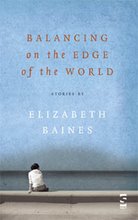
As we've discussed on this blog before, you can't copyright ideas, and you'd be mad to want to, but it's riling when someone appears to have taken your idea and flown with it, and doesn't even acknowledge you...
Maybe this isn't at all what has happened in the case of the anthology, Bad Girls: 26 Writers Misbehave, edited by Ellen Sussman, newly published in the US and receiving a lot of publicity, most recently in the New York Times. This book is strikingly similar in concept to last year's UK Bitch Lit anthology from the non-profit Crocus Books (in which one of my stories appears), but apparently bears no acknowledgement of the similarity. It's perfectly possible that when in 2004 Mary Sharratt, Bitch Lit co-editor with Maya Chowdhry, went to Ellen Sussman with a proposal for a US Bitch Lit version, Sussman had already had the same original idea. Though you can't blame Sharratt for wondering why, if so, she didn't she mention it.
Friday, August 31, 2007


Thursday, August 30, 2007
Writers versus Books
Joseph Ridgwell writes on the Guardian books blog about ageism in British publishing, but spoils his own case with his suggestion, only half tongue-in-cheek I think, that people should be banned from publishing books before they are thirty.
The point which gets rather swamped in the comment debate he thus generates is that the age of a writer should be irrelevant. We should stop thinking in terms of the personal characterstics of writers and get back to thinking in terms of books.
The point which gets rather swamped in the comment debate he thus generates is that the age of a writer should be irrelevant. We should stop thinking in terms of the personal characterstics of writers and get back to thinking in terms of books.
Tuesday, August 28, 2007
Coming up with the Goods
It seems unanswerable, doesn't it, the statement made so often in response to complaints that nowadays good novels don't always find publishing homes: 'Publishing is a business, not a charity'?
How can you deny it? Why would anyone continue publishing if they had to make losses?
But as I read an edited version of Jeremy Paxman's Edinburgh Festival castigation of the BBC for a loss of standards, in which he stated: 'Youth... This is the great motive force in contemporary television. Why do they want to find it? The motive is the same everywhere. Money' - well, another thought popped into my head:
There's business and there's business and there's money and there's money. After all, you wouldn't defend a grocer or a food wholesaler for being so obsessed with money he drops his standards and cheats his customers, or even poisons them, would you?
How can you deny it? Why would anyone continue publishing if they had to make losses?
But as I read an edited version of Jeremy Paxman's Edinburgh Festival castigation of the BBC for a loss of standards, in which he stated: 'Youth... This is the great motive force in contemporary television. Why do they want to find it? The motive is the same everywhere. Money' - well, another thought popped into my head:
There's business and there's business and there's money and there's money. After all, you wouldn't defend a grocer or a food wholesaler for being so obsessed with money he drops his standards and cheats his customers, or even poisons them, would you?
Wednesday, August 22, 2007
The Long and the Short of It
Mark Ravenhill writes about the ‘hunger for the epic’, the apparent need in a world devoted to the soundbite and fleeting images, a world where ‘brevity is everything’, for something meatier: the doorstop novel (he cites Harry Potter), the epic movie (Pirates of the Caribbean) and the hours-long stage play (David Edgar’s popular adaptation of Nicholas Nickleby for the RSC).
Monday, August 20, 2007
Words for Free
Not so long ago, discussing the controversy over copyright and Google Booksearch, I described my feeling of pleasure when two out-of-print anthologies in which my work featured appeared on Google Booksearch, and my disappointment when they disappeared again (they have since been reinstated). As I stated then, although the actual contents of those books weren't available online I wouldn't have minded if they had been, since I didn't think it likely that many people would otherwise read the few copies available in libraries such as that of the University of Michigan.
Today Peter Finch, Chief Executive of the Welsh Academy, writes to Academy members (of which I'm one) about Welsh Journals Online, a proposal by the National Library of Wales to digitize the entire content of the majority of twentieth-century literary periodicals in Wales.
A member of a nation in which education and literature have always had pride of place, he acknowledges the excitingly democratic nature of library digitization projects:
However, he points out this project has been funded:
Today Peter Finch, Chief Executive of the Welsh Academy, writes to Academy members (of which I'm one) about Welsh Journals Online, a proposal by the National Library of Wales to digitize the entire content of the majority of twentieth-century literary periodicals in Wales.
A member of a nation in which education and literature have always had pride of place, he acknowledges the excitingly democratic nature of library digitization projects:
No need any longer to visit the National Library at Aberystwyth to don white gloves and look at the ancient pages of Brut y Tywysogion. Log on and there are all the pages - viewable entirely for free and with no problem parking your car in order to get to see them. A service for the public has been created that is entirely in keeping with the spirit that founded the public library serviceand as a gifted and serious writer himself, he understands my impulse above. Authors on Welsh Journals Online will not be paid and 'will be given the right to say no and not to participate but the reality is that most will want to be included. This will offer some of them an opportunity to see work from years past appear again to re-read and re-evaluate'.
However, he points out this project has been funded:
In a society rich enough to pay for civic flowerbeds to be weeded and town centres to be illuminated 24/7 then authors should get something for what they do. In the whole digitisation process staffers working on the project at the National Library of Wales will be paid. So too the funders and Welsh Assembly Government and JISC. The operators of the internet servers on which the final project is to be stored will also receive financial consideration, as will the owners of the telephone lines down which the information will travel and the manufacturers of the equipment with which users will access it. But the creators of the works being read, the raison d'etre for the whole enterprise, they'll get nothing.He has a big point there, I reckon. There is something pretty amazing about the ubiquitous idea that, as far as literature is concerned, if there is ever any money going, the last people it should go to are the primary providers. So we do it for the love of it? Should we stop paying doctors or teachers or plumbers if they heal or teach or plumb for the love of it? As Finch says, it's too late to do anything about this project - the money has already been allocated - but in the rush towards digitization this assumption must be challenged.
Friday, August 17, 2007
Graphic Language
I know I've been away, but I was pretty puzzled when today I first read about the fuss over Ian Rankin's statement that lesbian crime writers write the most 'graphic' novels, and that he finds this 'interesting'. What? Why would people bridle at a compliment? Doesn't 'graphic' mean 'vivid'? See what a week in the Welsh hills (and a lack of familiarity with crime novels generally) does to you - you simply don't keep up with the language and you have no idea that it's shorthand for 'graphic violence'. And, to add to the confusion, in the same paper I am told that Rankin, having left Rebus behind, is now embarked on a 'graphic novel'!
Thursday, August 16, 2007
Inspiration
This month John Baker is tackling the issue of 'inspiration' by running a series of pieces by writers describing how they create a text. Mine appeared yesterday.
Wednesday, August 15, 2007
Ugly Romance
I couldn't agree more with John Sutherland when he says that those who have voted Wuthering Heights the most romantic novel ever have got it entirely wrong. It's what I said too when Norm invited me to contribute to his Writers' Choice.
What does it mean that people (60% of women polled, anyway) insist on reading this book, and the others he lists, in this way? That people don't in fact actually read? That we have forgotten, or are no longer educated, how to? That the tendency to privilege our preconceptions or wishes over clear-eyed analysis is a function of a commercial society based on fantasy and obsession with the self? (And as for the fact that our wishes are romantic, well, heaven help us.)
* Edited in: Norm has a great post on this, with all the links.
What does it mean that people (60% of women polled, anyway) insist on reading this book, and the others he lists, in this way? That people don't in fact actually read? That we have forgotten, or are no longer educated, how to? That the tendency to privilege our preconceptions or wishes over clear-eyed analysis is a function of a commercial society based on fantasy and obsession with the self? (And as for the fact that our wishes are romantic, well, heaven help us.)
* Edited in: Norm has a great post on this, with all the links.
Monday, August 06, 2007
A short break
Along with several other bloggers, it seems, I'm off on holiday so won't be blogging for a week or so.
Saturday, August 04, 2007
Acknowledging the Luck
Michael Holroyd writes amusingly in today's Guardian Review about the current tendency to fulsomeness and even sentimentality in book Acknowledgment sections and dedications:
I have a collection of short stories forthcoming, and in the current climate I can't help feeling lucky. Part of that sense of luck is inextricably bound up with other people: the magazine editors who happened to be sticking their necks out and publishing short stories just at the time I happened to write them (and therefore boosted me to go on writing them), the literary professionals I happened to meet who gave me contacts and practical hints, the close friends and relatives who acted as my first readers and helped me go on believing in my stuff when the going got hard. Holroyd is right, that to go too far with your acknowledgments can seem hilariously self-serving (he quotes some howlers ), but they can also be a political statement about the precariousness of creative production.
I'm with Holroyd on dedications, though. A single name, that's all. And the reason it's there is between me and him.
Writing books is no longer a solitary affair ... These "warm and gracious" friends have become, as it were, "co-workers" on the book, eulogised for their "endless patience" and "great understanding". They are like wet-nurses tending to whatever the young manuscript and its trusty word-processor need.What Holroyd fails to comment on is the whiff of uncertainty and/or relief coming off these missives, the sweat-soaked sense that the book might well never have been written and/or published if circumstances had been other, the contingency that always inevitably surrounds the making of a book - the author needing to keep sane and well, and if he/she doesn't have a commission needing savings in the bank or to be kept, or someone else to mind the kids. Not to mention the moral support you can need to stay on course in a world of shrinking publishing opportunities.
I have a collection of short stories forthcoming, and in the current climate I can't help feeling lucky. Part of that sense of luck is inextricably bound up with other people: the magazine editors who happened to be sticking their necks out and publishing short stories just at the time I happened to write them (and therefore boosted me to go on writing them), the literary professionals I happened to meet who gave me contacts and practical hints, the close friends and relatives who acted as my first readers and helped me go on believing in my stuff when the going got hard. Holroyd is right, that to go too far with your acknowledgments can seem hilariously self-serving (he quotes some howlers ), but they can also be a political statement about the precariousness of creative production.
I'm with Holroyd on dedications, though. A single name, that's all. And the reason it's there is between me and him.
Friday, August 03, 2007
The Book Depository
Grumpy Old Bookman draws our attention the The Book Depository which acts both a bookseller and publisher, concentrating on fast service and with a core philosophy of making 'All books available to all', a key feature being the reprinting out-of-copyright works. Grumpy says that as far as he knows this venture has had little publicity, and I too have noticed little reference to it in discussions about either copyright or bookselling. I can't help agreeing with him that for readers (and authors with an eye on their own longevity) it would seem to be only a good thing, but that potentially it presents yet another threat to the independent bookseller.
Thursday, August 02, 2007
The Burden of Blogging
I never intended to leave this blog for so long, but have been almost entirely preoccupied with another, artistic, project, and coming back to it today, and checking into other litblogs again, feels like coming back to your home town after living away: whole discussions have taken place which have passed me by (and the population has changed: some blogs have gone inactive, others which were in abeyance have started up again), and, although it's only been a fortnight, people have started to forget me: my site stats for this blog have gone down.
The fact that blogging is a huge project which can clash with one's other, more creative work is the perpetual dilemma of the writer-blogger. In fact, I didn't find it quite as hard to keep in touch with my other, writer blog, as I could make it part of the current project, which was promoting a play, and use it as a personal diary of my current obsession. But keeping writing while blogging is a different matter, and I neglected even that blog while I was writing that play. This is a paradox, since - let's be frank - most writer-bloggers blog partly to get exposure for their work (and apparently some publishers now expect authors to blog as part of their marketing duties).
As far as I'm concerned, though, it is critical discussion - with which this blog is concerned - which takes the real time and commitment. Today Susan Hill has announced that she's no longer prepared to spend the time reading other blogs and getting drawn into their literary discussions, and who can blame her with all that writing to do? And Daniel Green at The Reading Experience gets to grips with Sven Birkerts' assertion that litbloggers fail to engage as thoughtfully as print reviewers in a long, thoughtful article that must have taken him hours.
It's like the Partner of the Bitch said: 'I don't understand it, this blogging. How can it take you all that time? Why are you up there all hours, and so late?' Darling, keeping up a litblog can be like writing an essay every single day.
The fact that blogging is a huge project which can clash with one's other, more creative work is the perpetual dilemma of the writer-blogger. In fact, I didn't find it quite as hard to keep in touch with my other, writer blog, as I could make it part of the current project, which was promoting a play, and use it as a personal diary of my current obsession. But keeping writing while blogging is a different matter, and I neglected even that blog while I was writing that play. This is a paradox, since - let's be frank - most writer-bloggers blog partly to get exposure for their work (and apparently some publishers now expect authors to blog as part of their marketing duties).
As far as I'm concerned, though, it is critical discussion - with which this blog is concerned - which takes the real time and commitment. Today Susan Hill has announced that she's no longer prepared to spend the time reading other blogs and getting drawn into their literary discussions, and who can blame her with all that writing to do? And Daniel Green at The Reading Experience gets to grips with Sven Birkerts' assertion that litbloggers fail to engage as thoughtfully as print reviewers in a long, thoughtful article that must have taken him hours.
It's like the Partner of the Bitch said: 'I don't understand it, this blogging. How can it take you all that time? Why are you up there all hours, and so late?' Darling, keeping up a litblog can be like writing an essay every single day.
Thursday, July 19, 2007
The Smell of a Rat
Laugh and cry at the Guardian's report of the test for publishers and agents set by David Lassman, director of the Jane Austen Festival. He typed out Jane's books, changing only the names, and submitted them as new manuscripts and all he received back were polite rejections.
Well, you might say, what publisher in their right mind would glance twice at a contemporary manuscript written in late-eighteenth century prose and steeped in eighteenth-century upper-middle-class values? Trouble is, though, it seems that in that one glance at the beginning of Pride and Prejudice, only one publisher recognised it for what it was.
Laugh and cry as the publishers and agents tie themselves in knots explaining it away. Oh, but they did recognise it, claims a spokesman for agent Christopher Little: they might have sent out a polite rejection, but in fact there were 'discussions about plagiarism'. Excuse me while I fall off my chair imagining that po-faced discussion while the smelly rat ran riot beneath the table.
Excuse me while I fail to get up as I imagine the special x-ray process whereby Penguin, who say that they never actually said the manuscript was original, only that it 'seemed' so, can judge a manuscript when - as they also say, thus giving the whole game away - 'It would not have been read.'
Well, you might say, what publisher in their right mind would glance twice at a contemporary manuscript written in late-eighteenth century prose and steeped in eighteenth-century upper-middle-class values? Trouble is, though, it seems that in that one glance at the beginning of Pride and Prejudice, only one publisher recognised it for what it was.
Laugh and cry as the publishers and agents tie themselves in knots explaining it away. Oh, but they did recognise it, claims a spokesman for agent Christopher Little: they might have sent out a polite rejection, but in fact there were 'discussions about plagiarism'. Excuse me while I fall off my chair imagining that po-faced discussion while the smelly rat ran riot beneath the table.
Excuse me while I fail to get up as I imagine the special x-ray process whereby Penguin, who say that they never actually said the manuscript was original, only that it 'seemed' so, can judge a manuscript when - as they also say, thus giving the whole game away - 'It would not have been read.'
Tuesday, July 17, 2007
The Price of Retail
Watch your jaw on the desktop when you read these figures regarding Waterstone's charges to publishers for 'maximizing their books' potential', as reported by The Times.
Emma Barnes of Snow Books has commented before on this blog that in fact Waterstone's operate a sliding scale of charges in order to accommodate small publishers, but the books of small publishers are of course unlikely thus to get the kind of 'maximization' being referred to here, and Anthony Cheetham of Quercus Books is now quoted as saying:
Emma Barnes of Snow Books has commented before on this blog that in fact Waterstone's operate a sliding scale of charges in order to accommodate small publishers, but the books of small publishers are of course unlikely thus to get the kind of 'maximization' being referred to here, and Anthony Cheetham of Quercus Books is now quoted as saying:
There is a genuine level of exasperation and anxiety in the publishing industry that the booksellers have gone too far down this road. It’s the reader who loses because it’s throttling the distribution of a wider range of high-quality books and [perpetuating] the system whereby you plaster the entire country with copies of the same few books.Thanks to Debi for the link.
Sunday, July 15, 2007
A Breath of Fresh Air
Any one concerned about the draconian developments in modern copyright would do well to check out 'Free to Air' running at Manchester's Cornerhouse this month (106.5 FM and online), and which I write about on my other blog.
Saturday, July 14, 2007
Been Had
Tee hee.
Here's how it went this week with a local journalist to whom I had sent a press release about a play:
Extract from phone conversation #1:
She rings me again. Extract from phone conversation #2:
Here's how it went this week with a local journalist to whom I had sent a press release about a play:
Extract from phone conversation #1:
Journalist (after patiently bearing with me about the play and then asking the strangely apparently more interesting personal questions which I managed to deflect): So where did you get your inspiration for the play? From things you see in the village?
Me (wisely onto such journalistic tricks, intent on keeping things more literary and cleverly deflecting): Umm. Well, it doesn't quite work like that. You have to have an idea brewing already, and only then will something in the outside environment spark that idea off into a story.
She rings me again. Extract from phone conversation #2:
Journalist (after probing more deeply about my life and my 'hobbies'): So when you go walking round the village, and down the meadows like you said, is that where you get your inspiration?She rings me a third time. Extract from phone conversation #3:
Me (getting slightly worried now): Umm, well, as I explained, there has to be an idea already there...
Journalist: So what is it you like about living in the village? Is it the people?She rings me a fourth time. Extract from phone conversation #4:
Me (thinking of course of the paper's readers which include my neighbours!): Well yes of course!
Journalist: So it's the people in the village who give you your inspiration?Here's an extract of the article which appeared yesterday, titled 'Are you a player on Elizabeth's suburban stage?':
Me (laughing): I'm not telling you who I put in my stories! (And realising at once I've fallen into the trap)
Journalist: And do you sit in the village cafe and watch people go by?
Me (still recovering and so not concentrating): Well, I have done... (in truth only once or twice)
The next time you take a stroll through the village you could unwittingly become a character in a book or a play. That's because Elizabeth has a unique method when it comes to creating her characters. She simply sits at her favourite cafe watching people go by and imagines what it must be like for them. The figures are then transformed into three dimensional creations in her stories... She likes nothing better than sitting outside the village cafe with a notebook and pen and doing a spot of people watching.Ha!
Friday, July 13, 2007
Bookarazzi
Speaking of marketing and the power of authors, you may be interested in a new website set up by a group of us blogging authors:

Bookarazzi is the public face of BloggersWithBookDeals, a group of published writers / artists who spend half our lives on the internet.
There are almost 50 of us, and our books range from surreal comedy to commercial women’s fiction to graphic novels and disgusting recipes. This is where we come to pool our collective abilities and provide stuff for you to read and use.
Whether you’re a budding writer, a bored net surfer or are just feeling nosy, there should be something for you.
Oh, and we might plug our books occasionally too.
Check us out and let us know what you think:
Tuesday, July 10, 2007
Real-life Fantasy
Mark Ravenhill complains, as I am always doing, about the tendency to want to see autobiography in fiction:
At the moment I'm producing one of my own plays. I talked to several directors interested in working on it. 'Is this protagonist you?' asked one of them. I was shocked, and went hot and cold all over, because, as I am so often saying, once you start looking at a play or a book in the light of the author's life you are no longer looking at it for what it is, and indeed it becomes something less than it should be.
I've just come off the phone from talking to a journalist to whom I had found it necessary to send a press release about the play. Actually, she rang three times. The first time I deflected her nicely from the personal questions I knew she would ask. Then she rang again: her editor had asked her to get more colour. Not about the play (of course: who's interested in literature, what we want is the lowdown on the writer!), but I managed to keep her on the subject of my writing career. The phone rings again. Her editor still wants more. What age did I say I was? (I didn't). What years were my children born? What year was I divorced? What is it my partner does? Oh, what the hell, I told her - I could sense her desperation, and it's only a local paper, and anyway everyone locally knows all these things anyway, and quite frankly nowadays I'm past caring what anyone knows or even thinks about me, but then the moment comes: 'And how does this relate to your play?' and I do care how people view my play.
Even Mark Ravenhill seems to miss the real point about fiction. He says it's often the differences rather than the similarities between an author's life and work which are interesting. But the whole point, as I've said before, is that you can't make those divisions: fiction is an indivisible meld of fact and imagination, something different from either and carrying its own truth.
And I'm totally puzzled by all this fuss about JT LeRoy: what, so no one ever makes up a persona for the rest of the world? So you wouldn't expect a fiction writer to be better at it than most?
It's troubling to be a writer on the receiving end of this hunger for autobiography. When my play Shopping and Fucking was produced in 1996, I was totally unprepared for the fact that many people would read it as autobiographical. The play is inhabited by rent boys and junkies. Suddenly, people I knew well were scouring my arms for track marks.We've all had similar experiences. The most annoying for me was when a journalist who knew nothing whatever about me stated sagely that my depiction of my protagonist suffered because of my own pain. Maybe she really had hit on a failure in the writing, but I do think this judgement was fuelled by a (wrong) assumption of autobiography.
At the moment I'm producing one of my own plays. I talked to several directors interested in working on it. 'Is this protagonist you?' asked one of them. I was shocked, and went hot and cold all over, because, as I am so often saying, once you start looking at a play or a book in the light of the author's life you are no longer looking at it for what it is, and indeed it becomes something less than it should be.
I've just come off the phone from talking to a journalist to whom I had found it necessary to send a press release about the play. Actually, she rang three times. The first time I deflected her nicely from the personal questions I knew she would ask. Then she rang again: her editor had asked her to get more colour. Not about the play (of course: who's interested in literature, what we want is the lowdown on the writer!), but I managed to keep her on the subject of my writing career. The phone rings again. Her editor still wants more. What age did I say I was? (I didn't). What years were my children born? What year was I divorced? What is it my partner does? Oh, what the hell, I told her - I could sense her desperation, and it's only a local paper, and anyway everyone locally knows all these things anyway, and quite frankly nowadays I'm past caring what anyone knows or even thinks about me, but then the moment comes: 'And how does this relate to your play?' and I do care how people view my play.
Even Mark Ravenhill seems to miss the real point about fiction. He says it's often the differences rather than the similarities between an author's life and work which are interesting. But the whole point, as I've said before, is that you can't make those divisions: fiction is an indivisible meld of fact and imagination, something different from either and carrying its own truth.
And I'm totally puzzled by all this fuss about JT LeRoy: what, so no one ever makes up a persona for the rest of the world? So you wouldn't expect a fiction writer to be better at it than most?
Sunday, July 08, 2007
Not Just Designs on Your Purse
 Recently some of us noted the cloning of certain book covers as cover design becomes increasingly in thrall to 'the market'. Interesting then, and encouraging, to read of the new Penguin Books Design Award, aimed at final-year art students, and, according to artist Harland Miller, promoting book covers as artefacts which are 'design- rather than sales-led' and, he implies, more sensitive to a book's content and ethos. Left is the winner of the inaugural competition: Ara Youn's design for Malcolm Gladwell's Blink.
Subscribe to:
Posts (Atom)