Showing posts with label The question of authenticity. Show all posts

Thursday, January 31, 2013

What makes you think you know me?

In a Guardian article today about Ricky Gervais's controversial new character Derek, Mark Lawson notes this:
Performers such as Alec Guinness and Paul Scofield used to argue that actors should be wary of giving interviews because the profession demands the ability to disappear within a part. But contemporary actor-comedians such as Gervais, not only chat-show regulars but also constantly visible on social media, are as far from that mysterious ideal as it is possible to be. The risk is that a proportion of viewers will always be judging the public personality – and, in Gervais's case, controversy – as much as the work. It's intriguing to speculate about how Derek would be received if played by an unknown actor.
I have often argued on this blog a similar case regarding writers: the fact that, if novels don't exactly get judged purely on the personalities of their authors (though I suspect they often do), our celebrity culture does mean that very often it's the novelist rather than the novel that gets attention. In a books marketing climate depending on social media it's unavoidable: authors are now pretty much required by their publishers to have a profile on social media.

It's a conundrum: as I have pointed out often enough, many writers write precisely because they find social interaction more difficult than the page, and most writers write precisely because they find social interaction inadequate: it's solitary contemplation that produces original thought and it's the calm of the page where those thoughts can be properly transmitted and appreciated. This last is a point made strongly by Susan Cain, author of Quiet: The Power of Introverts in a World That Can't Stop Talking. (Tania Hershman, who it seems is also currently concerned with these issues, alerts us to a moving film of Cain speaking.) Cain doesn't in any way suggest we give up social interaction, but pleads for more space for the privacy and contemplation necessary for creative production.

Here's another thought. If the recent 'sock-puppetry' scandal has shown us anything, it's that you can't always trust who someone is online anyway, and I'd say you can't always know who someone is online even when they're using their own name. Another thing the scandal showed was that there's now a whole culture - especially among authors, or at least those authors who were up in arms - of obsession with honesty and being up front, but it seems to me that writers, above anyone, are capable of fictional manipulation - either consciously or unconsciously - when it comes to their online selves. I'd go further and say that we never really know a person from any of their fundamentally public appearances.

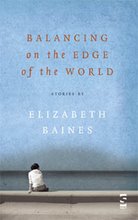
I've been thinking about these issues a fair bit since I discovered in the pages of Nicholas Royle's new novel First Novel (which plays with the issue of the difficulty of knowing what's fiction and what isn't) a character (appearing intermittently and briefly) who answers to my description and bears my writing name. Other characters in the novel are recognisable as real-life people to those who know them in life, but their names are changed, and other writers are mentioned, but only as the authors of their books - they do not appear as characters (except maybe Paul Auster, though if I remember correctly that's only in the narrator's imagination). People keep coming up to me and suggesting it's outrageous and asking me if I feel weird about it. The answer is: no, on reflection, I don't (though their reaction does make me feel weird - it's not me, folks, it's a character!). I haven't discussed it at all with Nick, and he may have other things to say about it, but as far as I can see, it's a kind of literary joke about the knowability of anyone with any kind of public profile. Who is this Elizabeth Baines? No one really knows: it's significant - and funny - that the glasses of the EB in the novel flash at one point with the reflections of a glitter ball. For one thing, as Nick knows, it's a pen name, the name behind which, in the beginning, when I first started writing, I hid my real identity. But it's all very complex: in fact, I wasn't so much hiding as naming my deepest, most private, contemplative self, the self that (with luck) emerges on the page, and delineating and protecting it from my social identity - which in turn makes it ironic that it's now become the name for my public profile, and the active promotional side of me as a writer, as well as a name by which people know me on a social level after all. 

The truth of it all is this: as difficult as it is nowadays, if you really want to know a writer, try to forget the public profile and look at the work for what it is.

Friday, March 07, 2008

The Misery-Memoir Saga Goes On

Here we go again: two more cases of a publisher refusing to let the smell of rat put them off a juicy misery 'memoir' (here and here) and then coming over all hoodwinked when it's unveiled as fake. (Thanks to The Accidental Blogger for the links.)

And here's John Crace with a How To guide for misery-memoir writers. This injunction of his best sums up for me what's invidious about the whole fashion for 'authenticity', and it's a point I've made myself before:
remember that readers won't be reading [your book] as you would hope. They are not identifying with your struggle; they are thanking their lucky stars that they aren't you.

Tuesday, October 03, 2006

Don't We Just Love a Scapegoat?

Looking back at the last few lines of my last post, and musing on the fact that no one seems prepared to take at all seriously James Frey's claim that he originally intended his book as fiction, but that he was persuaded otherwise by his publisher, I've decided to bring to the top Rupert's comment on my post 'Novels versus Memoirs':

As an agent, I feel quite strongly that Frey was shafted by his publisher and agent. Not only must they have known that embellishment was going on, they *did* know - I met an editor at Doubleday who told me, prior to the book's Oprah laurels, that he was sure some of the book wasn't true. It is deeply disingenuous of the professionals closely involved in the book's publication to claim they were duped by Frey, ruthless of them to drop him, and deeply immoral for them to continue to profit from the discredited works which they are merrily doing.

Monday, September 18, 2006

Novels versus Memoirs

The day after the Booker shortlist announcement, the Guardian ran an article on the disgraced American author James Frey. For those not familiar with the story, Frey's memoir, A Million Little Pieces, an account of his life as a drug addict, became an all-time best-seller after being chosen for Oprah Winfrey's book club, but was later exposed by the Smoking Gun website as being semi-fictional, and a discredited Frey was forced to issue an apology (although the book is still selling well, apparently).

In the interview with Laura Barton, Frey makes this claim which tickled the Bitch's antennae: he says that initially he wrote the book as fiction, but that it was turned down by 17 publishers(including Doubleday who eventually published it), all of them asking 'How much of this is true?' and clearly in the market for non-fiction rather than fiction. Barton doesn't manage to ascertain at what stage the book began being touted as non-fiction - whether Frey made the decision himself before re-submitting, or whether the publishers were complicit in the transformation (Frey claims the latter, but his now ex-agent claims to have been duped by him).

Whatever the truth of this particular situation, it's extremely interesting that a fine writer, as Barton assures us he is (I haven't read the book), and a man who apparently longed to be a novelist, feels compelled to allow his work of autobiographical fiction to be launched on the world as a memoir, and exceedingly interesting that non-fiction is what sells now.

Laura Barton speculates that perhaps this latter 'is an indication that we are recoiling from a culture that has grown increasingly synthetic.' Yet, as I have argued before, it is good novels, with their particular universalising power, which are anything but emotionally synthetic, but have the real power of emotional truth. Perhaps the very reason that this book affected so many people so powerfully, was that it was indeed really a novel, with all the novelistic tropes and exaggerations and patterns which can so persuade the emotions.

Oprah claimed that, having identified so closely with the book, readers now felt betrayed. But could it possibly be that readers are in fact easier with the idea of a memoir because the experience in a memoir is safely identifiable as another's, and not our own as a good novel can make it? That the emotion evoked by a memoir is thus easier to handle, more safely sentimental?

And then we come to the Booker shortlist, only one of which I have read, Hisham Matar's In the Country of Men. Now this is a book with a very moving story - that of a nine-year-old boy in Gadafy's Libya, with a dissident father under threat of arrest and torture and an unhappy mother driven to illegal drink - and, in view of the current asylum-seekers debate, a story which needs to be told. The thing which strikes me about it, though, is that, like Khaled Hosseini's The Kite Runner (which has an interestingly similar cover illustration), it takes the form of a memoir, and to my mind it suffers from that. The narrative is constantly interrupted and slowed down and deprived of dynamism by memories related in the past continuous tense (we used to ...) (or whatever that tense is called nowadays), and towards the end there is a memoir-like filling-in-the-gaps exposition which I found indeed distancing (although the book is then saved by a very moving end).

Interesting that The Observer, reporting on the shortlist on Sunday, felt compelled to point out the parallels between the events of the novel and those of Matar's life, as well as those between Edward St Aubyn's book and life. Why are we so keen nowadays to see an author's life in their books? Cult of personality, as I so often think? Or retreat into the safety of the otherness of memoir?

Sunday, April 30, 2006

The Tale or the Teller?

An aspect of the obsession with an author's credentials (about which I have been complaining) is given articulate expression in today's Observer in an article by Sarfraz Manzoor: Why do Asian Writers Have to Be 'Authentic' to Succeed? Manzoor notes that writers of 'Asian' novels are expected to be the voice of an erstwhile hidden community and that while they are thought to be so their novels are lauded, but that once they are 'exposed' as being not quite of that community themselves - ie mixed race, middle class or Cambridge educated - they can expect a critical slamming.

What is all this about an author's 'authenticity'? Have we forgotten that art is an act of imagination and empathy, that the further away an author is from that which he/she successfully evokes, the greater his/her achievement, both artistically and politically in a world of communities badly in need of bridging? Nowadays this prejudice is linked with the cult of personality which is grounded in the commercial impulse, but it has its roots in the political correctness of the 1980s. Manzoor makes the case that nowadays a white author (as opposed to an 'inauthentic' Asian author) is lauded for empathising with the Asian experience. Back in the eighties, however, a white English vicar empathised enough with a young Asian girl to get a novel about one published by a feminist publisher, only to have it pulped when the publishers discovered there was man behind the pen-name. A similar thing happened when a story about the pain a man can cause a woman, published in a feminist anthology, was discovered to be by the writer John Ashbrook, only that time it was a woman who got it in the neck: his partner, our own Manchester-based one-time novelist and now playwright Elizabeth Baines, who was suddenly 'exposed' by association as an 'inauthentic' feminist writer and quickly dropped by her feminist publishers.

Interesting that such Stalinist-style insistence on personal authenticity and lack of faith in the words on the page should have elided in the intervening years with the trashy commercialist
cult of the Glamorous Author.

Sunday, April 23, 2006

Is It Cos I Is An Old Git (ie Over 25)?

Adrian at The Art of Fiction draws our scathing attention to UEA's New Writing Ventures. It's mis-named, as so many of these schemes are, because, as he points out, it's not primarily about writing itself. The focus, as usual nowadays, is the status and real-life identity of the author. As opposed to the National Short Story contest, this time it's 'emerging authors' being courted, those who have not had a 'dedicated publication of their work, ie a novel or a collection'. You must give a short account of your 'writing life' (!), and strictly no pen names or c/o addresses allowed. (Don't these people know that good fiction writers are constitutionally incapable of sticking to facts and are the world's experts in creating alter egos?) And it's a development project: does this mean your work can be too good to qualify, ie you wouldn't benefit from the nice little year-long mentoring scheme set up with the funding, and which of course is the real focus of it all? This scheme makes a point of avoiding the current trend for ageism - for once there's no upper age limit - but as always the stress is on the wearying, drearying obsession with new faces and new names. What about those increasingly numerous writers who've published one or two novels and then been dropped because publishers are hooked on the marketing notion of The Next New Thing - who ever sets out to help them? It's now accepted publishing wisdom that a novel by a new author is easier to sell to bookshops than one by a second- or third-time author, so every exciting new writer given a leg-up by these schemes is a mid-list has-been in the making - it's only a matter of time.

In my last post I commented on the trend towards the familiar, and so this might seem like a contradiction, but it's not. We get bored easily, but we don't want real change, we're not interested in real literary development, and in the age of the cult of youth and personality we are frankly frightened of the kind of change that overtakes dewy young faces as the years go by. We want a new brand of the same product: tales of youth adorned with pics of authors with sulky pouts and slides in their hair and little-girl cardigans. (Apologies to Gwendoline Riley, but then I never said I wasn't a bitch; now there's an author who managed to publish a very short novel - see 'Odds and Ends' in the Art of Fiction - and I suspect it wasn't simply on the strength of her prose, good as it is.)

But so it goes, to quote the great man (now there's a supple subversive literary mind inside an old shell).

Everyone's at it, no one can avoid it: the esteemed Ra Page ain't above it all, indeed his whole publishing venture seemed founded on the practice of eschewing established practitioners of the short story in favour of persuading established practitioners of other forms - poets and playwrights - to give it a go. Anything to be able to say you're offering something new in the way of authorship as opposed to simply writing.