This week's stop on the virtual book tour for my novel Too Many Magpies is at the blog of the thoughtful and erudite John Baker, who reviews the book (very positively, I'm thrilled to say). He also asked me some searching questions about my aims in writing novels and, since this is a theme of the book, our present-day sense of ourselves in the world. You can find his questions and my answers in the comments section of his post.
Wednesday, May 12, 2010
Flying with Magpies: Stop 2
This week's stop on the virtual book tour for my novel Too Many Magpies is at the blog of the thoughtful and erudite John Baker, who reviews the book (very positively, I'm thrilled to say). He also asked me some searching questions about my aims in writing novels and, since this is a theme of the book, our present-day sense of ourselves in the world. You can find his questions and my answers in the comments section of his post.


Monday, May 10, 2010
Judged by Your Covers?
There's an extremely interesting article in yesterday's Observer about the different covers given to the same book in different countries - and a fabulous colour spread which, in the print edition, makes you so glad of the day our newspapers took to colour!
The difference in designs is staggering - Everything Is Illuminated represented in France by a man fondling a woman's breasts, for godssake (?!). Perhaps the most interesting point is that, according to designers interviewed, in both Europe and the US there's less of a sense of the need to hide 'literariness' - covers for literary fiction in Europe are plainer because literary fiction sells better than in the UK, and in the US 'literariness' is deliberately and proudly flagged. What a philistine lot we are in Britain, and no wonder Nick Clegg got it in the neck after claiming a fondness for Beckett!
On the other hand, one commentator believes that there's no real need for these geographical differences, and that it all comes down to 'bloody-mindedness' and pride.
The difference in designs is staggering - Everything Is Illuminated represented in France by a man fondling a woman's breasts, for godssake (?!). Perhaps the most interesting point is that, according to designers interviewed, in both Europe and the US there's less of a sense of the need to hide 'literariness' - covers for literary fiction in Europe are plainer because literary fiction sells better than in the UK, and in the US 'literariness' is deliberately and proudly flagged. What a philistine lot we are in Britain, and no wonder Nick Clegg got it in the neck after claiming a fondness for Beckett!
On the other hand, one commentator believes that there's no real need for these geographical differences, and that it all comes down to 'bloody-mindedness' and pride.
Thursday, May 06, 2010
Flying With Magpies
I'm beginning a blog tour today for my latest novel, Too Many Magpies (Salt). Sue Guiney asks me about the inspiration and impetus for the novel, and the experience of writing for different forms.
Wednesday, April 28, 2010
What do Writers Want?
Here's a great article by Kate Pullinger on the needs of writers that should be kept in mind as changes occur the publishing industry. And it's a measure of the way that those needs have been squeezed so far that it almost comes as a (ridiculous) shock to find her making such a statement of requirements.
Monday, April 26, 2010
Are Publishers Anti-Male?
Friday, April 23, 2010
It's a Man's World
Anyone who thinks that there is no need for the Orange Prize or any form of such positive discrimination for women, should read Bidisha's witty and excoriating assessment of the gender imbalance in the arts in today's Guardian. She presents an irrefutable list of instances (including review pages, arts events, festivals, theatre, literary prizes) which are overwhelmingly balanced in favour of men. She notes that
I suppose this means that she'll no longer light up the discussions on Newsnight Review, or whatever it's called since it dumbed itself down, and on which, I've always noted, the men panelists outnumber the women. Shame.
in 41 years of the Booker prize the jury has been male dominated 30 times. There have been 28 male winners and 15 female winners. That said, the one time there were four women and one man on the jury, in 1986, they chose Kingsley Amis's The Old Devils over Margaret Atwood's The Handmaid's Tale. God. Why do women love misogynists so much? Is it Stockholm syndrome? [Yes, I'd say: women are always bending over backwards not to be thought feminists or even female.]She comments that
it's all the more galling given that women equal or outnumber men as attendees of arts festivals, concerts, readings, discussions and debates, and as arts and humanities students at university. Women write, read, edit and publicise more fiction than men Women make up the majority of executive, PR and organisational staff in arts and cultural institutions. Women's ticket revenue, licence fees, book purchases and entrance fees are being used to fund events at which women artists and thinkers are marginalised with breathtaking obviousness.She points out too how the perception of this situation is skewed - even for those with the truth most closely under their noses:
When I was judging the Orange prize last year we all noticed how major bookshops consistently stacked 10 men's books to every one woman's book on its "recommended read" tables – in whatever genre. In one bookshop, fellow judge Martha Lane Fox was told barefacedly by the sales guy that this was because men published 10 times as much fiction as women.She's sick, she says, of being the token woman on panels, and she's no longer prepared 'to give my time and attention – and implicitly, my support – to any event, such as the debates at How The Light Gets In, that gives space to five times as many men as women.'
I suppose this means that she'll no longer light up the discussions on Newsnight Review, or whatever it's called since it dumbed itself down, and on which, I've always noted, the men panelists outnumber the women. Shame.
Wednesday, April 21, 2010
The Problems of Complexity
The latest discussion of my reading group, on Toni Morrison's Beloved, is here.
Perhaps the most interesting thing about this discussion is the difficulty the members had with the complex structure of the novel, a structure without which it seems to me Toni Morrison could not have conveyed her material with emotional and psychological truth - which raises some interesting questions about the tension between the cultural and political need for innovation/complexity and its problems.
Perhaps the most interesting thing about this discussion is the difficulty the members had with the complex structure of the novel, a structure without which it seems to me Toni Morrison could not have conveyed her material with emotional and psychological truth - which raises some interesting questions about the tension between the cultural and political need for innovation/complexity and its problems.
Edge Hill Long List Announced
Good to see that this year the Edge Hill Short Story Prize has published a long list. It seems to me that if the aim of a prize is to draw attention to and indeed to promote a burgeoning short-story culture, then giving publicity to as many as possible of the high-calibre collections entered is a very good idea.
Congratulations to all on the long list, which includes A L Kennedy, previous shortlister Robert Shearman, and two of my fellow Salt authors, Nuala ni Chonchuir and Mark Illis.
Congratulations to all on the long list, which includes A L Kennedy, previous shortlister Robert Shearman, and two of my fellow Salt authors, Nuala ni Chonchuir and Mark Illis.
Tuesday, April 20, 2010
Orange Prize Shortlist, Connections and Misery
The Orange Prize shortlist is announced, and the interesting story of Rosie Alison, the shortlister who didn't get a single national review, becomes even more interesting: turns out she had a prominent books industry connection she made a point of not using, and her now shortlisted novel was turned down over and over until independent Alma Books picked it up.
And Daisy Goodwin continues with her theme of too much misery in women's fiction: 'The Lovely Bones has a lot to answer for', we are told she says today.
And Daisy Goodwin continues with her theme of too much misery in women's fiction: 'The Lovely Bones has a lot to answer for', we are told she says today.
Wednesday, April 07, 2010
My Reading Group Archive
It's occurred to me to put links to my reading group discussions on this blog - I'm not really sure why it hasn't occurred to me before: maybe the fact that they seem so personal has meant that they seemed most suitable for my more personal, author blog, where I have been posting them in the last year or so (they've appeared on my website all along). But they are of course an interesting insight into the nature of reading and something of the cultural context into which we write and publish books.
We're a mixed sex group - quite often the men outnumber the women - and not a particularly overtly literary group: my partner John Ashbrook and I are writers (and earlier on we had another couple of writers), but the rest are a retired lecturer in criminal justice, a patent officer, a textile conservator, a furniture maker who once dropped out of an Engineering degree, a pharmacist, a counsellor and an accountant. (At one time we had a hospital doctor.) An eleventh member, who was originally a crew member for BA, left the group temporarily to study for a literature degree, and so he's jumped the divide. But it's not a divide, after all, I find: this mixed-sex group of people with non-literary professions is quite passionate about novels. As a writer, I've found this very heartening, but also very educative: while the group may not be exactly a representative demographic, one or two of the members are avid readers of populist fiction as well as the so-called 'literary', and to this writer it's a valuable lesson in reader-expectation and taste.
Our latest discussion was on J G Ballard's The Kindness of Women, which is on my other blog here, and recent discussions have included Henry James's The Turn of the Screw (John's take on it took us all aback) and very divided opinions about The Elegance of the Hedgehog by Muriel Barbery. All of our discussions for the past seven-plus years can be found on my website: a list of the books we've discussed (with links to the discussions) is here, and if you want to see how our discussions have developed, a chronological archive is here.
We're a mixed sex group - quite often the men outnumber the women - and not a particularly overtly literary group: my partner John Ashbrook and I are writers (and earlier on we had another couple of writers), but the rest are a retired lecturer in criminal justice, a patent officer, a textile conservator, a furniture maker who once dropped out of an Engineering degree, a pharmacist, a counsellor and an accountant. (At one time we had a hospital doctor.) An eleventh member, who was originally a crew member for BA, left the group temporarily to study for a literature degree, and so he's jumped the divide. But it's not a divide, after all, I find: this mixed-sex group of people with non-literary professions is quite passionate about novels. As a writer, I've found this very heartening, but also very educative: while the group may not be exactly a representative demographic, one or two of the members are avid readers of populist fiction as well as the so-called 'literary', and to this writer it's a valuable lesson in reader-expectation and taste.
Our latest discussion was on J G Ballard's The Kindness of Women, which is on my other blog here, and recent discussions have included Henry James's The Turn of the Screw (John's take on it took us all aback) and very divided opinions about The Elegance of the Hedgehog by Muriel Barbery. All of our discussions for the past seven-plus years can be found on my website: a list of the books we've discussed (with links to the discussions) is here, and if you want to see how our discussions have developed, a chronological archive is here.
Thursday, April 01, 2010
The 'Lost' Booker Prize
Although I am known here to be pretty dubious about competitions including the literary (and of course would be a marketing-literary fool not to be pleased to win one!), I'm giving two cheers for the 'Lost Booker Prize', precisely because it shows up the (often unacknowledged) arbitrary nature of such prizes: the books eligible for this one are those which fell between the two stools of eligibility the year that the deadline for submission for the Booker Prize was changed. Not so thrilled by the voting system, though: anyone can vote online, without having bothered to read all of the shortlisted books, presumably - or even any of them, I guess. Though on second thoughts, that makes a nice mockery of the whole idea of winners, doesn't it...?
Thursday, March 25, 2010
Comedy versus Tragedy
Once again I haven't been blogging here. Partly it's because I've been working on a new publication, a reissue of my first novel The Birth Machine, which has taken up much of the time and headspace left over from any actual writing I've managed to do. But partly, too, I have to admit there's the loss of impetus which others have reported, connected to the rise of Facebook and Twitter. As Tania Hershman says, on social networking sites you can get instant feedback and have instant conversations - and without having to write whole mini-essays - and reach a wider audience than just the blogging fraternity. Another thing which has struck me is that by the time you get around to blogging about an issue, on Twitter or Fb things have moved on, and it's become old hat.
But that, precisely, is the value of blogs. The reason that sometimes one doesn't instantly get around to blogging about an issue is that blogs can take a commitment of time, and the reason they do us that is that they can also take a commitment of thought. A blog, it seems to me, is an excellent vehicle for contemplating nuances which can easily be submerged in instant discussions. Take for instance the recent issue of Orange Prize Chair Daisy Goodwin's plea for women writers to lighten up. I've been mulling this for some time, and wondering why I didn't want to join in the discussions, and why something about it all has worried me. Once I had a moment free from retrieving files from old computers and reading proofs, it struck me.
I know there were one or two more subtle voices, but the general thrust of the conversation on the web seemed to fall into bald either-or arguments: there were those who believed that women were too miserable and those who didn't and thought men were just as bad; there were those who were for comedy and those who weren't. Even the intelligent article by Erica Wagner in The Times arguing that comedy is harder to do than tragedy (comedy requires a particularly incisive verbal facility) seemed to imply that comedy is therefore better.
Why does one have to be better than the other? Aren't they simply different sides of the coin of human nature, expressions of different but equally valid individual and social states of mind? Sometimes comedy answers our emotional needs, sometimes tragedy does. Why, as artists, can't we do both? (I certainly like to.)
I'm troubled by this thrust towards either/or and black-and-white thinking, and not just as a writer fighting the culture of branding.
But that, precisely, is the value of blogs. The reason that sometimes one doesn't instantly get around to blogging about an issue is that blogs can take a commitment of time, and the reason they do us that is that they can also take a commitment of thought. A blog, it seems to me, is an excellent vehicle for contemplating nuances which can easily be submerged in instant discussions. Take for instance the recent issue of Orange Prize Chair Daisy Goodwin's plea for women writers to lighten up. I've been mulling this for some time, and wondering why I didn't want to join in the discussions, and why something about it all has worried me. Once I had a moment free from retrieving files from old computers and reading proofs, it struck me.
I know there were one or two more subtle voices, but the general thrust of the conversation on the web seemed to fall into bald either-or arguments: there were those who believed that women were too miserable and those who didn't and thought men were just as bad; there were those who were for comedy and those who weren't. Even the intelligent article by Erica Wagner in The Times arguing that comedy is harder to do than tragedy (comedy requires a particularly incisive verbal facility) seemed to imply that comedy is therefore better.
Why does one have to be better than the other? Aren't they simply different sides of the coin of human nature, expressions of different but equally valid individual and social states of mind? Sometimes comedy answers our emotional needs, sometimes tragedy does. Why, as artists, can't we do both? (I certainly like to.)
I'm troubled by this thrust towards either/or and black-and-white thinking, and not just as a writer fighting the culture of branding.
Monday, March 08, 2010
Author Blog Awards
 I've been asked to let you know about the Author Blog Awards being run by CompletelyNovel in association with Quartet, Allison and Busby, Simon and Schuster and BookBrunch. Here's what they say they're all about:
There are over 10,000 published and unpublished authors blogging to readers, writers and industry professionals. Despite huge loyal followings and a remarkable wealth of new content, many readers remain unaware of these blogs.The Author Blog Awards aim to honour the best blogs by both published and unpublished writers. They will recognise the writers who use their blogs to connect with readers in the most imaginative, engaging and inspiring ways. At the same time we hope to attract new audiences to these blogs and help readers find out more about the authors they love…and new authors too.
You can nominate your favourite author blog to win an award and will also have the chance to win something from a selection of prizes including free eReaders, new books, free eBooks, and book tokens. There are three categories: Best Published Author Blog, Best Unpublished Author Blog, and Best Author Microblog. The winners will be announced in April.
Go to the site here.
Crossposted with Elizabeth Baines.
Saturday, March 06, 2010
Stationery Lust
I love Hilary Mantel's Guardian article about stationery and its relationship to our writing processes. I am so gratified by her praise for the loose leaf and the ring binder as the best media for writing novels, and her denunciation of the bound notebook, in particular the Moleskine, and its straitjacket of linearity, which I totally agree is not the way you write novels. (And I'm so glad she said it for me: 'Chatwin, Hemingway: has the earth ever held two greater posers?'). 'You must be able to loop back on yourself,' she says, 'and to be able to arrange the elements of which your story consists in an order that is entirely flexible.' And she's right: crossings out won't do: you need to be able to restore those bits you abandoned when you realize they are necessary after all.
Mantel says that 'at twilight' she starts dreaming about old-fashioned stationery: 'pink tape, for instance, that barristers use to tie up their bundles'. But I can go one better: I actually have it! (Don't ask me where to get it, someone gave it to me years ago, a huge cardboard roll of it, and I don't know where they got it.) I use it to tie up those old drafts which, you never know, I might loop back to for those bits I do need after all. And she wonders if you can still still get treasury tags. Well, I can tell her, yes you can, in Staples - or you could last time I needed them - and I use them all the time to bind plays, and yes, there's something really nice about threading those lovely dark-green strings with their sharp metals ends through the holes... Ah, stationery!
Mantel says that 'at twilight' she starts dreaming about old-fashioned stationery: 'pink tape, for instance, that barristers use to tie up their bundles'. But I can go one better: I actually have it! (Don't ask me where to get it, someone gave it to me years ago, a huge cardboard roll of it, and I don't know where they got it.) I use it to tie up those old drafts which, you never know, I might loop back to for those bits I do need after all. And she wonders if you can still still get treasury tags. Well, I can tell her, yes you can, in Staples - or you could last time I needed them - and I use them all the time to bind plays, and yes, there's something really nice about threading those lovely dark-green strings with their sharp metals ends through the holes... Ah, stationery!
Monday, March 01, 2010
Jewish Book Week: A Beginner's Guide to Jews on the Edge
Billed as a discussion between novelists Will Self and Adam Thirwell about 'the many possible manifestations of Judaism - half-Jews, non-Jewish Jews, self-hating Jews, anti-semitic Jews et al - and whether any of these semitic permutations actually matters', this Sunday afternoon session could not have been more different in atmosphere from the Theresienstadt session I attended in the morning. Maybe it was the jokey billing, maybe it was the thought of Will Self's rebellious intellect, but long before it began there was a thrill of anarchy and rebellion in the air. Having been late for the morning session, I determined to be early for this one, entering as people were leaving from the last session, only to find myself, along with other early arrivers, turfed out for security reasons. Well, the woman in front of me and in the front row wasn't having that. She refused to move, she said she needed that seat, she was hard of hearing, and they would have to lift her bodily (and, as she pointed out, she wasn't exactly petite), and things were held up as they failed to remove her and the rest of us exiles watched the altercation from the door, highly entertained.
Well, I got my seat behind her back, and the huge hall filled up almost to capacity. Adam Thirwell kicked off by pointing out that he and Self hadn't chosen the title of the event, and, needless to say (and gratifyingly for me) the thrust of their interest turned out to be literary rather than sociological. They had had the idea, Self said, while at a literary festival in Lyon, and as a result of a talk in praise of the novelist Celine, a passionate anti-semite. Turning to examine the concepts of Jewishness held by Jews and others, he said that when he tells Gentiles that he is half-Jewish, they often ask which of his parents is Jewish, and when he says his mother they say, 'Oh, well, you're Jewish then!', and he found it interesting that Jews had managed to impose so successfully on Gentiles this matrilineal notion of Jewishness. For him, he said, such a notion simply doesn't add up: his mother wasn't observant, and he feels it ill behoves him to claim to be more than half Jewish.
Thirwell then said he was a matrilineal Jew (ie he wasn't claiming the matrilineal notion, just saying his mother is Jewish), but 'barely cultural', and he feels embattled when he is forced to 'be' more Jewish than he feels because of this matrilineal notion. Why was it not possible to have a two-part identity? Self referred to a piece he had written for the Jewish Quarterly, 'On Writing Half-Jewishly', which he said he had thought a sweet little piece, but had been attacked for it by the author Cynthia Ozik, who said that he may be famous but if he claims placelessness he can only be a blur; that people are born whole not half. Untrue, said Self (rightly): people are born multifarious.
In fairness, though, said Self, we have to look at it historically. Up until very recently it was possible to hear casually anti-semitic remarks (and older people are far more familiar with the experience). Self had memories of hearing them as late as the eighties, and each time he had had a choice in terms of identity: either to express a Jewish identity or deny it by remaining silent (implying that neither expressed the truth of his sense of identity). The state of half or demi can only be realized in the absence of anti-semitism.
There is an interesting category, he said, where Jewishness is often formed against anti-semitism, and I was reminded of Philipp Manes's growing espousal of Jewishness in the Theresienstadt ghetto, as discussed in the morning - which momentarily made me lose my grip on the current discussion, and the point that Self went on to make about Sartre (who wrote that 'if the Jew did not exist, the anti-Semite would invent him'). We have to look at it all, Self said, in terms of the diaspora and the 1880s and 1890s pogroms. One interesting thing is the reaction of indigenous Jews to that of 'stetl' Jews, as they called them; the ambivalence towards the latter, particularly from Sephardic aristocratic Jews. At this Thirwell commented that one strand of his family had been very established, but another strand had arrived from Lithuania in this era, and one of the things that interested him was this intermingling (by which I think he meant the interest of multifariousness within Jewishness.) Self said that at first there had been a repression of these newcomers, then acceptance and fast assimilation aided by a religious mission and the opening of numerous synagogues.
So where does that leave us as writers? Self asked, getting to (for me) the nub of the matter. Self-hating, said Thirwell, which people half-laughed at, but which actually sent off a ripple of shock. What is a Jewish writer? Self asked. Would we only be Jewish writers if we wrote in Hebrew or Yiddish? The two then discussed Kafka, a Jewish writer who wrote in German as a way of 'avoiding his fathers' (Self) but who wrote of being, in doing so, like a donkey with its back legs stuck in mud and its front legs flailing. Thirwell pointed out the similarities of this to the image of the cockroach on its back in Metamorphosis - the fact that Kafka was obsessed with the notion of the difficulties of linguistic assimilation and mutant forms. He also noted that Kafka had problems with the word 'Mutter' - he felt it was not his word, it seemed far too comical to describe a Jewish mother.
Self said, but as far as he knew Kafka's family were assimilated and didn't speak Yiddish in the home at all, and the fact that he wrote in a very Czech German wasn't commensurate with his having a Yiddish background. Thirwell said but the fact is that there was a there was a Yiddish theatre in Prague at the time which attracted Kafka as having a more sincere language. In any case, Self said, Kafka seems the paradigmatic example of the fact that you can't really speak of Jewish writers in relation to language. He is marked out for his quality of prescience of the coming Holocaust, and while you can say he is a paradigmatic Jewish writer, he is a world writer at the same time. Thirwell said though that he did think there was something in Kafka that was in danger of being lost: that he represents a way of thinking about what assimilation and identity mean, that he is concerned with complicated identity; and Self agreed that there was a dialectical process of assimilation taking place (analagous with what took place in the 1960s here) (and which the Shoah would replace with a different set of priorities) which involved anxieties about assimilation.
Thirwell now turned the conversation to the issue of the Jew as victim in literature. Roth admired Bellow, he said, but attacks Bellow for returning in his later fiction to a Gentile-imposed model of the Jew as victim. We must stop acting as victims, Roth said: it's not always 1933. (Though it felt very close this morning, I couldn't help thinking.) In Thirwell's opinion one strand in American fiction does think it's still 1933, that there is still a tragedy about to happen, and Israel has a role in this perception. Self agreed: Israel is made to stand as proxy for this historical memory. Both agreed that, in spite of his criticisms of Bellow, Roth himself has failed to come to terms with victimology and the trap of the self-hating Jew. Self now expressed the view that Roth, in his flight from humanism and his fear that it could drive him back to Judeo-Christianity, is a curiously cold, dessicated, arid writer. Thirwell noted that on the level of structure and form, Roth is an interesting writer, but on the sentence level he is indeed dessicated, bland, and here the conversation turned to an issue which was of greatest interest of all to me, the issue of Jewishness and literary style.
Self noted that Kafka wrote a kind of unornamented anti-style, whereas Proust could be placed at the other extreme, consisting of a highly stylised anxiety about Jewish assimilation. Thirwell said that, re Kafka, even so he creates a specific Kafka-language, which Self said was a microcosm of a pre-existant dialect, a crudescence of a certain kind of Czech German. In Proust, Thirwell said, it's a question of who you're allowed to desire, and the (unfettered) style is an expression of that - the problem of borders. Self referred to Otto Weininger's pre-WW1 book Sex and Character in which he characterizes the Jew as hermaphroditic, a book which was influential on both Proust and Joyce (who of course presented a positive non-victim portrait of a Jew).
This was all getting extremely interesting to me when the hard-of-hearing woman in front of me stood up and said Couldn't we ask questions? and started to ask one which appeared to be intended to bring the whole thing back to what she seemed to consider the matter in hand, the question of half- and quarter-Jewishness (maybe she hadn't heard their protestation that they weren't responsible for the thrust of the title).
There was now a bit of an altercation: the audience shouted out for discussion to continue rather as it had been doing, and the woman sat down, but accused Self of delaying the start of the session (and so running on too long) by taking too long eating his lunch, at which Self quipped, No, it was drugs. The thread of the argument was sadly lost. What we were trying to say, said Self, is that it's good to stand outside as a writer (to be half), and Thirwell got back to the issue of language/style by saying that every writer creates his or her own minor language anyway, and there are certain ways in which the issue of language gets inflected by identity, and there was a brief discussion about Bashevis Singer.
After that, the floor really was thrown open to questions. One of the most interesting was the first: a woman asked what they thought about Pinter who she felt lost by never declaring his Jewishness in his work. Self said that he liked her style! which caused laughter, but Thirwell defended Pinter by pointing out that Ashes to Ashes is a play about the Holocaust, and asked why anyone has to be Jewish in their writing. Self said, Yes, are we looking at him through identity politics he wouldn't have agreed with, or is there really a lack in his work? But then do we think Beckett paid attention to his Irishness in his writing? Yes, of course he did! Thirwell said, But does this have anything to do with whether or not these two are good writers? Self said perhaps all the silences in Pinter are really him saying, 'I'm Jewish! I'm Jewish'! which caused a good deal of laughter.
Jewish book Week runs until Sunday March 7th, and you can book for events here.
Well, I got my seat behind her back, and the huge hall filled up almost to capacity. Adam Thirwell kicked off by pointing out that he and Self hadn't chosen the title of the event, and, needless to say (and gratifyingly for me) the thrust of their interest turned out to be literary rather than sociological. They had had the idea, Self said, while at a literary festival in Lyon, and as a result of a talk in praise of the novelist Celine, a passionate anti-semite. Turning to examine the concepts of Jewishness held by Jews and others, he said that when he tells Gentiles that he is half-Jewish, they often ask which of his parents is Jewish, and when he says his mother they say, 'Oh, well, you're Jewish then!', and he found it interesting that Jews had managed to impose so successfully on Gentiles this matrilineal notion of Jewishness. For him, he said, such a notion simply doesn't add up: his mother wasn't observant, and he feels it ill behoves him to claim to be more than half Jewish.
Thirwell then said he was a matrilineal Jew (ie he wasn't claiming the matrilineal notion, just saying his mother is Jewish), but 'barely cultural', and he feels embattled when he is forced to 'be' more Jewish than he feels because of this matrilineal notion. Why was it not possible to have a two-part identity? Self referred to a piece he had written for the Jewish Quarterly, 'On Writing Half-Jewishly', which he said he had thought a sweet little piece, but had been attacked for it by the author Cynthia Ozik, who said that he may be famous but if he claims placelessness he can only be a blur; that people are born whole not half. Untrue, said Self (rightly): people are born multifarious.
In fairness, though, said Self, we have to look at it historically. Up until very recently it was possible to hear casually anti-semitic remarks (and older people are far more familiar with the experience). Self had memories of hearing them as late as the eighties, and each time he had had a choice in terms of identity: either to express a Jewish identity or deny it by remaining silent (implying that neither expressed the truth of his sense of identity). The state of half or demi can only be realized in the absence of anti-semitism.
There is an interesting category, he said, where Jewishness is often formed against anti-semitism, and I was reminded of Philipp Manes's growing espousal of Jewishness in the Theresienstadt ghetto, as discussed in the morning - which momentarily made me lose my grip on the current discussion, and the point that Self went on to make about Sartre (who wrote that 'if the Jew did not exist, the anti-Semite would invent him'). We have to look at it all, Self said, in terms of the diaspora and the 1880s and 1890s pogroms. One interesting thing is the reaction of indigenous Jews to that of 'stetl' Jews, as they called them; the ambivalence towards the latter, particularly from Sephardic aristocratic Jews. At this Thirwell commented that one strand of his family had been very established, but another strand had arrived from Lithuania in this era, and one of the things that interested him was this intermingling (by which I think he meant the interest of multifariousness within Jewishness.) Self said that at first there had been a repression of these newcomers, then acceptance and fast assimilation aided by a religious mission and the opening of numerous synagogues.
So where does that leave us as writers? Self asked, getting to (for me) the nub of the matter. Self-hating, said Thirwell, which people half-laughed at, but which actually sent off a ripple of shock. What is a Jewish writer? Self asked. Would we only be Jewish writers if we wrote in Hebrew or Yiddish? The two then discussed Kafka, a Jewish writer who wrote in German as a way of 'avoiding his fathers' (Self) but who wrote of being, in doing so, like a donkey with its back legs stuck in mud and its front legs flailing. Thirwell pointed out the similarities of this to the image of the cockroach on its back in Metamorphosis - the fact that Kafka was obsessed with the notion of the difficulties of linguistic assimilation and mutant forms. He also noted that Kafka had problems with the word 'Mutter' - he felt it was not his word, it seemed far too comical to describe a Jewish mother.
Self said, but as far as he knew Kafka's family were assimilated and didn't speak Yiddish in the home at all, and the fact that he wrote in a very Czech German wasn't commensurate with his having a Yiddish background. Thirwell said but the fact is that there was a there was a Yiddish theatre in Prague at the time which attracted Kafka as having a more sincere language. In any case, Self said, Kafka seems the paradigmatic example of the fact that you can't really speak of Jewish writers in relation to language. He is marked out for his quality of prescience of the coming Holocaust, and while you can say he is a paradigmatic Jewish writer, he is a world writer at the same time. Thirwell said though that he did think there was something in Kafka that was in danger of being lost: that he represents a way of thinking about what assimilation and identity mean, that he is concerned with complicated identity; and Self agreed that there was a dialectical process of assimilation taking place (analagous with what took place in the 1960s here) (and which the Shoah would replace with a different set of priorities) which involved anxieties about assimilation.
Thirwell now turned the conversation to the issue of the Jew as victim in literature. Roth admired Bellow, he said, but attacks Bellow for returning in his later fiction to a Gentile-imposed model of the Jew as victim. We must stop acting as victims, Roth said: it's not always 1933. (Though it felt very close this morning, I couldn't help thinking.) In Thirwell's opinion one strand in American fiction does think it's still 1933, that there is still a tragedy about to happen, and Israel has a role in this perception. Self agreed: Israel is made to stand as proxy for this historical memory. Both agreed that, in spite of his criticisms of Bellow, Roth himself has failed to come to terms with victimology and the trap of the self-hating Jew. Self now expressed the view that Roth, in his flight from humanism and his fear that it could drive him back to Judeo-Christianity, is a curiously cold, dessicated, arid writer. Thirwell noted that on the level of structure and form, Roth is an interesting writer, but on the sentence level he is indeed dessicated, bland, and here the conversation turned to an issue which was of greatest interest of all to me, the issue of Jewishness and literary style.
Self noted that Kafka wrote a kind of unornamented anti-style, whereas Proust could be placed at the other extreme, consisting of a highly stylised anxiety about Jewish assimilation. Thirwell said that, re Kafka, even so he creates a specific Kafka-language, which Self said was a microcosm of a pre-existant dialect, a crudescence of a certain kind of Czech German. In Proust, Thirwell said, it's a question of who you're allowed to desire, and the (unfettered) style is an expression of that - the problem of borders. Self referred to Otto Weininger's pre-WW1 book Sex and Character in which he characterizes the Jew as hermaphroditic, a book which was influential on both Proust and Joyce (who of course presented a positive non-victim portrait of a Jew).
This was all getting extremely interesting to me when the hard-of-hearing woman in front of me stood up and said Couldn't we ask questions? and started to ask one which appeared to be intended to bring the whole thing back to what she seemed to consider the matter in hand, the question of half- and quarter-Jewishness (maybe she hadn't heard their protestation that they weren't responsible for the thrust of the title).
There was now a bit of an altercation: the audience shouted out for discussion to continue rather as it had been doing, and the woman sat down, but accused Self of delaying the start of the session (and so running on too long) by taking too long eating his lunch, at which Self quipped, No, it was drugs. The thread of the argument was sadly lost. What we were trying to say, said Self, is that it's good to stand outside as a writer (to be half), and Thirwell got back to the issue of language/style by saying that every writer creates his or her own minor language anyway, and there are certain ways in which the issue of language gets inflected by identity, and there was a brief discussion about Bashevis Singer.
After that, the floor really was thrown open to questions. One of the most interesting was the first: a woman asked what they thought about Pinter who she felt lost by never declaring his Jewishness in his work. Self said that he liked her style! which caused laughter, but Thirwell defended Pinter by pointing out that Ashes to Ashes is a play about the Holocaust, and asked why anyone has to be Jewish in their writing. Self said, Yes, are we looking at him through identity politics he wouldn't have agreed with, or is there really a lack in his work? But then do we think Beckett paid attention to his Irishness in his writing? Yes, of course he did! Thirwell said, But does this have anything to do with whether or not these two are good writers? Self said perhaps all the silences in Pinter are really him saying, 'I'm Jewish! I'm Jewish'! which caused a good deal of laughter.
Jewish book Week runs until Sunday March 7th, and you can book for events here.
Jewish Book Week: Philipp Manes: A Theresienstadt Chronicle
A session chaired by Victoria Glendinning, in which editors Ben Barkow and Klaus Leist read from and discussed As If It Were Life, an account by Pilipp Manes of life in the Czech ghetto of Theresienstadt.
Asked to blog for Jewish Book Week, I instantly chose to cover this session. The Jewish ghetto Theresienstadt had haunted me since reading WG Sebold's Austerlitz, and then last month, on my trip to Prague, I visited the place, isolated among the flat fields, and was overcome, as was Sebold's narrator, and as were my companions, by an oppressive desolation which seems to hang over the place. Built in the late eighteenth century as a garrison town for the Austro-Hungarian Empire, it was emptied in October 1941, its population relocated, and designated as a collection point for Jews from Bohemia and Moravia (today's Czech Republic) and from Germany and German-occupied territories. It is remarkable for having been used by the Nazis as an apparently (I use the word 'apparently' advisedly) model ghetto to disguise the Nazi's extermination plans, in particular to receive an investigatory visit by the International Committee of the Red Cross, and for its seemingly deliberate concentration of Jews who were well-known outside the Jewish community, members of the professional, intellectual and artistic elites.
Philipp Manes, a Berlin furrier in his sixties, and his wife were taken to Theresienstadt in July 1942, and were there until October 1944 when they were transported to Auschwitz and were two of the last people to enter the gas chambers. During his time in Theresienstadt, Manes, who had always been an enthusiastic diarist, wrote in nine notebooks his detailed account of life in the ghetto where he played a key role as an artistic impresario, developing an intellectual and artistic community which served as a kind of spiritual resistance against imprisonment and debilitating conditions. He seems to have intended the account for publication after the war, and once his final deportation was due he handed it secretly for safe keeping to a fellow inmate who survived. Tragically, the memoir ends in mid-sentence when Manes was deported. After some difficulties and delays, in 1948 the manuscript finally reached his daughter Eva in London. Eventually the manuscript was deposited, along with others of Manes' writings, in the Wiener Library in London, but only in 2005 did it find a publisher and only in 2009 was it translated into English.
The book, which I am half-way through reading, is a fascinating and contradictory expression of fear and hope, of critical reportage and German-patriotic pride in hard work and achievement, and of descriptions of harsh conditions alongside those of soaring artistic and intellectual pursuit - a remarkable expression, in fact, of the reality conundrum that Theresienstadt must have been.
I'm afraid I was a little late arriving at this session, and it had already begun as I entered. There was a deep hush over the room, and a quiet dignity about the three-person panel. Editor Ben Barkow, director of The Wiener Library, was providing an account of Pilipp Manes' life before he entered Theresienstadt: his childhood love of the theatrical, the travel and connection with the artistic community he enjoyed as an employee of the New Photographic Society, the later necessity of taking over his father's furrier firm, the loss of freedom and property as the Nazis put pressure on the Jews, and the consolation he found in writing.
Editor Klaus Leist then read from the very moving account Manes wrote at this time, Last Days in Berlin, which forms the Prologue to this book and describes the preparations Manes and his wife were forced to make for departure, and their feelings of grief as they did so.
The Theresienstadt account takes up where this prologue leaves off, and Ben Barkow outlined its main events - Klaus Leist reading relevant sections - from the first horrible experience, the Schleuse (sluice) when newcomers were deprived of all possessions they had brought, afterwards being put to sleep without cover on the floor of bare stables and later of barracks. However, Manes was very soon put in charge of the 'Orientation Service', meant to direct those who were lost in the ghetto. This was necessary because although Theresienstadt was a small town, built for a population of 7,000, it now held over 50,000, many of whom were disorientated and traumatised: there are, as Barkow said, many heartbreaking stories in the book. Manes was proud of his work in the Orientation Service, which he developed into a kind of adult education centre and cultural agency, organising over 500 lectures, play readings and music concerts in two years. German officers were rarely seen in the ghetto - the place was policed by Czech gendarmes - as the administration tried to keep up an appearance of normality, which the prisoners tended to support 'for the good of the ghetto'. Many, however, sensed an air of unreality which reached its peak in the 'beautification' of the town in preparation for the Red Cross visit of June 1944. Manes's attitude, Barkow said, was realistic, if not cynical. He knew that the measures were meant to cover up the truth, but accepted them. As he wrote: 'Whatever the reasons, they make our life better.'
The main problem Manes had to contend with for his cultural project was the loss of his contributors through transport to the east or the collapse of their morale or health. No one was murdered in Theresienstadt [EB: there were no gas chambers there, though on my visit there I learned that some had begun to be built and then abandoned], but many died, so Manes always had an eye on the hospital and on departing and arriving transports. By the date of his last event, in August 1944, he had lost most of his audience and speakers.
The account describes in stark detail the horrible conditions - the bedbugs and lice, the delousing sessions, the inequities between the German and Czech Jews - and is a fascinating insight into the maintenance of the place. There was no doubt, though, said Barkow, that Manes was starstruck by the intellectual elite among his inmates, and that he felt fulfilled by his role there as a cultural impresario. Even by the end he appeared to have no complete notion of what Auschwitz really was [EB: and it's true that every so often he appears to entertain the German propaganda that it's the place of a new and perfect life for Jews].
Victoria Glendinning now opened up a discussion between the panel members, drawing attention to the peculiar conflict Manes had between being a German and a Jew. He was very much a German patriot and his attitudes, in fact, are often those of a conservative German Christian. Barkow commented that Manes' sense of cultural (rather than religious) Jewishness grew in the ghetto, and while some of his patriotic statements about the SS are troubling, it's possible that they were inserted to protect him should the memoir be discovered [a point which seems valid to me, since some of these patriotic statements follow directly on from harsh criticism of conditions]. He was in fact very proud of Jewish self-sufficiency and capacity to work in the ghetto and thus could be said to be reaching towards a notion of Zionism.
Victoria Glendinning drew attention to Manes's attitude to the Czech Jews in the ghetto [he writes with sadness and possible bitterness of the greater privileges of the Czech Jews, but with almost sentimental admiration of their youth and beauty], and Klaus Leist talked about the snobbery of Germans towards eastern Jews and the anti-German feeling on the Czech side. Czech Jews, as the first to be brought to Theresienstadt, had originally envisaged building a self-sustaining and economically viable community there and thus, by being indispensable to the Germans, ride out the war, but once older Jews were brought in from elsewhere, that dream expired. Glendinning also pointed to the paradox that Manes was perhaps more fulfilled in his role as a cultural impresario there than he perhaps had ever been before in his life - that he even seems smug about it, with which Barkow agreed. She stressed the lack of clarity in the memoir about how much Manes knew of the truth - he did after all get his children out of the country before the war, and he makes quite clear at one point [elsewhere I think] that he understands that the aim of National Socialism is the destruction of Judaism. What about this ambivalence? Was it shared by a lot of Jews? Klaus Leist said that he thought it was, and this may have been a function of wishful thinking [EB: which I think it's possible to detect in Manes's document], and maybe anyway people didn't guess that destruction meant death. Ben Barkow added that very little was known about Auschwitz; Theresienstadt was very sealed off from the world (although someone, I think Glendinning, commented that Leo Baeck knew the truth, but deliberately decided to keep it secret). Possibly Manes chose not to believe: he was, after all, a very conforming individual.
I found that perhaps for me the most moving part of this session came now, when Victoria Glendinning opened it up to two or three questions from the floor. A white-haired woman across the room said that she had been in Theresienstadt and that she didn't recognize this description of people's knowledge about Auschwitz. Some people certainly knew: if a postcard arrived from a relative in a concentration camp and they had marked it with a cross, it meant that there were gas chambers there. But then, she said, in a statement that for me summed up everything, such things operate according to denial mechanisms.
Ben Barkow is the author of Alfred Wiener and the Making of the Holocaust Library and editor of Testaments of the Holocaust.
Dr Klaus Leist works at The Wiener Library, concentrating on deciphering and translating old documents. He edited As If It Were Life, A WWII Diary from the Theresienstadt Ghetto by Philipp Manes with Ben Barkow.
Jewish Book Week runs until Sunday March 7th, and you can book for events here.
Friday, February 26, 2010
Salt Sale, Hard Times and Doing It for Yourself
My publishers, Salt, are having an amazing sale, and anyone interested in poetry would be advised to get on over there quick, while stocks last. Salt make beautiful books and some are going for as little as £1 !
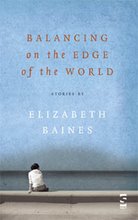
There's a serious side to this, though, of course. The reason Salt are running this sale is that they need an emergency injection of cash if they are to keep going. The Just One Book campaign started last summer continues, and as a Salt author I am asking you once more to do that: buy just one Salt book - and brighten up your life into the bargain! If you want prose, you could buy one of my own Salt books: Balancing on the Edge of the World, a story collection that lifts the lid on some of the untold stories in our everyday lives, or my novel Too Many Magpies, on the surface a spooky tale of adultery but on the deeper level a study of our present sense of the precariousness of the world, and of the ways in which we think. (If you've got them already, why not buy one for a relative or friend - Too Many Magpies, since motherhood is one of its themes, would make a great Mothers' Day present!) Or you could buy a book by one of the great short story writers I feel privileged to be published alongside: Carys Davies, Matthew Licht, Paul Magrs, Tania Hershman, Vanessa Gebbie, Nuala Ni Chonchuir, Chrissie Gittins, Padrika Tarrant, and on... Or you could buy Salt's guide to the art of the short story, Short Circuit.
Times are hard, the publishing industry has changed, and all but the most commercial sectors of publishing are suffering. Last night I attended a meeting of north-west women writers, convened by the novelist Sherry Ashworth and others with a view to setting up a press to publish fiction by women in the north west, in response to these changes. The reality of those changes was illustrated by the fact that there were several writers present, both prize-winning and mass-market, who were now facing difficulties in publishing their latest books or had moved to small presses. Basically the feeling is now that writers must do it for themselves.
A propos this, my fellow Salt author Nuala Ni Chonchuir writes an interesting post on the subject of self-promotion by authors. I have come across criticisms on the web of authors who ceaselessly promote their own books, and I have to say that, although I try to do it conscientiously, it still goes against the grain for me, but the fact is that it's now an absolute necessity - most of all for authors with small presses, but also it seems now for most authors with big publishers. I'm sure that Vanessa Gebbie won't mind me replicating here her comment on Nuala's post:
Cross-posted to my author blog.
There's a serious side to this, though, of course. The reason Salt are running this sale is that they need an emergency injection of cash if they are to keep going. The Just One Book campaign started last summer continues, and as a Salt author I am asking you once more to do that: buy just one Salt book - and brighten up your life into the bargain! If you want prose, you could buy one of my own Salt books: Balancing on the Edge of the World, a story collection that lifts the lid on some of the untold stories in our everyday lives, or my novel Too Many Magpies, on the surface a spooky tale of adultery but on the deeper level a study of our present sense of the precariousness of the world, and of the ways in which we think. (If you've got them already, why not buy one for a relative or friend - Too Many Magpies, since motherhood is one of its themes, would make a great Mothers' Day present!) Or you could buy a book by one of the great short story writers I feel privileged to be published alongside: Carys Davies, Matthew Licht, Paul Magrs, Tania Hershman, Vanessa Gebbie, Nuala Ni Chonchuir, Chrissie Gittins, Padrika Tarrant, and on... Or you could buy Salt's guide to the art of the short story, Short Circuit.
Times are hard, the publishing industry has changed, and all but the most commercial sectors of publishing are suffering. Last night I attended a meeting of north-west women writers, convened by the novelist Sherry Ashworth and others with a view to setting up a press to publish fiction by women in the north west, in response to these changes. The reality of those changes was illustrated by the fact that there were several writers present, both prize-winning and mass-market, who were now facing difficulties in publishing their latest books or had moved to small presses. Basically the feeling is now that writers must do it for themselves.
A propos this, my fellow Salt author Nuala Ni Chonchuir writes an interesting post on the subject of self-promotion by authors. I have come across criticisms on the web of authors who ceaselessly promote their own books, and I have to say that, although I try to do it conscientiously, it still goes against the grain for me, but the fact is that it's now an absolute necessity - most of all for authors with small presses, but also it seems now for most authors with big publishers. I'm sure that Vanessa Gebbie won't mind me replicating here her comment on Nuala's post:
I was at a large writer's convention last weekend, with talks from some senior figures in the publishing world - (Get Writing 2010 - and a speaker in question was the MD of Hachette) - it was a wake-up call for anyone in the audience who thought that all you had to do was get a book accepted and then sit back!
Cross-posted to my author blog.
Sunday, February 21, 2010
The Pinch of Salt Rule for Writing.
Interesting that some of the 10 Rules for Writing offered by some of the authors in The Guardian tell you rather about those writers themselves.
Anne Enright's first rule, for instance: The first twelve years are the worst. Hm, obvious she's never been a mid-list author out on her ear.
Hilary Mantel's very first rule: Get an accountant. For god's sake, has she never been at the writing stage where you can't f***ing afford an accountant?
Interesting how conflicting the advice is, Atwood and others saying it's no use plodding on if something's going stale, someone (can't remember who) saying stick at it.
All relative, innit? And perhaps it's not surprising that it's the writers I like best with whom I mostly agree: Atwood, Enright (in spite of her opener), AL Kennedy, Joyce Carol Oates among others.
Anne Enright's first rule, for instance: The first twelve years are the worst. Hm, obvious she's never been a mid-list author out on her ear.
Hilary Mantel's very first rule: Get an accountant. For god's sake, has she never been at the writing stage where you can't f***ing afford an accountant?
Interesting how conflicting the advice is, Atwood and others saying it's no use plodding on if something's going stale, someone (can't remember who) saying stick at it.
All relative, innit? And perhaps it's not surprising that it's the writers I like best with whom I mostly agree: Atwood, Enright (in spite of her opener), AL Kennedy, Joyce Carol Oates among others.
Tuesday, February 16, 2010
Jewish Book Week
 I'm delighted to have been asked to blog for Jewish Book Week (27th February-27th March), and I'm covering two sessions on Sunday 28th in which I must say I'm immensely interested. After my recent visit to Theresiestadt, there was no way that I was going to miss the session at 11 am when Ben Barkow and Klaus Leist will read from and talk about the book they have edited, Philipp Manes' account of his experiences in the camp, written in the last days and broken off in mid-sentence when he was deported to Auschwitz. And at 2 pm I'm covering 'A Beginner's Guide to Jews on the Edge', a discussion between Will Self and Adam Thirwell on 'the many possible manifestations of Judaism and whether any of these semitic permutations actually matters'.
The week looks really interesting, other speakers including Chief Rabbi Jonathan Sacks, Lionel Shriver, Anne Fine, Rebecca Goldstein and Stephen Pinker. Probably a good idea to book, which you can do here. My colleague, author and blogger Sue Guiney, will also be blogging JBW.
Sunday, February 14, 2010
Writers Are the New Proles
Foad Mardukhi alerts me to an article by Leon Wieseltier, the literary editor of The New Republic, which spells out the pauperisation of writers and their loss of status in our new internet culture.
And, although I don't usually respond to requests to publicize things - once you start, you're never finished, and this is a commentary and not a listings blog - I've given in for once:
The Juniper Institute is an American summer writing conference hosted by the UMass-Amherst MFA program (www.umass.edu/juniperinstitute), giving new/emerging writers the chance to study with a stellar array of more established poets and fictionists. The April 1 deadline for scholarship applications to the 2010 Juniper Summer Writing Institute is fast approaching! From June 20-26, poets and writers will gather at the University of Massachusetts Amherst to explore the creative process and advance their craft. Faculty members Charles D’Ambrosio, Mark Doty, Noy Holland, Paul Lisicky, Dara Wier, and Matthew Zapruder will offer workshops in poetry, fiction, and memoir. Writers in residence (including James Tate, Joy Williams, and Thomas Sayers Ellis) will give readings, lead craft sessions, and participate in Q&As. For application forms and more information, visit http://www.umass.edu/juniperinstitute. Workshops fill quickly, so applicants are encouraged to submit their materials soon.
And, although I don't usually respond to requests to publicize things - once you start, you're never finished, and this is a commentary and not a listings blog - I've given in for once:
The Juniper Institute is an American summer writing conference hosted by the UMass-Amherst MFA program (www.umass.edu/juniperinstitute), giving new/emerging writers the chance to study with a stellar array of more established poets and fictionists. The April 1 deadline for scholarship applications to the 2010 Juniper Summer Writing Institute is fast approaching! From June 20-26, poets and writers will gather at the University of Massachusetts Amherst to explore the creative process and advance their craft. Faculty members Charles D’Ambrosio, Mark Doty, Noy Holland, Paul Lisicky, Dara Wier, and Matthew Zapruder will offer workshops in poetry, fiction, and memoir. Writers in residence (including James Tate, Joy Williams, and Thomas Sayers Ellis) will give readings, lead craft sessions, and participate in Q&As. For application forms and more information, visit http://www.umass.edu/juniperinstitute. Workshops fill quickly, so applicants are encouraged to submit their materials soon.
Friday, February 12, 2010
Who'd Be a Writer?
Apologies for the recent absence from this blog, which was due to much busy-ness. One of the very many things which preoccupied me was a visit to a private secondary school to conduct workshops with younger classes and to talk to upper school classes about the whole business of being a writer. My readers may be interested to know that the matter of greatest concern for the future guardians of our culture appeared to be that of Making a Living, and achieved its best expression when I addressed the whole of Year 10 in the hall at the end of the day:
Boy 1: What's your best-selling book?
Boy 2: How many of it have you sold?
Response of shock at the figure of 3,000 (they opened by asking me if I like Twilight, and know that it has sold in the millions), and I explain that I write literary and not commercial fiction, and that it's not on the whole possible to make a living out of literary fiction.
Boy 3 (puzzled): But what's the difference between literary and commercial fiction?
I explain, essentially that literary fiction doesn't obey the expected formulae, isn't simply entertainment.
Boy 4 (a bit incredulous): So why don't you write commercial fiction that sells?
I explain that though I may sometimes have thought of it, basically I can't and don't want to: I'm looking for the truth rather than just to entertain, and I'm constitutionally incapable of doing the expected thing (adding that I was always in trouble at school, which raises a titter).
Boy 4 (really incredulous): How do you buy things?
I explain that I do other things for money such as talks like the one I am giving now.
Boy 5: So isn't it just a hobby then, rather than a job?
Hm. Not so sure I fired up that particular lot to be writers...
Boy 1: What's your best-selling book?
Boy 2: How many of it have you sold?
Response of shock at the figure of 3,000 (they opened by asking me if I like Twilight, and know that it has sold in the millions), and I explain that I write literary and not commercial fiction, and that it's not on the whole possible to make a living out of literary fiction.
Boy 3 (puzzled): But what's the difference between literary and commercial fiction?
I explain, essentially that literary fiction doesn't obey the expected formulae, isn't simply entertainment.
Boy 4 (a bit incredulous): So why don't you write commercial fiction that sells?
I explain that though I may sometimes have thought of it, basically I can't and don't want to: I'm looking for the truth rather than just to entertain, and I'm constitutionally incapable of doing the expected thing (adding that I was always in trouble at school, which raises a titter).
Boy 4 (really incredulous): How do you buy things?
I explain that I do other things for money such as talks like the one I am giving now.
Boy 5: So isn't it just a hobby then, rather than a job?
Hm. Not so sure I fired up that particular lot to be writers...
Monday, January 18, 2010
Channel 4's Book Club
So you decide to have a television Book Club. Book Club. Note the precise phrase. For we all know, don't we, what book clubs are like? No one's really there for the books, are they? They're there for the wine, for the chat about house prices and bags and shoes, and the chosen book is just an excuse. So this is what we'll do for a television book club. We can't have wine, of course, well, not beyond the Green Room, but we can have the intoxication of celebrity, a very likeable fashion guru who confesses to read far less than he'd like, a couple of well-loved comedians (one of each sex), and a couple of good-looking actors (one of each sex again) who will at least be able to act looking interested and intelligent even if it's a bit obvious they're acting and even if the female ex-Footballers' Wives Laila Rouass never manages to say anything (and the camera will be able to focus strategically up the thighs of her crossed legs).
Stick them all randomly on sofas (that's how book clubs happen, don't they - people just turn up and plonk down on the nearest seat). Don't bother briefing them, that would be really unrealistic: in book clubs people just say the first thing that comes into their heads, and the biggest personalities get to say the most (although rarely the most considered). Make the main focus of your programme the writer of a celebrity memoir. He will be the focus, even though the billed focus is a novel. He will be the focus not only because the other celebrities are more excited by his presence than the novel, and because he and the female comedian immediately start a basically private but very entertaining bit of sparring (in which she also gets to plug her own celebrity memoir) (this is the sort of thing that happens in book clubs, isn't it?) but because you have allocated the greatest amount of time on the programme to this item. And the questioning is not only entirely adulatory, but focused not so much on his book but on his life. Well, you get a lot of that in books clubs, don't you, people going on about life rather than books, and, let's face it, who after all really wants dry old literary stuff - that's just gonna put people off books, isn't it?
So let's put the serious bookish bit off a bit more by an interview with a mega-selling chick-lit author who can provide some glamour and success and riches and stuff, and then by having a nice little lark, a film of a reporter rushing around Spitalfields with strange words stuck on big cards like street signs, getting charmingly engaged with the public (and hope it doesn't seem embarrassingly forced).
Well, it's getting towards the end of the programme now, so better bite the bullet and have a bit of a film of the serious novel's author talking intelligently about it (though sweeten the pill with some lurid spooky photography).
And finally, with five or fewer minutes to go, the promised discussion, which you have billed as the point of programme. The fashion guru says without elaboration that he doesn't go for Gothic stuff. The female comedian looks a bit uninterested in this, and fails to give an opinion of her own. Well, that's what it's like in book clubs, isn't it? No one's obliged to say anything, after all. Others make a few murmurs, and the general impression is that no one likes it very much. Well, that's how it goes: people in book clubs are so often far more interested in their own egos than books.
And that's it. Book club over. Really authentic. Brilliant.
Stick them all randomly on sofas (that's how book clubs happen, don't they - people just turn up and plonk down on the nearest seat). Don't bother briefing them, that would be really unrealistic: in book clubs people just say the first thing that comes into their heads, and the biggest personalities get to say the most (although rarely the most considered). Make the main focus of your programme the writer of a celebrity memoir. He will be the focus, even though the billed focus is a novel. He will be the focus not only because the other celebrities are more excited by his presence than the novel, and because he and the female comedian immediately start a basically private but very entertaining bit of sparring (in which she also gets to plug her own celebrity memoir) (this is the sort of thing that happens in book clubs, isn't it?) but because you have allocated the greatest amount of time on the programme to this item. And the questioning is not only entirely adulatory, but focused not so much on his book but on his life. Well, you get a lot of that in books clubs, don't you, people going on about life rather than books, and, let's face it, who after all really wants dry old literary stuff - that's just gonna put people off books, isn't it?
So let's put the serious bookish bit off a bit more by an interview with a mega-selling chick-lit author who can provide some glamour and success and riches and stuff, and then by having a nice little lark, a film of a reporter rushing around Spitalfields with strange words stuck on big cards like street signs, getting charmingly engaged with the public (and hope it doesn't seem embarrassingly forced).
Well, it's getting towards the end of the programme now, so better bite the bullet and have a bit of a film of the serious novel's author talking intelligently about it (though sweeten the pill with some lurid spooky photography).
And finally, with five or fewer minutes to go, the promised discussion, which you have billed as the point of programme. The fashion guru says without elaboration that he doesn't go for Gothic stuff. The female comedian looks a bit uninterested in this, and fails to give an opinion of her own. Well, that's what it's like in book clubs, isn't it? No one's obliged to say anything, after all. Others make a few murmurs, and the general impression is that no one likes it very much. Well, that's how it goes: people in book clubs are so often far more interested in their own egos than books.
And that's it. Book club over. Really authentic. Brilliant.
Sunday, January 10, 2010
Reading and the masses
Robert McCrum can't understand why, when book programmes are just about the cheapest to make and there's such interest in book festivals despite the fact that they're not even much hyped, there are in fact hardly any books programmes on TV.
Saturday, January 02, 2010
Down with the internet - or at least off into part of the day!
Many bloggers are announcing their New Year resolutions, which is something I usually only do in the privacy of my journal: yes, I still have one of those old-fashioned black-and-red hardback A4 books in which I record by hand my writing thoughts, though I must say I write in it far less often nowadays since the internet has swallowed up so much of my time.
And here's the rub. I want to make a resolution to stop using the internet so much, since it has not only eaten into my writing time, but as Tania Hershman has indicated lately, and as David Ulin wrote recently, the presence of the internet in one's life can create a kind of scattering of focus that is entirely antipathetic to the writing of fiction, which for me, and I am sure for most fiction writers, requires a kind of shutting-off into a very personal dream world. It goes without saying that I thoroughly enjoy the social interaction, and the internet has been a stupendous marketing tool for both my recent books, but let's face it, it's like having social get-togethers and sales pitch meetings in your house all day long, and who can write under those circumstances?
But how can I make such a resolution, when the marketing of my books, which come from an independent publisher, depends on my being very much online? Would making such a resolution be the same as making a resolution to stop marketing my books? I'm very much afraid of this, but I guess I'm even more afraid of ending up never writing again.
Later this year (I think - or sometime soon, anyway) Salt will be reprinting the revised edition of my first novel The Birth Machine (which I guess is a bit of a feminist classic - see here [scroll down to Kimberley Osivwemu's entry]), so I'll have to work on promoting that, as well as keeping my other books afloat. But like Tania Hershman, I'm going to try to restrict my time on the internet each day. It will be interesting to see if it's just as effective, and if by being constantly connected I was just wasting time...
I'm posting this across my two blogs, as it seems both very personal to my own writing and a subject of more general literary import.
And here's the rub. I want to make a resolution to stop using the internet so much, since it has not only eaten into my writing time, but as Tania Hershman has indicated lately, and as David Ulin wrote recently, the presence of the internet in one's life can create a kind of scattering of focus that is entirely antipathetic to the writing of fiction, which for me, and I am sure for most fiction writers, requires a kind of shutting-off into a very personal dream world. It goes without saying that I thoroughly enjoy the social interaction, and the internet has been a stupendous marketing tool for both my recent books, but let's face it, it's like having social get-togethers and sales pitch meetings in your house all day long, and who can write under those circumstances?
But how can I make such a resolution, when the marketing of my books, which come from an independent publisher, depends on my being very much online? Would making such a resolution be the same as making a resolution to stop marketing my books? I'm very much afraid of this, but I guess I'm even more afraid of ending up never writing again.
Later this year (I think - or sometime soon, anyway) Salt will be reprinting the revised edition of my first novel The Birth Machine (which I guess is a bit of a feminist classic - see here [scroll down to Kimberley Osivwemu's entry]), so I'll have to work on promoting that, as well as keeping my other books afloat. But like Tania Hershman, I'm going to try to restrict my time on the internet each day. It will be interesting to see if it's just as effective, and if by being constantly connected I was just wasting time...
I'm posting this across my two blogs, as it seems both very personal to my own writing and a subject of more general literary import.
The (Dis)Comfort of the Familiar
In today's Guardian John Dugdale assesses the implications of the 2009 Bestsellers list, which is dominated by genre fiction, and from which literary fiction and non-fiction are largely exiled (can't find a link, I'm afraid):
...there's a narrowing of the range of work that sells in bulk, a sense of the public grasping for novels that will conform to a familiar structure.
Monday, December 14, 2009
How Can You Be Dissident?
Robert McCrum asserts that our contemporary market-driven culture has no room for the dissident writer, and that ' "the habit of art" has become the "addiction of charm" '. His heart's in the right place, and in my view he's absolutely right about the general trend, but the thrust of his argument is to blame writers themselves - he accuses them of 'want[ing] to join the system, not keep it at arm's length', and refers to 'artistic vanity' and 'complacency and an appetite for entertaining' which leads to a 'sapping [of] the instinct to ask awkward questions of the status quo.'
But this overlooks the power of a system within which it is just not possible for the dissident or avant-garde author to operate. If authors are 'fearful of risk', as he says they are, it is only because in this day and age your agent or editor will simply turn you down if you're 'not commercial enough'. McCrum says authors nowadays just wanna belong, but maybe it's more a case of not belonging meaning not being published at all.
But this overlooks the power of a system within which it is just not possible for the dissident or avant-garde author to operate. If authors are 'fearful of risk', as he says they are, it is only because in this day and age your agent or editor will simply turn you down if you're 'not commercial enough'. McCrum says authors nowadays just wanna belong, but maybe it's more a case of not belonging meaning not being published at all.
Saturday, December 12, 2009
Women and Writing
I have more than I can possibly settle down to say about Rachel Cusk's Guardian article on women and writing, and the way it relates to my own writing experience - on a weekend, that is, when I'm gearing up for builders, meetings, another trip to London, pre-Christmas and Christmas visitors and, ironically, trying to find time even to get back into my room of my own to actually write (and realizing that December, which I had planned to set aside for a new story, is in all practical ways nearly over). Maybe I'll write about the article soon (on the train, perhaps, though laptopping on those Pendolinos makes me trainsick). Suffice for the present to say that she rang a lot of bells for me, and I'm still ringing...
Friday, December 11, 2009
Ten Awful Truths About Publishing.
Enough to make you give up writing altogether. Thanks (or not) to Eva Ulian.
Women Writers and the Short Story
Sarah Crown ponders the recent successes of female writers with the short story, and concludes:
Whatever the reason, their current success has the welcome effect of reminding us that great writing doesn't have to be set on the grand scale.
Wednesday, December 09, 2009
Selling lit fic to Waterstone's
As I write I am in Waterstone's Gower St again, where on November 16th Verona kindly ordered a copy of my novel Too Many Magpies. When I wrote about this , Salt's Chris Hamilton-Emery explained that bookshops rarely re-order even if they do sell such writer-motored orders, and David Knowles of Two Ravens Press questioned that they were even really ordered in the first place:
Do you know, I feel too weary to ask...
But the real value of your experiment will come if you ever manage to find out how many of those 'Magpies' actually got ordered after you left - and, more importantly, how many have come home to roost in 3 or 4 month's time.Well, I have to report that there is no copy of Too Many Magpies here on the fiction shelves. So was it not really ordered? Or did they send it back double-quick, or did it sell, and it hasn't been replaced?
Do you know, I feel too weary to ask...
The BBC National Short Story Award
Yesterday afternoon I managed to catch up with the BBC National Short Short Award on the BBC website, where podcasts of four of the five selected stories remained. Kate Clanchy's winning story, The Not-Dead and the Saved was certainly very impressive and extremely moving, and I'm not surprised that it won both this and the V S Pritchett awards. It's interesting that the press-release story stresses the wonder of the winner being a poet with only the third short story she has written (the implication being that she is not practised at the form). It seems to me that that's no wonder at all: short stories, as I'm frequently saying, are closer to poetry than novels, and this short story bears all the hallmarks of that: a linguistic attention and the structural and verbal patterning at which Clanchy as a poet is supremely practised, and it is these elements which create the control of emotion and tone for which this story has been rightly praised, and make it so moving.
The other stories were prosey by comparison, I thought. Sara Maitland's Moss Witch was an interesting choice as runner-up: it's typical of Maitland's oevre - ecological and feminist with a good dollop of fairytale quality. The judging panel were of course female, which might explain this, though I do wonder if it was the ecological theme that did it. It felt a little forced, even clunky, at times, I thought, but was certainly a most interesting concept, and memorable as so much of Maitland's writing is. Lionel Shriver's Exchange Rates was competent, indeed extremely well-oiled, but pretty much a traditional New-Yorker type story, I thought, and Jane Rogers' Hitting Trees With Sticks betrayed her drama background by being a dramatic monologue narrated by a woman beginning to suffer senility - a difficult feat to pull off with psychological authenticity, as the authorial voice was more knowing than the narrative voice, and I have to say I wasn't absolutely sure it worked - or maybe I was just put off by Julia McKenzie's reading which rendered the narrator rather irritating.
The other stories were prosey by comparison, I thought. Sara Maitland's Moss Witch was an interesting choice as runner-up: it's typical of Maitland's oevre - ecological and feminist with a good dollop of fairytale quality. The judging panel were of course female, which might explain this, though I do wonder if it was the ecological theme that did it. It felt a little forced, even clunky, at times, I thought, but was certainly a most interesting concept, and memorable as so much of Maitland's writing is. Lionel Shriver's Exchange Rates was competent, indeed extremely well-oiled, but pretty much a traditional New-Yorker type story, I thought, and Jane Rogers' Hitting Trees With Sticks betrayed her drama background by being a dramatic monologue narrated by a woman beginning to suffer senility - a difficult feat to pull off with psychological authenticity, as the authorial voice was more knowing than the narrative voice, and I have to say I wasn't absolutely sure it worked - or maybe I was just put off by Julia McKenzie's reading which rendered the narrator rather irritating.
Sunday, December 06, 2009
The Physical Act of Writing and the Psychological Problem
Tim Adams asks whether the art of great writing can survive the advent of the e-book. He works towards an argument (I think) that computers and our constant on-line status have created a kind of solipsistic self-centred mentality which may make us unable to appreciate extended arguments or concentrate on the great social novels which are at this moment being loaded onto e-books.
Well, maybe my head has already been turned to mush via all this stuff, because for much of this article I don't find his logic easy to follow. Adams begins by suggesting that the problem is based in 'different understandings of the physicality of the act of writing and the act of reading'. One assumes - or I did - that he is referring to different understandings about each of these things. However, he goes on to contrast an act of writing with an act of reading [* added: or to be more precise, elements surrounding an act of reading]: the fact that Don DeLillo still writes his novels on a manual typewriter with the fact of the new Classic Book Collection created for the Nintendo DS - and it's not clear to me from his argument what is the precise nature of this contrast or what it signifies. DeLillo, he reports, needs the physicality of his manual typewriter because he thinks of writing as sculpting: "I have a sculptor's sense of the words I'm making." This I can understand - as a writer I know that sense of a physical, bodily relationship with words in general and with the sentences you're making - and thus far I can follow. But then Adams says that in describing Shakespeare 'as an "iconic author" of "must-read novels" ... [the Nintendo makers] betray some of the side-effects of their product - it treats all writing as if it were simply text, content, something else to scroll on a screen to suit your mood'.
This begs so many questions I hardly know where to begin. Firstly, although by describing Shakespeare as the author of novels the makers or their copywriters are betraying a pretty general cultural ignorance, I'm not sure that they are betraying anything whatever about an attitude to the physical act of writing or any other aspect of it, and this is hardly their concern. Their concern is quite properly with 'writing' in the sense of text - that product which is the goal to be reached via the physical act of writing and which even writers like DeLillo will acknowledge as separate from it - and I'm not clear what there is to complain about in this. Apart from which, text and content are never simple, they are complexly cultural. Perhaps in the last phrase -'something else to scroll onto a screen to suit your mood' - Adams' objection becomes clearer: he feels that the medium of the e-book diminishes the cultural character and impact of the text. However, it seems to me that this is a question not of how we write, but how we read.
He goes on to discuss interestingly our developing relationship with the computer, and the writing we do use it for in the form of blogging and social networking, which he sees, as I say, as increasingly solipsistic rather than truly social. (We can be fundamentally anonymous on the internet, and we are not subject to editorial correction, so that our writing on the internet can, I think he is saying, create a form of inward-looking self-aggrandisement.) He then asks: 'What effect might that have on writing itself?' adding that writing on the internet is not subject to the 'rationalities of syntax or argument', and that, constantly logged on, we are losing our capacity the 'think in the real world'.
But social networking on the internet is not the same as the writing of novels any more than writing letters to your friends has ever been the same as writing novels; it's not as if novelists are unable to shift between registers as necessary. Adams' final question gets nearer the nub of the problem for both readers and writers: 'Will anyone who is "always on" have the concentration to read the great social novels?... Will anyone be able to see far enough beyond themselves to write one?' It's a psychological problem, as I discussed earlier this year.
Well, maybe my head has already been turned to mush via all this stuff, because for much of this article I don't find his logic easy to follow. Adams begins by suggesting that the problem is based in 'different understandings of the physicality of the act of writing and the act of reading'. One assumes - or I did - that he is referring to different understandings about each of these things. However, he goes on to contrast an act of writing with an act of reading [* added: or to be more precise, elements surrounding an act of reading]: the fact that Don DeLillo still writes his novels on a manual typewriter with the fact of the new Classic Book Collection created for the Nintendo DS - and it's not clear to me from his argument what is the precise nature of this contrast or what it signifies. DeLillo, he reports, needs the physicality of his manual typewriter because he thinks of writing as sculpting: "I have a sculptor's sense of the words I'm making." This I can understand - as a writer I know that sense of a physical, bodily relationship with words in general and with the sentences you're making - and thus far I can follow. But then Adams says that in describing Shakespeare 'as an "iconic author" of "must-read novels" ... [the Nintendo makers] betray some of the side-effects of their product - it treats all writing as if it were simply text, content, something else to scroll on a screen to suit your mood'.
This begs so many questions I hardly know where to begin. Firstly, although by describing Shakespeare as the author of novels the makers or their copywriters are betraying a pretty general cultural ignorance, I'm not sure that they are betraying anything whatever about an attitude to the physical act of writing or any other aspect of it, and this is hardly their concern. Their concern is quite properly with 'writing' in the sense of text - that product which is the goal to be reached via the physical act of writing and which even writers like DeLillo will acknowledge as separate from it - and I'm not clear what there is to complain about in this. Apart from which, text and content are never simple, they are complexly cultural. Perhaps in the last phrase -'something else to scroll onto a screen to suit your mood' - Adams' objection becomes clearer: he feels that the medium of the e-book diminishes the cultural character and impact of the text. However, it seems to me that this is a question not of how we write, but how we read.
He goes on to discuss interestingly our developing relationship with the computer, and the writing we do use it for in the form of blogging and social networking, which he sees, as I say, as increasingly solipsistic rather than truly social. (We can be fundamentally anonymous on the internet, and we are not subject to editorial correction, so that our writing on the internet can, I think he is saying, create a form of inward-looking self-aggrandisement.) He then asks: 'What effect might that have on writing itself?' adding that writing on the internet is not subject to the 'rationalities of syntax or argument', and that, constantly logged on, we are losing our capacity the 'think in the real world'.
But social networking on the internet is not the same as the writing of novels any more than writing letters to your friends has ever been the same as writing novels; it's not as if novelists are unable to shift between registers as necessary. Adams' final question gets nearer the nub of the problem for both readers and writers: 'Will anyone who is "always on" have the concentration to read the great social novels?... Will anyone be able to see far enough beyond themselves to write one?' It's a psychological problem, as I discussed earlier this year.
Thursday, November 26, 2009
On the Borders of Change
A thoughtful blog by independent Snowbooks' Emma Barnes on the horrible realities of book retail (in response to the denied rumour that Borders is in administration). Here's a snippet:
Truth is, Borders and their sub brand Books Etc have bought hardly anything from us for the whole year. Our current balance with them is about £100. So on the plus side, if they go bust as a result of being in administration, our cash flow will hardly notice and we won't have to write off any debt.Read the whole blog, though: there are also interesting thoughts on Amazon.
Books are Evil
Michael Wolff has had it with books (Thanks to Melville House Publishing via Peter Robins at the Guardian):
If there are still good books, they are largely irrelevant to a form and business that is largely about the creation of the artifact—identifier, symbol, leave-behind, brand enhancer...
...It’s not that there is anything wrong, or at least out of the ordinary, with salesmanship or promotional copy, or with even saying you wrote what your ghostwriter wrote. This is the stuff of speeches, advertising, and testimonials. What’s insidious here is that these forms, which are understood to be insincere and a confection, are now in the guise of a book, which is understood to be genuine and substantial.
And, indeed, people are fooled. And, to the extent that readers are not fooled (and reading just a few paragraphs of these books, if you do read them, ought to raise questions), the form of the book itself is undermined. Books lose value and meaning. Real readers come to understand there are fewer and fewer real books.
Publishers publish fake books because, if you have an “author” who has some larger cause to promote, the publisher gets free promotion. What the publisher has traded for such an abundance of promotion is its own brand. HarperCollins does not really believe Sarah Palin has written a valuable book—or even that it is really a book, not in the way that HarperCollins has historically understood books, or in the way that people have counted on HarperCollins to have understood a book. But, these are desperate times and real books are an increasingly equivocal proposition anyway, so almost all publishers are willing to engage in the strategic mix-up between real books and fake books.
This really isn’t quibbling. We have created a giant system of national agitprop, in which books and the book business have become one of the most effective tools...
...Literate people should boycott books.
Sunday, November 22, 2009
The Reality of Fiction
A post on Katy Evans-Bush's blog reminded me tonight that I hadn't yet read Zadie Smith's Guardian essay on the essay, and I went and did so. I commend to you this article, in which Zadie acknowledges the reality of 'novel-nausea', a sickness with the artificiality of novels in general (which Katy, it seems, strongly shares) and conventional novels in particular, but takes issue with the total condemnation of fiction expressed in a forthcoming book by David Shields.
Funnily enough, I had been intending a blog on this subject myself, ever since I went back, a few weeks ago, to a place where I once lived and which I'd had in mind as one of the 'settings' when I wrote my new novel. Suddenly I found myself in the same street, and suddenly the emotions came back to me that I'd had when I lived there. I hadn't even tried to translate those feelings into the novel, as they weren't appropriate to the story, but it struck me that I never could, not precisely: because those feelings were to do with the inchoate: they belonged to the time before they could be processed, and modified, via logic and the imagination and words.
But then I wondered? Could I? Isn't that my next task as a novelist, to find some way of doing so? To dispense not only with accepted conventions but my own conventions, and write something truly real but nevertheless fictional? Because, like Zadie, I have faith in Werner Herzog's 'ecstatic truth' of fiction.
Funnily enough, I had been intending a blog on this subject myself, ever since I went back, a few weeks ago, to a place where I once lived and which I'd had in mind as one of the 'settings' when I wrote my new novel. Suddenly I found myself in the same street, and suddenly the emotions came back to me that I'd had when I lived there. I hadn't even tried to translate those feelings into the novel, as they weren't appropriate to the story, but it struck me that I never could, not precisely: because those feelings were to do with the inchoate: they belonged to the time before they could be processed, and modified, via logic and the imagination and words.
But then I wondered? Could I? Isn't that my next task as a novelist, to find some way of doing so? To dispense not only with accepted conventions but my own conventions, and write something truly real but nevertheless fictional? Because, like Zadie, I have faith in Werner Herzog's 'ecstatic truth' of fiction.
Saturday, November 21, 2009
On the Theme of Themes
I like this by A L Kennedy on the Guardian books blog, which expresses exactly what I feel about being asked to write stories according to predetermined themes:
I object on principle to unhelpful restrictions of time and subject, because I got into writing at least in part so that no one could tell me what to do or think. I neither like nor thrive upon that kind of interference and it doesn't necessarily help me to grow or develop my capacities. I also don't relish restrictions being placed upon a form which should be able to roam free and express itself as it wishes. Sometimes a subject is an inspiration or chimes with an idea you've already got, but often a magazine, or a newspaper, or a bunch of people who say they want to save the short story will end up constricting imaginative and technical scope and making sure much of what they receive will resemble slightly over-emotional op-ed articles. This doesn't help the uninitiated to think well of the short story. And would anyone phone up a writer and ask them to write a themed novel?I also like Darragh McManus's tribute on the same blog to Margaret Atwood on her 70th birthday, which is a nice counterbalance to Robert McCrum's recent dismissal of the powers of older writers.
Thursday, November 19, 2009
Selling to the Bookshop Chains: How Waterstone's Compares
After the conflicting claims about the way in which Waterstone's deals with literary fiction not backed by big marketing budgets (see Stuart Jeffries versus Waterstone's MD Gerry Johnson and writer and Waterstone's employee Sara Crowley), it's been a bit hard to know what to believe. So, for what it's worth, here's my own experience of visiting branches of the chain bookshops in central London this week, and asking if they would order my new novel, Too Many Magpies (published by independent Salt which doesn't have the resources for big marketing budgets).
Borders, Charing Cross Road. I set foot in this shop with a sinking heart: it doesn't really look like a book shop, more like a W H Smith's, a big gift shop, basically. I approach the information desk with my book and a sheet of information about it, and ask if I can speak to the relevant person. I am given the immediate and unequivocal answer that I need to ring Head Office and swiftly handed the number. I leave the shop, efficiently dispatched.
Foyles. Now this should be more promising: after all, Salt have done a reading here in which I took part. At the information desk I am told by a rakish-looking young man with a beard that the fiction buyer is not available, and I should email him for an appointment. I explain that I'm only in London that day (Tuesday) and the next, and am told that I should still email him and ask for an appointment next day. He adds that this is a very busy period, Christmas. I'm pretty sure I'm being cynically fobbed off, but for the sake of thoroughness, I repair to a cafe and do so. Now, at the time of writing, it's late on Thursday, and I have still had no reply, and of course I am back in Manchester.
Blackwell's, Charing Cross Road. The academic bookshop which you might expect to be interested in serious literature - although of course they probably rely on the academic rather than the general market. This time I can actually speak to the fiction buyer, a nice bearded young man. He hears my spiel, he looks at my book and the information sheet, and the review quotes for my story collection on the back cover. He looks very embarrassed. He is silent. He bites his lip. He says, 'Er...' He is silent once more then he says: 'But will you be getting broadsheet reviews for this?' I say, 'Well, it's certainly been sent out to them for review!' But of course we both know how difficult it is to get reviews nowadays, and the unspoken knowledge swells between us. He starts to go red. He looks as though he'd rather die than be dealing with this. I feel tremendously sorry for him. He bites his lip again, and then he shakes his head. 'I'm sorry,' he says - and I can see he really is - 'but it's so difficult to sell anything that hasn't already had broadsheet reviews.' And that's it. He can't stock my book.
Now 7 branches of Waterstone's:
Waterstone's Trafalgar Square. I'm feeling pretty cynical as I enter this branch, which I imagine caters to passing rather than serious literary trade. But when I speak to Stephen on the front desk, he turns out to be not only one of the fiction buyers, but to know all about Salt, to be really interested in the fact that they have now published a novel (my book), and in my book, and orders two copies on the spot! Wow! Thank you, Stephen!
Waterstone's Gower Street. Once again the first bookseller I speak to, Verona, turns out to be a fiction buyer and orders a copy of my novel there and then. Double wow! This Waterstone's also has a 'small press' section, I notice, in which books by Dedalus and another small press are given a magnificent display. Thank you, Verona!
Waterstone's Covent Garden. Triple wow! Without any ado Gabie, the knowledgable-looking woman on the front desk, orders a copy of my book as I stand there! Thank you, Gabie.
It's the end of the day now and I finish on a high and I'm back in love with Waterstone's.
Waterstone's Oxford Street Plaza. Next day here in the retail heart of London my renewed affection is perhaps inevitably in for a bit of knock. This is a far more commercial-looking branch, 'Best sellers' flagged like mad at the entrance. I must say, though, that the young man I speak to is wonderfully attentive and enthusiastic: he insists on taking me upstairs to the fiction buyer, and all the way up the escalator he asks me about the book and takes it in his hands and strokes it and seems mightily interested and impressed. He introduces me to the fiction buyer and stands by waiting. She is an extremely polite young woman, who tells me most pleasantly but briskly that at this time of the year unless I am a local author or the book has a specifically London connection, they are unable to take it as they can't give it the profile it requires, with face-out displays and Staff Recommends. I say that I wouldn't necessarily expect the book to be given a high-profile treatment, but she insists on her point, perhaps understandably, and says that now, in the run up to Christmas, all the Staff Recommends are hardback (my book is a paperback). Maybe I'm being unfair, but now I'm getting the feeling I'm being fobbed off. She does take my information sheet and tells me that in the New Year they'll perhaps look at the possibility again. And the young man insists on taking me downstairs again and all the way to the front door, with almost ostentatious solicitousness, and, maybe I'm completely wrong, but I can't get rid of the feeling that they saw me coming (or at least read my statement on the web that I was coming).
Waterstone's Oxford Street West. This branch is if anything even more commercial. I speak to a young woman who says the fiction buyer has just popped out, she'll go and check. I can hear her reporting my request to a man who comes back and tells me that there are no fiction buyers in the shop today. He says he'll pass my information sheet on to them, and I'm out of the shop in five minutes flat with the complete certainty that nothing will come of it.
Waterstone's Piccadilly. Here in Waterstone's flagship store is the first table I have come across dedicated to collections of single-author short stories, but as far as I can see (in my by now worn-out state), they are all by well-known or classic authors in editions from mainstream publishers (which would appear to make Brighton Waterstone's, with its specialist short story section, something of an exception). The person I speak to is the crime buyer, who says he will deal with me because the general fiction buyer is busy and not available. He looks doubtful. I push my spiel. I point out my nice comment (re my short stories) from ex-Waterstone's Scott Pack. He says, in such a mumble that I have to ask him to repeat it, that they only deal with official reps from publishing houses. I explain that my publishing house doesn't have the resources for an official rep, and then get the feeling that I've thereby condemned myself and my publisher anyway. He takes my information sheet to pass on, but once again it doesn't look in the least promising.
Waterstone's High Holborn. This is the last shop on my list. It's late in the day, dark, I'm exhausted and hungry - I didn't have lunch - and it's a long trek up to High Holborn from Piccadilly. Is it worth it, when Waterstone's has been so disappointing today? But me, I'm like a dog with a bone, I've got to finish this job. I set off for High Holborn. When I get there I find the branch is tiny. The fiction section is miniscule. I say to the young man at the desk: 'Is that your whole fiction section?' Yes, he tells me. 'Well,' I say, hardened and cynical now, 'then there's probably no point my asking if you'll stock my new novel.' He says he'll go and ask James. James comes up. James instantly hits the buttons and orders three copies of my book. I nearly fall off my blistered feet to the floor. Thank you, thank you, James!
Hatchard's, Piccadilly. Before leaving Piccadilly I turned into Hatchard's (owned, like Waterstone's, by HMV). Oh, wow. Here it was, a truly traditional bookshop, oozing the glamour of intellect and of tradition and modernity in collision which I have always associated with bookshops, and for which I think we're all in mourning. Downstairs in the fiction section which was hushed with a kind of lush intellectual expectancy, Margot received me and my book with warm enthusiasm and ordered four copies, the biggest order of all, and told me that she will give it attention and display it face out. Thank you, thank you, Margot.
So what can be concluded? If my experience is anything to go by, the other big chains are a dead loss for no-budget literary fiction, but Hatchard's and some, though not all, of the Waterstone's branches are great. And that Waterstone's just can't be characterized by any single one of its variable branches.
And, for the sake now purely of promotion, here are the branches where I know my new novel is available:
Hatchard's Piccadilly and Waterstone's in Brighton (Thank you Sara!), Trafalgar Square, Gower Street, Covent Garden and High Holborn.
Borders, Charing Cross Road. I set foot in this shop with a sinking heart: it doesn't really look like a book shop, more like a W H Smith's, a big gift shop, basically. I approach the information desk with my book and a sheet of information about it, and ask if I can speak to the relevant person. I am given the immediate and unequivocal answer that I need to ring Head Office and swiftly handed the number. I leave the shop, efficiently dispatched.
Foyles. Now this should be more promising: after all, Salt have done a reading here in which I took part. At the information desk I am told by a rakish-looking young man with a beard that the fiction buyer is not available, and I should email him for an appointment. I explain that I'm only in London that day (Tuesday) and the next, and am told that I should still email him and ask for an appointment next day. He adds that this is a very busy period, Christmas. I'm pretty sure I'm being cynically fobbed off, but for the sake of thoroughness, I repair to a cafe and do so. Now, at the time of writing, it's late on Thursday, and I have still had no reply, and of course I am back in Manchester.
Blackwell's, Charing Cross Road. The academic bookshop which you might expect to be interested in serious literature - although of course they probably rely on the academic rather than the general market. This time I can actually speak to the fiction buyer, a nice bearded young man. He hears my spiel, he looks at my book and the information sheet, and the review quotes for my story collection on the back cover. He looks very embarrassed. He is silent. He bites his lip. He says, 'Er...' He is silent once more then he says: 'But will you be getting broadsheet reviews for this?' I say, 'Well, it's certainly been sent out to them for review!' But of course we both know how difficult it is to get reviews nowadays, and the unspoken knowledge swells between us. He starts to go red. He looks as though he'd rather die than be dealing with this. I feel tremendously sorry for him. He bites his lip again, and then he shakes his head. 'I'm sorry,' he says - and I can see he really is - 'but it's so difficult to sell anything that hasn't already had broadsheet reviews.' And that's it. He can't stock my book.
Now 7 branches of Waterstone's:
Waterstone's Trafalgar Square. I'm feeling pretty cynical as I enter this branch, which I imagine caters to passing rather than serious literary trade. But when I speak to Stephen on the front desk, he turns out to be not only one of the fiction buyers, but to know all about Salt, to be really interested in the fact that they have now published a novel (my book), and in my book, and orders two copies on the spot! Wow! Thank you, Stephen!
Waterstone's Gower Street. Once again the first bookseller I speak to, Verona, turns out to be a fiction buyer and orders a copy of my novel there and then. Double wow! This Waterstone's also has a 'small press' section, I notice, in which books by Dedalus and another small press are given a magnificent display. Thank you, Verona!
Waterstone's Covent Garden. Triple wow! Without any ado Gabie, the knowledgable-looking woman on the front desk, orders a copy of my book as I stand there! Thank you, Gabie.
It's the end of the day now and I finish on a high and I'm back in love with Waterstone's.
Waterstone's Oxford Street Plaza. Next day here in the retail heart of London my renewed affection is perhaps inevitably in for a bit of knock. This is a far more commercial-looking branch, 'Best sellers' flagged like mad at the entrance. I must say, though, that the young man I speak to is wonderfully attentive and enthusiastic: he insists on taking me upstairs to the fiction buyer, and all the way up the escalator he asks me about the book and takes it in his hands and strokes it and seems mightily interested and impressed. He introduces me to the fiction buyer and stands by waiting. She is an extremely polite young woman, who tells me most pleasantly but briskly that at this time of the year unless I am a local author or the book has a specifically London connection, they are unable to take it as they can't give it the profile it requires, with face-out displays and Staff Recommends. I say that I wouldn't necessarily expect the book to be given a high-profile treatment, but she insists on her point, perhaps understandably, and says that now, in the run up to Christmas, all the Staff Recommends are hardback (my book is a paperback). Maybe I'm being unfair, but now I'm getting the feeling I'm being fobbed off. She does take my information sheet and tells me that in the New Year they'll perhaps look at the possibility again. And the young man insists on taking me downstairs again and all the way to the front door, with almost ostentatious solicitousness, and, maybe I'm completely wrong, but I can't get rid of the feeling that they saw me coming (or at least read my statement on the web that I was coming).
Waterstone's Oxford Street West. This branch is if anything even more commercial. I speak to a young woman who says the fiction buyer has just popped out, she'll go and check. I can hear her reporting my request to a man who comes back and tells me that there are no fiction buyers in the shop today. He says he'll pass my information sheet on to them, and I'm out of the shop in five minutes flat with the complete certainty that nothing will come of it.
Waterstone's Piccadilly. Here in Waterstone's flagship store is the first table I have come across dedicated to collections of single-author short stories, but as far as I can see (in my by now worn-out state), they are all by well-known or classic authors in editions from mainstream publishers (which would appear to make Brighton Waterstone's, with its specialist short story section, something of an exception). The person I speak to is the crime buyer, who says he will deal with me because the general fiction buyer is busy and not available. He looks doubtful. I push my spiel. I point out my nice comment (re my short stories) from ex-Waterstone's Scott Pack. He says, in such a mumble that I have to ask him to repeat it, that they only deal with official reps from publishing houses. I explain that my publishing house doesn't have the resources for an official rep, and then get the feeling that I've thereby condemned myself and my publisher anyway. He takes my information sheet to pass on, but once again it doesn't look in the least promising.
Waterstone's High Holborn. This is the last shop on my list. It's late in the day, dark, I'm exhausted and hungry - I didn't have lunch - and it's a long trek up to High Holborn from Piccadilly. Is it worth it, when Waterstone's has been so disappointing today? But me, I'm like a dog with a bone, I've got to finish this job. I set off for High Holborn. When I get there I find the branch is tiny. The fiction section is miniscule. I say to the young man at the desk: 'Is that your whole fiction section?' Yes, he tells me. 'Well,' I say, hardened and cynical now, 'then there's probably no point my asking if you'll stock my new novel.' He says he'll go and ask James. James comes up. James instantly hits the buttons and orders three copies of my book. I nearly fall off my blistered feet to the floor. Thank you, thank you, James!
Hatchard's, Piccadilly. Before leaving Piccadilly I turned into Hatchard's (owned, like Waterstone's, by HMV). Oh, wow. Here it was, a truly traditional bookshop, oozing the glamour of intellect and of tradition and modernity in collision which I have always associated with bookshops, and for which I think we're all in mourning. Downstairs in the fiction section which was hushed with a kind of lush intellectual expectancy, Margot received me and my book with warm enthusiasm and ordered four copies, the biggest order of all, and told me that she will give it attention and display it face out. Thank you, thank you, Margot.
So what can be concluded? If my experience is anything to go by, the other big chains are a dead loss for no-budget literary fiction, but Hatchard's and some, though not all, of the Waterstone's branches are great. And that Waterstone's just can't be characterized by any single one of its variable branches.
And, for the sake now purely of promotion, here are the branches where I know my new novel is available:
Hatchard's Piccadilly and Waterstone's in Brighton (Thank you Sara!), Trafalgar Square, Gower Street, Covent Garden and High Holborn.
Saturday, November 14, 2009
Waterstone's Response
Gerry Johnson, managing director of Waterstone's, responds to Stuart Jeffries' Tuesday Guardian article, and insists that Waterstone's is still passionate about books, and intent on making sure that 'writers get to write the books they want, and readers can enjoy the books they want to read'.
This is a most heartwarming thing to read, and I am very glad indeed if the worries of publishers and writers turn out to be unfounded (in relation to Waterstone's at any rate). However, Johnson needs to make a better argument to reassure me.
He says that Waterstone's buyers picked out Aravind Adiga's The White Tiger and Sadie Jones's The Outcast 'before they received any media or awards attention.' Well, The White Tiger comes from independent Atlantic, so this is good. But Sadie Jones's debut is well known to have been 'hotly tipped', so the odds are that its powerful publisher, Harper, awarded it a fair-sized marketing budget which must have included buying attention from bookshops.
He refutes Jeffries' statement that Waterstone's is a place where 'you're invited to buy as much as possible and then shove off' with the vague statement that the stores are 'hugely inviting'. Hm, maybe W has changed since I last went there, but the alternative possibility is that Johnson believes that the sight of rows and rows of the latest bestseller face out like slabs of marg is inviting, in which case he rather undermines his own point: such a sight can be inviting only to the reader happy to be marketed the latest commodity. (I suppose it's also an inviting sight to the marketer.)
In addition, he says, the shops 'give people the opportunity to meet writers they love'. Now that's an interesting statement. Which writers is he talking about? People can only love the writers they know about, of course, and they are more likely to know about the ones the bookshops are pushing. So which writers is W pushing (and inviting to read)? And that phrase 'the writers they love' has too much of the ring of crowd-pleasing and the lowest common denominator for comfort.
Similarly with the 'countless reading groups' he says W runs: to be convinced that they are any more than cynical marketing exercises we would need to know that these reading groups read books other than those with front-table budgets behind them.
Jeffries weakened his argument with his choice of vocabulary, I think, when he made a plea for bookshops to be more like 'old-fashioned reading lounges'. But Johnson's rebuff is very telling. 'Our customers' needs are different to those of shoppers a century ago', he says. 'Our industry must look to the future and adapt to changes in demand, taste and technology.' Again, he fails to define. We must work out those customer 'needs', 'demand' and 'taste' from the context: that customers don't want to hang around browsing any more, and are thus no longer interested in exploring and making their own choices, but in simply purchasing those books on ready display, or those they know about before they set foot in a bookstore, and which, mostly, they know of only because of big marketing budgets. Above all, this statement appears to prove Jeffries' main point that bookshops have relinquished their role of 'creat[ing] demand for books worth reading', and now respond solely to a commercial imperative. And as for that word 'industry': well, I know we use it for the creative businesses all the time, especially in the media, but one wonders if in the context it's especially telling.
This is a most heartwarming thing to read, and I am very glad indeed if the worries of publishers and writers turn out to be unfounded (in relation to Waterstone's at any rate). However, Johnson needs to make a better argument to reassure me.
He says that Waterstone's buyers picked out Aravind Adiga's The White Tiger and Sadie Jones's The Outcast 'before they received any media or awards attention.' Well, The White Tiger comes from independent Atlantic, so this is good. But Sadie Jones's debut is well known to have been 'hotly tipped', so the odds are that its powerful publisher, Harper, awarded it a fair-sized marketing budget which must have included buying attention from bookshops.
He refutes Jeffries' statement that Waterstone's is a place where 'you're invited to buy as much as possible and then shove off' with the vague statement that the stores are 'hugely inviting'. Hm, maybe W has changed since I last went there, but the alternative possibility is that Johnson believes that the sight of rows and rows of the latest bestseller face out like slabs of marg is inviting, in which case he rather undermines his own point: such a sight can be inviting only to the reader happy to be marketed the latest commodity. (I suppose it's also an inviting sight to the marketer.)
In addition, he says, the shops 'give people the opportunity to meet writers they love'. Now that's an interesting statement. Which writers is he talking about? People can only love the writers they know about, of course, and they are more likely to know about the ones the bookshops are pushing. So which writers is W pushing (and inviting to read)? And that phrase 'the writers they love' has too much of the ring of crowd-pleasing and the lowest common denominator for comfort.
Similarly with the 'countless reading groups' he says W runs: to be convinced that they are any more than cynical marketing exercises we would need to know that these reading groups read books other than those with front-table budgets behind them.
Jeffries weakened his argument with his choice of vocabulary, I think, when he made a plea for bookshops to be more like 'old-fashioned reading lounges'. But Johnson's rebuff is very telling. 'Our customers' needs are different to those of shoppers a century ago', he says. 'Our industry must look to the future and adapt to changes in demand, taste and technology.' Again, he fails to define. We must work out those customer 'needs', 'demand' and 'taste' from the context: that customers don't want to hang around browsing any more, and are thus no longer interested in exploring and making their own choices, but in simply purchasing those books on ready display, or those they know about before they set foot in a bookstore, and which, mostly, they know of only because of big marketing budgets. Above all, this statement appears to prove Jeffries' main point that bookshops have relinquished their role of 'creat[ing] demand for books worth reading', and now respond solely to a commercial imperative. And as for that word 'industry': well, I know we use it for the creative businesses all the time, especially in the media, but one wonders if in the context it's especially telling.
Tuesday, November 10, 2009
The End for Writers
Stuart Jeffries examines How Waterstone's killed publishing. So great is the stranglehold of the book chains over publishers that he can't get any publishers to talk openly about the situation. Agent Bill Hamilton tells him that "They fear speaking out about how their books are being sold." Hamilton, a man who should know, tells us instead:
"There's been a slow bonfire of literary authors in the last 18 months," says Hamilton. "Publishers are sending out to pasture established literary novelists because they realise they aren't going to be sold by the chains. The complaint now from publishers is that most of their quality books hardly get a look in at all"
Sunday, November 08, 2009
Old Authors: Shut Up
Same old story from Robert McCrum as he adds fuel to the ageism of our literary culture once again. (It's always the same old story, Observer, today.) Old authors ought to shut up, is his basic message, pointing to the thinness of Roth's latest novel, the disappointment of Nabokov's recently revealed last, and the fact that Doris Lessing is remembered for the novels she wrote in her forties rather than her latest, written at 87 - and the fact that Shakespeare hung up his quill before he was 50, another aspect, according to McCrum, of his genius. McCrum rather shoots himself in the foot again, though, with his finger-wagging retort to Tolstoy's avowal, expressed at the age of 79, not to be silent: that Tolstoy produced his last 'novel of any consequence' at the tender age of 72...
Edited in: This, ironically, in an edition of the review which leads with an appreciation by Tim Adams of Alan Bennett and the cover story strapline: At 75, with a masterly new play on stage, are we finally seeing the true Alan Bennett?
Edited in: This, ironically, in an edition of the review which leads with an appreciation by Tim Adams of Alan Bennett and the cover story strapline: At 75, with a masterly new play on stage, are we finally seeing the true Alan Bennett?
Wednesday, November 04, 2009
Same old
Joe Queenan is sick of the repetition in film which current marketing practice has created. (They liked this, so let's give them another.) Most of the films he mentions, though, are populist, and while many of us deplore the blanket application of such marketing philosophy to all films and books, including the serious and 'literary', I only have to haul my ex-mother-in-law before you once again to indicate that, when it comes to populist culture, the marketers have got it right. Picture her once more: rotund, leaning back in the soft chair by the fire, feet up on the side of the fireplace, Mills and Boon in her hand, utterly engrossed for two solid hours. Then she gets to the end and snaps the book shut with great satisfaction, heaves herself, knees spread, from the chair, stops half-way up with a thought and then says, matter-of-fact: 'Mmm, think I might have read that one before!'
Sunday, November 01, 2009
Definitive versions?
Today in the Observer Tim Adams reviews Beginners, the unexpurgated version of Raymond Carver's second story collection, published by Gordon Lish as What We Talk About When We Talk About Love. He finds the differences startling, but that the 'new' version is nevertheless 'an extraordinary book, more generous and rambling in tone than its distilled counterpart', more nuanced, yet 'still recognizably Carver's'.
Struck by the incongruity of that last thought - presumably that we should be looking for, and hoping for, what we think of as Carver's 'real' voice in his more original work - Adams muses most interestingly on the power and practice of editors:
The Carver-Lish debate and these Granta revelations focus on the issue of prose style. My experience with my first novel was to have to submit to a change of structure - simple but radical: chapter four was moved to the beginning - specifically designed to create a very different type of novel (as I indicated recently) which would appeal to a very different market. As a new young writer I felt I didn't have a leg to stand on in this matter, but I was never happy with the result, and later republished the book with its original structure restored. Adams predicts that the publication of Beginners will start a trend in this direction - 'the author's cut'.
(If anyone is interested, the revised edition of my first novel The Birth Machine - The Author's Cut, which includes a preface discussing the implications of the changes, is available on Amazon or direct from me via my profile along with a limited number of used copies of the original edition.)
Struck by the incongruity of that last thought - presumably that we should be looking for, and hoping for, what we think of as Carver's 'real' voice in his more original work - Adams muses most interestingly on the power and practice of editors:
Editing of Lish's kind is a dark art, but not so unusual. I used to work for a literary magazine, Granta, where the editor, Bill Buford, brought a Lish-style idea of editing to all the content. In some pieces, long stories of 10,000 words or more, not a sentence of the writer's original draft stood. Many writers were grateful for these interventions: they had never sounded so good. Some, of course, balked at the mauling. Carver's friend Richard Ford, for one, would always take Buford back through any story and painstakingly argue for the choice behind every word and comma until the original was restored exactly, not in every case better, but all his own.One does wonder if this still happens: the Booker judges this year complained at the apparent lack of editing. But you never know, really: as a once-editor myself, I know that it's perfectly possible to overlook the typos but still mess about with a writer's prose, and anyway I suspect that in general nowadays an obsession with the market promotes a cavalier attitude towards authors' intentions which allows for the former and leads to the latter.
The Carver-Lish debate and these Granta revelations focus on the issue of prose style. My experience with my first novel was to have to submit to a change of structure - simple but radical: chapter four was moved to the beginning - specifically designed to create a very different type of novel (as I indicated recently) which would appeal to a very different market. As a new young writer I felt I didn't have a leg to stand on in this matter, but I was never happy with the result, and later republished the book with its original structure restored. Adams predicts that the publication of Beginners will start a trend in this direction - 'the author's cut'.
(If anyone is interested, the revised edition of my first novel The Birth Machine - The Author's Cut, which includes a preface discussing the implications of the changes, is available on Amazon or direct from me via my profile along with a limited number of used copies of the original edition.)
Thursday, October 29, 2009
Carver and Tricks
Interesting Guardian books blog article by Stuart Evers on Carver and Lish, and the matter of experimentation/innovation in short stories. As usual, the comments illustrate the wide variety of responses readers can have to a single author...
Sunday, October 18, 2009
Robert McCrum Tells it Like it Is
A friend of McCrum's has, like so many of us, fallen foul of the current situation in which
new fiction by unknown writers, the lifeblood of the business, is being scrutinised by people who have neither appetite for, nor understanding of, originality.He says what I have been saying for years about the errors of contemporary publishing marketing philosophy:
Here, as in Hollywood, [from the nineties] the cry was: "Give us books that look like other successful books"... Original books are, by definition, not like others. They must be selected by experienced readers (aka editors).
Saturday, October 17, 2009
Subscribe to:
Posts (Atom)