Nice article by Mark Lawson on possible signs that ageism in the arts may be on the wane...
I do wonder, though. I'll never forget the time I was teaching in a Glasgow comprehensive, not long out of college. I was twenty-three. We had cosy little individual staff rooms and the people in mine were a riot: swearers, drunkards, anti-establishment cynics who held parties in the school after hours - you know, you've seen them on Teachers. Well, I was telling them a story about some really stuffy people, and I described those people: straight-laced, tradition-bound, no sense of humour - well, what did I expect, they were all over thirty!
There was a gulping silence, and then everyone in the room said, 'Well, thanks!'
Well, of course I knew if I thought about it that they were all over thirty, but I didn't think of them as over thirty, for this reason: the image in my head of thirty-year-olds was pretty dire, and they simply didn't fit it. But such images are pretty hard to shift, and I do wonder sometimes what images are in the heads of the young people who seem increasingly nowadays to be running our arts organisations (and of course, in the theatre especially, funded to look for work by even younger people)...
Tuesday, August 26, 2008


Sunday, August 24, 2008
No Point in Whispering when You Want a Shout
OK, so I looked up Blurbings.com, the service providing book blurbs (by which they seem to mean puff quotes), which has apparently caused some outrage. And thanks to Tania Hershman I found the hilarious article by Rebecca Johnson on Salon.com exposing the fact that nothing could be more potentially corrupt than the traditional way that such cover quotes are obtained.
Blurbings.com tells us:
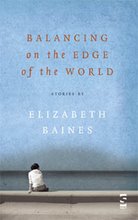
Here's my own recent cringe-worthy experience, my search for a cover quote for my recent story collection. Would I ask people I knew? Would I heck! How could I live with myself (and them afterwards) otherwise? So what did I do? I sent initial queries to the agents of short story writers I didn't know personally but whose work I respected. Guess what? Back came nice polite letters from the agents telling me that their clients were fiendishly busy but wished me all the luck.
What next? OK, I would bite the bullet and ask a well-known short story writer I had met not so long ago. But I wouldn't put her on the spot by ringing her up, or suggesting the coffee we had vaguely mooted. Instead I sent her a postcard, in which I insisted (repeatedly) that she must refuse to do it if she didn't want to etc etc, she didn't even need to answer this card if she didn't want to.
Guess what? She didn't answer the card. I didn't get a quote, and yet I still may have spoilt a beautiful potential friendship...
What next? Well, there's that mega-famous author who's really close friends with some really close old friends of mine, and I've met her at their house more than once... that wouldn't be so bad, would it. I mean, it's pulling strings, but I can hardly be said to know her, and she wouldn't feel obliged to give a good quote whatever... So I email my friends and ask them what they think. Well, they'll read the stories first and decide whether to ask her. I email the stories. One of my friends reads them over a week on his train journey to work. He really likes them, he thinks his friend the mega-famous author will like them. He'll contact her and ask.
Days go by. Weeks. A month, two... I give up. (Nine months later, when the book is published, I'm at a party at his house - the mega-famous author isn't - and he tells me she never answered his query.)
Meanwhile, I have caved in completely. I have rung up my good friend who has agreed to look at the manuscript, and there I am in his kitchen on Sunday afternoon, handing it over and cringing inwardly, not nearly as sure as he seems to be that he'll like the book when he reads it... But then we're saved the embarrassment: for my publisher decides it's better he doesn't do it anyway, since he's already just provided a quote for another of her books.
I was lucky in the end. I walked into the foyer of MMU for a reading, and Livi Michael, writer of wonderful novels for adults and children - and of brilliant short stories, one of which we published in metropolitan - came sweeping across the tiles to greet me. Livi! Perhaps I could ask Livi! But does she know my work? Would she hate my work? How could I put her through the embarrassment of saying no if she didn't like it? No, I can't ask Livi!
She sees the look on my face. 'I know what you're going to ask me,' she says, 'and the answer is Yes!' Turns out she did like my work already: turns out she loved the book.
Even so, it's not the easiest thing in the world, coming up with a quote that sums up and yet does justice to a book. Wouldn't surprise me if Livi, like so many of my writer friends, has since declared herself a blurb-free zone.
And I did only manage to get one shout.
Blurbings.com tells us:
Normally, a blurb will cost an author and/or publisher $14 - $23, which includes printing of the galleys, packaging and mailing fees. The standard 30 – 50 blurbs expected per book can range from $420 to $1,150. It is also very time consuming researching and contacting prospective authors as well as conducting follow-ups during the duration of the process.Notice any figure missing? A fee to the poor 'blurbing' author! As Rebecca Johnson says, it's also a time-consuming business for the endorsing author, who is expected to do it for free. Once, I remember, the winning novel of a competition for which I'd been on the judging panel, which was now to be published by a small publisher, was sent off for a quote to a famous novelist well known for her left-wing feminist views. How amazed and shocked the publisher was when she wrote back that she didn't do quotes for free. But you know, in reality, it's their shock which is shocking.
Here's my own recent cringe-worthy experience, my search for a cover quote for my recent story collection. Would I ask people I knew? Would I heck! How could I live with myself (and them afterwards) otherwise? So what did I do? I sent initial queries to the agents of short story writers I didn't know personally but whose work I respected. Guess what? Back came nice polite letters from the agents telling me that their clients were fiendishly busy but wished me all the luck.
What next? OK, I would bite the bullet and ask a well-known short story writer I had met not so long ago. But I wouldn't put her on the spot by ringing her up, or suggesting the coffee we had vaguely mooted. Instead I sent her a postcard, in which I insisted (repeatedly) that she must refuse to do it if she didn't want to etc etc, she didn't even need to answer this card if she didn't want to.
Guess what? She didn't answer the card. I didn't get a quote, and yet I still may have spoilt a beautiful potential friendship...
What next? Well, there's that mega-famous author who's really close friends with some really close old friends of mine, and I've met her at their house more than once... that wouldn't be so bad, would it. I mean, it's pulling strings, but I can hardly be said to know her, and she wouldn't feel obliged to give a good quote whatever... So I email my friends and ask them what they think. Well, they'll read the stories first and decide whether to ask her. I email the stories. One of my friends reads them over a week on his train journey to work. He really likes them, he thinks his friend the mega-famous author will like them. He'll contact her and ask.
Days go by. Weeks. A month, two... I give up. (Nine months later, when the book is published, I'm at a party at his house - the mega-famous author isn't - and he tells me she never answered his query.)
Meanwhile, I have caved in completely. I have rung up my good friend who has agreed to look at the manuscript, and there I am in his kitchen on Sunday afternoon, handing it over and cringing inwardly, not nearly as sure as he seems to be that he'll like the book when he reads it... But then we're saved the embarrassment: for my publisher decides it's better he doesn't do it anyway, since he's already just provided a quote for another of her books.
I was lucky in the end. I walked into the foyer of MMU for a reading, and Livi Michael, writer of wonderful novels for adults and children - and of brilliant short stories, one of which we published in metropolitan - came sweeping across the tiles to greet me. Livi! Perhaps I could ask Livi! But does she know my work? Would she hate my work? How could I put her through the embarrassment of saying no if she didn't like it? No, I can't ask Livi!
She sees the look on my face. 'I know what you're going to ask me,' she says, 'and the answer is Yes!' Turns out she did like my work already: turns out she loved the book.
Even so, it's not the easiest thing in the world, coming up with a quote that sums up and yet does justice to a book. Wouldn't surprise me if Livi, like so many of my writer friends, has since declared herself a blurb-free zone.
And I did only manage to get one shout.
Saturday, August 23, 2008
It's All too Much for an Author
Got my head stuck in that bearpit the Guardian books blog this week, where, after writing a post on the problems of having to sell one's book via one's identity in this commercially-oriented literary world, Josie Henley Einion was torn apart by the resident purists for using both her identity and the books blog to sell her novel.
Sigh. I must get out more...
And in so doing, I missed an apparent web discussion about book blurbs... well, it happened according to the Guardian, but I still can't find it, or should I say I'm not prepared to spend a moment longer at this ruddy computer on this first hot day of August, and I'm off in to the garden.
Which is just as well, because if you ever got me started on the excruciating process of having to creep to your well-known friends and acquaintances for shouts... Can't think about it any more, I'm shuddering too much. I'm off to do some weeding...
Sigh. I must get out more...
And in so doing, I missed an apparent web discussion about book blurbs... well, it happened according to the Guardian, but I still can't find it, or should I say I'm not prepared to spend a moment longer at this ruddy computer on this first hot day of August, and I'm off in to the garden.
Which is just as well, because if you ever got me started on the excruciating process of having to creep to your well-known friends and acquaintances for shouts... Can't think about it any more, I'm shuddering too much. I'm off to do some weeding...
Friday, August 22, 2008
Internet Widower
John Keenan responds on the Guardian books blog to John Updike's contempt for the internet, and links it to a fading relevance in his recent novels, in particular The Widows of Eastwick.
Wednesday, August 20, 2008
Thanks, Enid
In response to Enid Blyton's win in the recent Costa poll for the best-loved children's writer, Lucy Mangan writes in today's Guardian of her own childhood obsession with Blyton and the fact that while Blyton's books were once banned from public libraries as politically incorrect and culturally impoverished, she opened up for generations of children the 'promised land' of reading.
I've said it many times before and I'll say it again here: she opened up for me the promised land of writing. I wanted consciously to be a writer from the age of eight - in fact, I was a writer before that, and Enid Blyton played no small part in that. Like Lucy Mangan, while I was reading everything, including Dickens, I gobbled up Blyton - The Famous Five, The Secret Seven, and in particular the Adventure Series (The Castle of Adventure, The Valley of Adventure etc) - like a drug. You can say this for Blyton, which you can't say for Dickens: nearly every time I finished one of her books, I went off and wrote a story of my own.
Why was this? I don't have any Blyton books here to study for the reason: while I still have many of the books I read then I never kept a single Blyton; that wasn't the point of them, the point of them was what they triggered in me. I do of course remember though that they were, as Mangan says, formulaic and baldly told. It's interesting to me that Mangan reports that Blyton decribed her working method thus: '...simply a matter of opening the sluice gates and out it all pours with no effort or labour of my own.' Clearly, what is going to result from this is unthinking, cliched, repetitive. Yet there was something exciting for me, I think, generated by that, an energy - and a permission just to do it, which the classics, bound by their mature and rarified insights and more sophisticated use of language, couldn't give. The classics (after a certain age I never read any other books specifically intended for children; I stayed away from them like the plague) were exclusive in their consciousness (while of course being in the long term far more nourishing fodder), whereas Blyton did not even merely include me in hers, she allowed me to take over: so bald was her prose (as I remember) that it left infinite room for my own projections, my own imaginings of the settings and the inner thoughts of the characters. No wonder I would go off and write when I'd finished reading one: I was already writing as I was reading.
I must have another look at The Faraway Tree. So many people have told me that they hated it when I've said I loved it. I had chicken pox, I remember, and I suppose I was a bit delirious. But that notion of a tree you can climb to another world, the world of imagination (Yes, OK, I know it's derivative in the first place, but it's probably something about the very bald way she wrote it!) has been the basis of of my concept of writing ever since.
Creativity works in more complicated ways than we sometimes think, and all I can say is, Thanks, Enid.
I've said it many times before and I'll say it again here: she opened up for me the promised land of writing. I wanted consciously to be a writer from the age of eight - in fact, I was a writer before that, and Enid Blyton played no small part in that. Like Lucy Mangan, while I was reading everything, including Dickens, I gobbled up Blyton - The Famous Five, The Secret Seven, and in particular the Adventure Series (The Castle of Adventure, The Valley of Adventure etc) - like a drug. You can say this for Blyton, which you can't say for Dickens: nearly every time I finished one of her books, I went off and wrote a story of my own.
Why was this? I don't have any Blyton books here to study for the reason: while I still have many of the books I read then I never kept a single Blyton; that wasn't the point of them, the point of them was what they triggered in me. I do of course remember though that they were, as Mangan says, formulaic and baldly told. It's interesting to me that Mangan reports that Blyton decribed her working method thus: '...simply a matter of opening the sluice gates and out it all pours with no effort or labour of my own.' Clearly, what is going to result from this is unthinking, cliched, repetitive. Yet there was something exciting for me, I think, generated by that, an energy - and a permission just to do it, which the classics, bound by their mature and rarified insights and more sophisticated use of language, couldn't give. The classics (after a certain age I never read any other books specifically intended for children; I stayed away from them like the plague) were exclusive in their consciousness (while of course being in the long term far more nourishing fodder), whereas Blyton did not even merely include me in hers, she allowed me to take over: so bald was her prose (as I remember) that it left infinite room for my own projections, my own imaginings of the settings and the inner thoughts of the characters. No wonder I would go off and write when I'd finished reading one: I was already writing as I was reading.
I must have another look at The Faraway Tree. So many people have told me that they hated it when I've said I loved it. I had chicken pox, I remember, and I suppose I was a bit delirious. But that notion of a tree you can climb to another world, the world of imagination (Yes, OK, I know it's derivative in the first place, but it's probably something about the very bald way she wrote it!) has been the basis of of my concept of writing ever since.
Creativity works in more complicated ways than we sometimes think, and all I can say is, Thanks, Enid.
Monday, August 18, 2008
It's Marvellous, Darling!
A nice post from Ms Baroque on the fraught question of reviewing for writers.
Business versus Literature?
Mark Liam Piggott writes interestingly (and bravely) for the Guardian blog asking whether literary agents are any longer helpful to literary writers, or whether the pressures of the market have turned them into gatekeepers barring work which, however excellent as literature, is unlikely to be profitable. The many comments are interesting. Susan Hill (with her publishing hat on) points to the Nielsen book scan which reveals the sales of any previous book by an author, and thus determines whether or not they are likely to be invested in again, pointing out as she has on previous occasions that publishing is above all a business and that 'fine words butter no parsnips'. Though whether this is a defence or a condemnation depends where you're coming from with regard to the matter of literary fiction, I guess...
Like Piggott's, Nasim Marie Jafry's novel the State of Me, which I review on my other blog, is another interesting case of a novel held back by the commercial requirements of agents and then making it to publication without an agent.
Like Piggott's, Nasim Marie Jafry's novel the State of Me, which I review on my other blog, is another interesting case of a novel held back by the commercial requirements of agents and then making it to publication without an agent.
Thursday, August 14, 2008
The View from the Mountain
So sorry – I hadn’t resolved my internet problems after all. I’ve been pretty cut off altogether: the radio hasn’t tuned in either, there’s no telly, and each day it’s been late before I’ve driven the 6 miles for a newspaper, and sometimes there haven’t been any left.
Anyway, through my tiny window of internet connection from the side of a cloud-covered mountain I’ve had one or two glimpses of our weird commercially-oriented literary world: John Sutherland on the sexual fantasies the BBC Drama dept finds necessary to invent to make our literary history palatable, and Molly Flatt striking despair into the heart of every novelist by taking a whoops-silly-me-but-what-a-lark attitude to the fact that she reads as a kind of addiction without attending much to what she reads.
And if you think that going back up the Welsh mountain has made me regress to the Wesleyan parts of my origins, I don’t care. (And when the flood comes, I’ll be OK, Jack, even if I will have to live in a silent, clouded world.)
Anyway, through my tiny window of internet connection from the side of a cloud-covered mountain I’ve had one or two glimpses of our weird commercially-oriented literary world: John Sutherland on the sexual fantasies the BBC Drama dept finds necessary to invent to make our literary history palatable, and Molly Flatt striking despair into the heart of every novelist by taking a whoops-silly-me-but-what-a-lark attitude to the fact that she reads as a kind of addiction without attending much to what she reads.
And if you think that going back up the Welsh mountain has made me regress to the Wesleyan parts of my origins, I don’t care. (And when the flood comes, I’ll be OK, Jack, even if I will have to live in a silent, clouded world.)
Thursday, August 07, 2008
Back and Eating My Words
Back in blogging business sooner than I expected.
And proved wrong by the Raymond Carver short story comp either that short story comps are universally conservative or about my own level of innovation...
And proved wrong by the Raymond Carver short story comp either that short story comps are universally conservative or about my own level of innovation...
Saturday, August 02, 2008
Short Break
Just to say I won't be blogging much or responding to comments for a while. Back in 10 days or so.
Wednesday, July 30, 2008
Dressed to Kill the Market?
A year ago we were commenting on the tendency of publishers to 'brand' 'chicklit' novels with outrageously similar covers. Now Diane Shipley writes of an even more troubling move: having established that 'chicklit' books are the hot sellers, publishers are now dressing up very different novels to look like them. Shipley comments:
I hope publishers will soon realise that their tactic isn't working and could, in fact, backfire badly. If all book covers look the same, then none stand out. And if we know that how a book looks is no indication of its content, we might just become so dispirited that we bypass the bookstore and rent a DVD instead.Indeed, Suzanabrams, commenting on Shipley's post, says that she has been avoiding this apparent influx of the genre into the bookshops, unaware of this new practice.
Monday, July 28, 2008
Review: The Brief Wondrous Life of Oscar Wao by Junot Diaz
 Every so often - though not all that often once childhood is over, I think - you read a book which you know is going to affect your mental landscape forever. This, for me, is such a book. It's the story of Oscar de Leon, a New Jersey ghetto nerd struggling with the curse imposed by his family's history of entanglement with the cruel Dominican regime. It's a heartbreaking yet uplifting story, and the thing which will imprint it for me is the voice.
The overall narrative voice is that of Oscar's university friend Yunior (though two sections are narrated by Lola, Oscar's sister and ex-girlfriend to Yunior). It's a wonderful voice, colloquial, feisty and combative yet generous and humane. And direct, addressing the reader on familiar terms. Here's Yunior describing an episode from Oscar's teenage years (a passage which holds a subtle prefiguring of Oscar's destiny):
Those were some fucking lonely weeks when all he had were his games, his books, and his words. So now I have a hermit for a son, his mother complained bitterly. At night, unable to sleep, he watched a lot of bad TV, became obsessed with two movies in particular: Zardoz (which he'd seen with his uncle before they put him away for the second time) and Virus (the Japanese end-of-the-world movie with the hot chick from Romeo and Juliet). Virus especially he could not watch to the end without crying, the Japanese hero arriving at the South Pole base, having walked from Washington, D.C., down the whole spine of the Andes, for the woman of his dreams. I've been working on my fifth novel, he told the boys when they asked about his absences. It's amazing.There's a special kind of authenticity about this voice. While it conveys a very particular character - Yunior, with his own shortcomings and blindspots as well as his warm heart - one suspects, as with the voices in Diaz's story collection Drown, that it is not too far removed from the author's own voice: there's an overriding tone and an energy which inform the sections related by both Yunior and Lola. The impression of authenticity is further reinforced by the piecemeal and non-linear way the story unfolds, as Yunior weaves together the information he has gathered from the de Leon family members, provides a retrospective introduction and footnotes (in his own inimitable style) on the historical background and lays bare the workings of his written tale:
See? What did I tell you? Mr Collegeboy.
Footnote 15: A favourite hangout of Trujillo's, my mother tells me when the manuscript is almost complete.Indeed, the book itself is dedicated to Elizabeth de Leon. But it would be far too reductive to say that what Diaz has achieved here is a magical and explosive mix of historical fact and imagination: this book is something more magnificant than that. It goes beyond fact, it goes beyond fiction: it's a true voice, it's the searing dream and deep new knowledge that stays with you for good.
Oh, and I cried buckets.
Saturday, July 26, 2008
Of Books and Beetles
Sorry about the gap on this blog which was due to internet problems. (How weird is that, not to be blogging?)
A couple of myths being shattered in the pages of The Guardian - firstly, the idea that the fact that we buy so many books means that we're all committed and omnivorous readers. Of the nine authors interviewed, though, only two, Lionel Shriver and Alain de Botton, confess as I do that it is writing their own work which sometimes makes it hard for them to read the work of others.
And I feel totally vindicated today by a 'Week in Books' piece by Kafka scholar James Hawes exposing the author as not 'the middle-European Nostradamus, almost unknown in his lifetime, trapped in a dead-end job, whose mysterious, endlessly interpretable works somehow foresaw the Holocaust (and so on)' but 'a millionaire's son ... a writer backed by an influential clique ... who had no more inkling of the Holocaust than anyone else' and thus whose writing was not 'the gloomy stuff we Anglo-Saxons received via post Auschwitz French existentialists, but wonderful black comedies written by a man soaked in the writings of his predecessors and of his own day'. Vindicated because the last time I read Metamorphosis I laughed out loud: Gregor the dung beetle stuck up in his room was the spitting image of a teenager not too many miles from under my own nose.
(Sorry, but the search on the Guardian site gives up on me when I look for the link.)
A couple of myths being shattered in the pages of The Guardian - firstly, the idea that the fact that we buy so many books means that we're all committed and omnivorous readers. Of the nine authors interviewed, though, only two, Lionel Shriver and Alain de Botton, confess as I do that it is writing their own work which sometimes makes it hard for them to read the work of others.
And I feel totally vindicated today by a 'Week in Books' piece by Kafka scholar James Hawes exposing the author as not 'the middle-European Nostradamus, almost unknown in his lifetime, trapped in a dead-end job, whose mysterious, endlessly interpretable works somehow foresaw the Holocaust (and so on)' but 'a millionaire's son ... a writer backed by an influential clique ... who had no more inkling of the Holocaust than anyone else' and thus whose writing was not 'the gloomy stuff we Anglo-Saxons received via post Auschwitz French existentialists, but wonderful black comedies written by a man soaked in the writings of his predecessors and of his own day'. Vindicated because the last time I read Metamorphosis I laughed out loud: Gregor the dung beetle stuck up in his room was the spitting image of a teenager not too many miles from under my own nose.
(Sorry, but the search on the Guardian site gives up on me when I look for the link.)
Saturday, July 19, 2008
Whose Feast Is the Lit Fest?
Susan Hill gives us the lowdown on lit fests. Will you ever feel quite so privileged to be at one again?
Tuesday, July 15, 2008
What's Happening to Short Stories?
Anyone who ever read Metropolitan, the short-story mag I co-edited with Ailsa Cox, will know that I am no hater of conventional short stories. When it comes to form I am open to all comers - conventional or experimental, stories written within a recognizable tradition or wildly innovative: as long as a story work on its own terms, as long as it makes exciting use of language and I like what it's saying it'll please me. I've written both ways myself - and both kinds of story find their way into my recent collection - though I suppose I have to confess to leaning in ambition towards the more off-the-wall, to needing ultimately to stretch the form for what I really want to say, and that when I have written more conventionally it has sometimes (though not always) been because of the pressures of the market.
Which is why my pleasure at the recent rash of high-profile short-story competitions - and the seeming resurgence of the short story which it seems to indicate - is somewhat tempered by a fear that it is the conventional short story alone which is being endorsed and that innovation is being given the thumbs down, inadvertently or not. If so, it's especially disheartening when one would expect competitions to provide a counter to market forces, but perhaps expecting competitions to be immune from market forces is naive. Others have commented on the classical nature of Jhumpa Lahiri's short stories (winner of the Frank O'Connor Award), and the same could be said for the stories in Claire Keegan's Walk the Blue Fields, winner of the Edge Hill Prize. Keegan's are wonderful stories in an Irish tradition I love and indeed feel a great affinity with, and I would urge everyone to read them. They are, though, very firmly within that tradition - elegaic yet wry, lyrical yet controlled - and Keegan's writing has been compared to that of William Trevor, John McGahern and indeed Chekhov.
I am especially thrilled that Clare Wigfall has won the BBC National Short Story Award. I have been recommending her book since I discovered it and what judge Martha Kearney calls her amazing 'ventriloquism': she seems able to inhabit any voice, any psyche and any world or historical period, and the stories are nothing if not moving. Her winning story, 'The Numbers', is marked by this chameleon-like ability and by a striking, original and deeply resonant motif. I defy you to read it without ending in tears. However. Personally, I wouldn't call this story conventional, yet superficially it displays conventional elements, and one wonders if without them it would have got so far in this competition. Although there are subtle foreshadowings the story is basically linear, and the narrator tells her tale in the time-honoured mode of intimate and homely recollection. Above all there's a (wholly admirable) classical authorial restraint. And here's Martha Kearney, writing about judging the competition:
Which is why my pleasure at the recent rash of high-profile short-story competitions - and the seeming resurgence of the short story which it seems to indicate - is somewhat tempered by a fear that it is the conventional short story alone which is being endorsed and that innovation is being given the thumbs down, inadvertently or not. If so, it's especially disheartening when one would expect competitions to provide a counter to market forces, but perhaps expecting competitions to be immune from market forces is naive. Others have commented on the classical nature of Jhumpa Lahiri's short stories (winner of the Frank O'Connor Award), and the same could be said for the stories in Claire Keegan's Walk the Blue Fields, winner of the Edge Hill Prize. Keegan's are wonderful stories in an Irish tradition I love and indeed feel a great affinity with, and I would urge everyone to read them. They are, though, very firmly within that tradition - elegaic yet wry, lyrical yet controlled - and Keegan's writing has been compared to that of William Trevor, John McGahern and indeed Chekhov.
I am especially thrilled that Clare Wigfall has won the BBC National Short Story Award. I have been recommending her book since I discovered it and what judge Martha Kearney calls her amazing 'ventriloquism': she seems able to inhabit any voice, any psyche and any world or historical period, and the stories are nothing if not moving. Her winning story, 'The Numbers', is marked by this chameleon-like ability and by a striking, original and deeply resonant motif. I defy you to read it without ending in tears. However. Personally, I wouldn't call this story conventional, yet superficially it displays conventional elements, and one wonders if without them it would have got so far in this competition. Although there are subtle foreshadowings the story is basically linear, and the narrator tells her tale in the time-honoured mode of intimate and homely recollection. Above all there's a (wholly admirable) classical authorial restraint. And here's Martha Kearney, writing about judging the competition:
The perfect short story arrests the reader’s attention immediately and then goes on to illuminate an entire life through one scene or a few actions.Me, I would say that that's one type of short story. And that idea of the 'perfect short story' worries me dreadfully, both within this sentence, where it implies that there's only one kind of excellence, and generally, implying possibly a certain kind of stasis, a stylistic impasse. Yet surely the short story is precisely the place where we can tear down our traditional expectations of prose. Really, the last thing I want to write is a 'perfect' short story, and whenever people describe any of my stories as 'perfect', while I'm always pathetically flattered, I have a sneaky feeling I've failed.
Friday, July 11, 2008
Rushdie Avoids Literary Oblivion
It may seem a bit mean to pick on one hapless original publisher's reader for Midnight's Children (announced yesterday as the winner of the Best of the Bookers), but I can't resist it, and anyway it's a serious matter:
'The author should concentrate on short stories until he has mastered the novel form,' The Guardian tells us he/she reported.
OK, it's a long time ago, and I'm not even sure if publishers have readers any more - by most accounts, nowadays they generally rely on agents to do the reading for them - but in spite of Midnight's Children's phenomenal success (fortunately another reader, Susannah Clapp thought differently, though what if it hadn't fallen into her hands?) - I wonder how many potential works of fiction still founder on the knot of literary prejudice, conservatism, ignorant misconception and illogicality wrapped up in that sentence?
First, the illogicality: what, you master one form by concentrating on another? How does that work, exactly? Ah, I see, because (here's the misconception) short stories are just mini-novels, limbering-up things. I don't know about you, but I think that any reader ignorant enough to believe this about short stories should not be trusted on his/her view of anything much literary, including novels. And so it proves, and here's the lethal conservative prejudice: Rushdie has not 'mastered' the novel form, apparently, because mastering the form here means by definition fulfilling the conventional parameters he specifically set out to flout.
But this tendency - for those judging fiction to look for the recognizable and tried in fiction, and to shun the different and strange - is no longer even a hapless error but is institutionalized by the cult of the market and a cynical ploy.
'The author should concentrate on short stories until he has mastered the novel form,' The Guardian tells us he/she reported.
OK, it's a long time ago, and I'm not even sure if publishers have readers any more - by most accounts, nowadays they generally rely on agents to do the reading for them - but in spite of Midnight's Children's phenomenal success (fortunately another reader, Susannah Clapp thought differently, though what if it hadn't fallen into her hands?) - I wonder how many potential works of fiction still founder on the knot of literary prejudice, conservatism, ignorant misconception and illogicality wrapped up in that sentence?
First, the illogicality: what, you master one form by concentrating on another? How does that work, exactly? Ah, I see, because (here's the misconception) short stories are just mini-novels, limbering-up things. I don't know about you, but I think that any reader ignorant enough to believe this about short stories should not be trusted on his/her view of anything much literary, including novels. And so it proves, and here's the lethal conservative prejudice: Rushdie has not 'mastered' the novel form, apparently, because mastering the form here means by definition fulfilling the conventional parameters he specifically set out to flout.
But this tendency - for those judging fiction to look for the recognizable and tried in fiction, and to shun the different and strange - is no longer even a hapless error but is institutionalized by the cult of the market and a cynical ploy.
Wednesday, July 09, 2008
Just Not Good Enough
Hm. Not really sure what to say about the furore - well, furore by short-story standards - over the decision by the Frank O'Connor Award judges to skip a shortlist and announce the winner early: Jhumpa Lahiri's Unaccustomed Earth. My first decision was to say nothing: my own book was on the long list and so I felt it would be hard to be or at any rate appear objective, and the matter would be better left for others to discuss. Nicholas Lezard quickly posted his disgust on the Guardian books blog and the commenters agreed pretty unanimously, and today Susan Hill expresses hers and quotes from her experience as a Booker judge when her fellow judge Roy Fuller also wanted to omit a shortlist.
A main objection has been that, however much a judging panel knew who their eventual winner was going to be, it was mean to deprive those who would have been on the shortlist their hour in the sun and the increased sales (and, I would add, reputation) which would have followed. People have noted that it seems especially perverse when the Frank O'Connor Award was specifically set up to draw attention to the short story collections published yearly (and which usually get scant attention), and in the service of this aim its long list is generous (39 books this year). Some, including a previous Frank O'Connor judge, have commented that to decide on a winner so soon is arrogant and that the purpose of a short list is to allow judges time for reflection and reconsideration via closer reading and rereading, and a Guardian blogs commenter points out that innovative or subtle short stories are more likely to rise to the surface at such a stage (the general consensus seeming to be that Lahiri's stories, while excellent, conform to conventional expectations). (I haven't read them myself.) Some have seen the choice as pandering to extraneous authority, since Jhumpa Lahiri's book, her second collection, is already an American bestseller and she won a Pultizer for her first, especially in view of the fact that member of this year's judging panel Eileen Battersby complained after last year's off-the-wall choice of Miranda July that the prize was not doing enough to acknowledge internationally acclaimed writers of short stories.
Actually, I think the meanest bit is this section of their statement:
Regular readers of this blog will know of my reservations about literary competitions per se (or any ruddy competitions for that matter). And you know what, these judges have only gone and put into words what I keep saying is the unspoken implication of all competitions. It's great for the winners, but for those who don't win there's that other judgement: Less good.
But you know what, too? OK, so four or so people were deprived of being on the short list. But guess what, 34 others of us were saved having been labelled not good enough for the short list and, more to the point, being dropped immediately from the collective literary consciousness. Quite the contrary: look how it's all still being discussed.
A main objection has been that, however much a judging panel knew who their eventual winner was going to be, it was mean to deprive those who would have been on the shortlist their hour in the sun and the increased sales (and, I would add, reputation) which would have followed. People have noted that it seems especially perverse when the Frank O'Connor Award was specifically set up to draw attention to the short story collections published yearly (and which usually get scant attention), and in the service of this aim its long list is generous (39 books this year). Some, including a previous Frank O'Connor judge, have commented that to decide on a winner so soon is arrogant and that the purpose of a short list is to allow judges time for reflection and reconsideration via closer reading and rereading, and a Guardian blogs commenter points out that innovative or subtle short stories are more likely to rise to the surface at such a stage (the general consensus seeming to be that Lahiri's stories, while excellent, conform to conventional expectations). (I haven't read them myself.) Some have seen the choice as pandering to extraneous authority, since Jhumpa Lahiri's book, her second collection, is already an American bestseller and she won a Pultizer for her first, especially in view of the fact that member of this year's judging panel Eileen Battersby complained after last year's off-the-wall choice of Miranda July that the prize was not doing enough to acknowledge internationally acclaimed writers of short stories.
Actually, I think the meanest bit is this section of their statement:
"Not only were the jury unanimous in their choice of Lahiri's Unaccustomed Earth as the winner, they were unanimous in their belief that so outstanding was Lahiri's achievement in this book that no other title was a serious contender."So the rest were crap, eh?
Regular readers of this blog will know of my reservations about literary competitions per se (or any ruddy competitions for that matter). And you know what, these judges have only gone and put into words what I keep saying is the unspoken implication of all competitions. It's great for the winners, but for those who don't win there's that other judgement: Less good.
But you know what, too? OK, so four or so people were deprived of being on the short list. But guess what, 34 others of us were saved having been labelled not good enough for the short list and, more to the point, being dropped immediately from the collective literary consciousness. Quite the contrary: look how it's all still being discussed.
Friday, July 04, 2008
Martin Amis, Literature and Religion
Literature and Terrorism in December, and now in July our celebrity professor tackles Literature and Religion. On Tuesday of last week Martin Amis talked about this subject with critic James Wood in Manchester University's Whitworth Hall.
I was late - a bus and a little car had collided on Princess Parkway and the traffic was at a standstill. When I finally arrived outside the hall with my two companions, running, there was no one about, everyone else had gone in. Two stewards standing there said - with something of an excited air of occasion - 'Martin Amis?' and pointed to the door. Inside the building a huge guy like a bouncer said rather sternly, 'Martin Amis?' and pointed the way down the corridor. An Evening News photographer followed on our heels. Up the blue-carpeted stairs and then into the back of the huge hall which was unbelievably, out of term time, crowded, and where the speakers were being introduced.
Who were all these people who had given up a warm early evening to hear a debate on such a serious subject? From where we found seats near the back all I could see were strangers. Straight ahead of me was a woman in a straw Sunday hat.
Urbane as ever, even bored-seeming, Martin Amis spoke first. He was a confirmed secularist, he told us, but not an atheist. He told us that to be an atheist was an arrogant and illogical position since there is so much that we can't know, and yet I could swear that he used the word 'humiliating' rather than 'humbling' to describe this last fact. I thought he then said that religion may have solved the problem of death and evil (with the concept of heaven) but fails to solve the problem of panic - though Phillip Olterman, writing for The Guardian today (Saturday) has a different account of what Amis said on this precise point. Literature, Amis went on, has been a 'rearguard action' against this. He quoted smoothly from Milton' s great poem as the work of literature par excellence in this regard, and from some other classic English texts, I can't remember what.
James Wood sat semi-slumped over the table, leaning on his elbow and with his hand on his chin and almost over his mouth and said that his parents had become evangelical Christians, a background he had strongly rebelled against, which history had always informed his attitude to literature. He said that the rise of the novel in the nineteenth century had paralleled a decline in belief and the nineteenth-century novel was in this sense a slayer of belief - or well, maybe, he would need to think about it a lot more. There is something inherently secular about narrative, he said : a novel paradoxically requests belief (in itself, I think he meant - or maybe he meant in story) while being aware of its status as fiction. To make a narrative is to destabilize doctrine and the Bible begins with a totally unconvincing story, that of Adam and Eve and the serpent - well, I got a bit lost about his logic here. As far as Wood was concerned, it is not panic but evil which religion has failed to solve (well, this is what I heard anyway), and this has been the central theme of narrative.
And then Amis said that religion doesn't actually solve death with heaven anyway, and that heaven itself may be the real problem: the idea of it was 'repellent'. Where would the dramas and tensions be in such a bland world?
Both agreed that the debate surrounding Richard Dawkins' view of the universe was 'officially over', and theologian chair Graham Ward suggested with somewhat unctuous hopefulness that there was going to be a return to the 'sacred' in literature, whatever he meant by that.
Then there were questions from the floor. A woman stood up and spoke for a long time about her faith and how it had led her to write a novel which she hadn't yet had published and she wondered if Wood and Amis could imagine a heaven which we think of as heaven but which for the people inside it wasn't heaven at all - which seemed to be the subject of her novel; but it was hard to follow what she was saying and she realized it and finally said 'If you follow me,' and the people behind me started giggling, but Amis suavely said he followed her perfectly and gave an answer which in turn I couldn't follow since I couldn't fully work out how it related to her question before he had finished it and the next questioner was invited.
A man stood up and said he was a Pentecostal Christian and he wanted to write a religious novel, and would it be a good idea? Amis rudely told him to ask his 'heavenly father' for help, and Wood came in and in a conciliatory but tentative way suggested he write an allegory, like Tolkien or CS Lewis, who did actually write religious allegories, or well, sort of. And then a woman stood up and said Amis and Wood had been representing religious people wrongly, not all religious people just followed an institution and went to church on Sundays, but I had a funny feeling she was with the woman with the Sunday hat.
And then it was over, and we were told to sit in our seats till the panel had left because 'they had books to sell' and needed to be sitting with them at the bottom of the stairs before we filed down.
I'm sorry, but really I can't give you a good account of what was said. I was far too busy being gob-smacked and sitting there thinking how no one felt the need to couch their references to religion with the word Christian or to literature with the word Western, or mostly to the point, English and American. That in the age when religious fundamentalism should be of urgent interest to literature there was no acknowledgement of this or any sense of the need to address how literature might tackle this now. Indeed, there was only one reference to Islam: in his final condemnation of heaven Amis said he thought that the Muslim heaven was perhaps a good one, and some of the audience laughed. All I could think was that we were sitting there trapped in a Christiancentric universe, with a Christian theologian for a chairman, surrounded by Christian Neo-Gothic carving and soaring wooden arches, and overlooked by the massive organ which, on the occasion of the Literature and Terrorism debate, Tom Chatfield compared to the underside of a fighter plane, but which seemed to me on Tuesday like the towering bars of a gigantic prison.
I tell you, we couldn't get out of that place quick enough - once they let us - and we rushed down the stairs, my companion from UCL telling me in disgust that the open lectures at UCL never had such a low level of engagement or debate - and they didn't make you pay or try and make you buy their books, either.
I was late - a bus and a little car had collided on Princess Parkway and the traffic was at a standstill. When I finally arrived outside the hall with my two companions, running, there was no one about, everyone else had gone in. Two stewards standing there said - with something of an excited air of occasion - 'Martin Amis?' and pointed to the door. Inside the building a huge guy like a bouncer said rather sternly, 'Martin Amis?' and pointed the way down the corridor. An Evening News photographer followed on our heels. Up the blue-carpeted stairs and then into the back of the huge hall which was unbelievably, out of term time, crowded, and where the speakers were being introduced.
Who were all these people who had given up a warm early evening to hear a debate on such a serious subject? From where we found seats near the back all I could see were strangers. Straight ahead of me was a woman in a straw Sunday hat.
Urbane as ever, even bored-seeming, Martin Amis spoke first. He was a confirmed secularist, he told us, but not an atheist. He told us that to be an atheist was an arrogant and illogical position since there is so much that we can't know, and yet I could swear that he used the word 'humiliating' rather than 'humbling' to describe this last fact. I thought he then said that religion may have solved the problem of death and evil (with the concept of heaven) but fails to solve the problem of panic - though Phillip Olterman, writing for The Guardian today (Saturday) has a different account of what Amis said on this precise point. Literature, Amis went on, has been a 'rearguard action' against this. He quoted smoothly from Milton' s great poem as the work of literature par excellence in this regard, and from some other classic English texts, I can't remember what.
James Wood sat semi-slumped over the table, leaning on his elbow and with his hand on his chin and almost over his mouth and said that his parents had become evangelical Christians, a background he had strongly rebelled against, which history had always informed his attitude to literature. He said that the rise of the novel in the nineteenth century had paralleled a decline in belief and the nineteenth-century novel was in this sense a slayer of belief - or well, maybe, he would need to think about it a lot more. There is something inherently secular about narrative, he said : a novel paradoxically requests belief (in itself, I think he meant - or maybe he meant in story) while being aware of its status as fiction. To make a narrative is to destabilize doctrine and the Bible begins with a totally unconvincing story, that of Adam and Eve and the serpent - well, I got a bit lost about his logic here. As far as Wood was concerned, it is not panic but evil which religion has failed to solve (well, this is what I heard anyway), and this has been the central theme of narrative.
And then Amis said that religion doesn't actually solve death with heaven anyway, and that heaven itself may be the real problem: the idea of it was 'repellent'. Where would the dramas and tensions be in such a bland world?
Both agreed that the debate surrounding Richard Dawkins' view of the universe was 'officially over', and theologian chair Graham Ward suggested with somewhat unctuous hopefulness that there was going to be a return to the 'sacred' in literature, whatever he meant by that.
Then there were questions from the floor. A woman stood up and spoke for a long time about her faith and how it had led her to write a novel which she hadn't yet had published and she wondered if Wood and Amis could imagine a heaven which we think of as heaven but which for the people inside it wasn't heaven at all - which seemed to be the subject of her novel; but it was hard to follow what she was saying and she realized it and finally said 'If you follow me,' and the people behind me started giggling, but Amis suavely said he followed her perfectly and gave an answer which in turn I couldn't follow since I couldn't fully work out how it related to her question before he had finished it and the next questioner was invited.
A man stood up and said he was a Pentecostal Christian and he wanted to write a religious novel, and would it be a good idea? Amis rudely told him to ask his 'heavenly father' for help, and Wood came in and in a conciliatory but tentative way suggested he write an allegory, like Tolkien or CS Lewis, who did actually write religious allegories, or well, sort of. And then a woman stood up and said Amis and Wood had been representing religious people wrongly, not all religious people just followed an institution and went to church on Sundays, but I had a funny feeling she was with the woman with the Sunday hat.
And then it was over, and we were told to sit in our seats till the panel had left because 'they had books to sell' and needed to be sitting with them at the bottom of the stairs before we filed down.
I'm sorry, but really I can't give you a good account of what was said. I was far too busy being gob-smacked and sitting there thinking how no one felt the need to couch their references to religion with the word Christian or to literature with the word Western, or mostly to the point, English and American. That in the age when religious fundamentalism should be of urgent interest to literature there was no acknowledgement of this or any sense of the need to address how literature might tackle this now. Indeed, there was only one reference to Islam: in his final condemnation of heaven Amis said he thought that the Muslim heaven was perhaps a good one, and some of the audience laughed. All I could think was that we were sitting there trapped in a Christiancentric universe, with a Christian theologian for a chairman, surrounded by Christian Neo-Gothic carving and soaring wooden arches, and overlooked by the massive organ which, on the occasion of the Literature and Terrorism debate, Tom Chatfield compared to the underside of a fighter plane, but which seemed to me on Tuesday like the towering bars of a gigantic prison.
I tell you, we couldn't get out of that place quick enough - once they let us - and we rushed down the stairs, my companion from UCL telling me in disgust that the open lectures at UCL never had such a low level of engagement or debate - and they didn't make you pay or try and make you buy their books, either.
Sunday, June 29, 2008
Short Stories in a Vacuum
I'm invited this Thursday to the award ceremony for the Edge Hill Short Story Prize, and I've been thinking again about the comment made by last year's judge A L Kennedy:
One can't easily write into a vacuum and I would suggest that that's what this recent culture has created, a vacuum, in spite of those defining strictures - titles, themes, etc. These are simply not serious parameters. As I've said before, a serious piece of writing is not primarily characterized by its subject matter (although current marketing trends could have you thinking so). Take any subject - as these single-story competitions do - and you can approach it via any number of literary modes, traditional or experimental, any number of voices or narrative approaches. Writers entering competitions are basically taking pot luck: who knows if the one or two judges (so often writers) brought in, or indeed the anonymous early sifters, will share your literary agenda - or, more to the point, if they don't (since the odds are that they won't) how likely would it be that they'd be prepared to give it a prize however brilliant your story may be on its own literary terms? Personally, I'd never send a story into a competition which I hadn't already written anyway, but I hear all the time of writers writing stories specifically for competitions, and, as I've said before and as I think A L Kennedy is indicating, one wonders what this - a writing life of adapting to expectations which are after all usually only second-guessed- is doing to deflect them from their own potential literary agendas (and to very little avail when they don't win).
A serious literary magazine, on the other hand, will be based on a recognizable literary agenda and provide a nurturing community. (It's true that magazines sometimes run these competitions, but when they do I'd say they are a departure from truly literary concerns and are simply money-making schemes: we don't want your story really - though we'll stick the one the judge chooses in - what we want is your cash. When we were running the short-story mag Metropolitan our funders frequently suggested to us we ran competitions to raise money; for the reasons I'm outlining here we never did). In a climate where a lot of different literary magazines exist the talented short-story writer will usually find a home for his or her stories. I'm thinking of Ambit and the London Magazine, I'm looking back further to mags like Bananas and The Transatlantic Review. But I'm also looking forward and hoping that the forthcoming Horizon Review heralds a new flowering of serious lit mags supported by the web. This new online journal espouses the tradition (it's named after Cyril Connelly's 1940s Horizon) yet its editor Jane Holland looks forward to even greater possibilities afforded by the web:
The magazines that used to print stories have largely disappeared and they're left to be harried by endless small-scale competitions that merrily dictate size, content, themes and title options.I rather think that that word 'merrily' sums up the shift in culture which this situation reflects. I've won one or two short-story competitions, and some writers of my acquaintance have won several apiece, and I won't deny that it's great publicity for the writer and great acknowledgment for individual stories when this happens, but this doesn't stop me thinking that a short-story culture primarily generated by competitions is never going to be as serious as that mainly supported by serious literary magazines.
One can't easily write into a vacuum and I would suggest that that's what this recent culture has created, a vacuum, in spite of those defining strictures - titles, themes, etc. These are simply not serious parameters. As I've said before, a serious piece of writing is not primarily characterized by its subject matter (although current marketing trends could have you thinking so). Take any subject - as these single-story competitions do - and you can approach it via any number of literary modes, traditional or experimental, any number of voices or narrative approaches. Writers entering competitions are basically taking pot luck: who knows if the one or two judges (so often writers) brought in, or indeed the anonymous early sifters, will share your literary agenda - or, more to the point, if they don't (since the odds are that they won't) how likely would it be that they'd be prepared to give it a prize however brilliant your story may be on its own literary terms? Personally, I'd never send a story into a competition which I hadn't already written anyway, but I hear all the time of writers writing stories specifically for competitions, and, as I've said before and as I think A L Kennedy is indicating, one wonders what this - a writing life of adapting to expectations which are after all usually only second-guessed- is doing to deflect them from their own potential literary agendas (and to very little avail when they don't win).
A serious literary magazine, on the other hand, will be based on a recognizable literary agenda and provide a nurturing community. (It's true that magazines sometimes run these competitions, but when they do I'd say they are a departure from truly literary concerns and are simply money-making schemes: we don't want your story really - though we'll stick the one the judge chooses in - what we want is your cash. When we were running the short-story mag Metropolitan our funders frequently suggested to us we ran competitions to raise money; for the reasons I'm outlining here we never did). In a climate where a lot of different literary magazines exist the talented short-story writer will usually find a home for his or her stories. I'm thinking of Ambit and the London Magazine, I'm looking back further to mags like Bananas and The Transatlantic Review. But I'm also looking forward and hoping that the forthcoming Horizon Review heralds a new flowering of serious lit mags supported by the web. This new online journal espouses the tradition (it's named after Cyril Connelly's 1940s Horizon) yet its editor Jane Holland looks forward to even greater possibilities afforded by the web:
I’m not interested in becoming too prescriptive about the sort of poetry, fiction, critical prose or literary oddities I’d like to receive from contributors. I’m not positioning myself either left, right or dead centre of the mainstream. What I will be seeking, however, in the work received, is an openness: to the physical, to the wider world, to ideas and language, and to the possibility of failure.It may seem strange to be discussing failure here. But a willingness to take risks, even quite dangerous ones, is something I admire and encourage in writers. Literature without risk is like a meal without salt: predictable and unappealing. It’s important to bear in mind though that any risks should be based on the percentages, not taken at random or to extremes. Don't try this at home, etc.
I don’t want Horizon to be a cosy refuge for writers looking for allies and a comfortable place to sleep. I want it to prickle with energy, both negative and positive; to challenge preconceptions about the writing of poetry and fiction; to question methods of criticism and modes of thinking in a frank and open manner.
I tell you, I read that and I knew this was the place to send my most recent story (and indeed she accepted it) and I didn't have to send it off to some competition with that sinking feeling of chucking a bottle with a message off a cliff into the sea...
* Postscript: Jane Holland's statement about risk is an important one in relation to the competition culture. As she is implying, the risk of failure is built into experimentation - not only the failure of acceptance created by the conventional expectations of others but true aesthetic failure. But who wants to risk failure in a competition? Thus competitions can contribute towards a conventionalization of our short-story culture...
Thursday, June 26, 2008
The Confusion of Misery
Decca Aitkenhead profiles the original misery memoirist David Pelzer for today's Guardian and uncovers a possibly clarifying confusion....
Wednesday, June 25, 2008
Fiction as Thesis
I like the way The Guardian gives the right of reply to (admittedly selected) artists criticized in its pages, and today I'm particularly taken by Anthony Neilson's reply to Michael Billington's critique of his new play Relocated (Jerwood Theatre Upstairs). I don't know the play, and I tend to admire the thoughtfulness of Billington's writing and his commitment to championing political writing, but Neilson says something which strikes a deep chord with me, and which I believe also has implications for the ways in which we read prose fiction.
Billington complains about the 'general thesis' of the play, thus, says Neilson, not only misunderstanding the nature of his play but revealing an acceptance of the kind of play - the 'play-as-thesis' - which Neilson goes on to condemn:
Billington complains about the 'general thesis' of the play, thus, says Neilson, not only misunderstanding the nature of his play but revealing an acceptance of the kind of play - the 'play-as-thesis' - which Neilson goes on to condemn:
This is the great danger of the play-as-thesis. It assumes that the play is an expression of the playwright's character. And, since playwrights desire approval as much as the next person, it leads to dishonest and complacent work. A play should reflect life as the playwright sees it - not as they, or anyone else, wishes it to be. If one sees a world in which there are no permanent truths, it is dishonest to fabricate them for the sake of approbation. Worse, it is a dereliction of duty. A play-as-thesis is by nature reductive, an attempt to bring order to the unruliness of existence. But bringing order is the business of the state, not the artist.Interestingly, a Guardian book blog yesterday by Sam Jordison echoes something of these sentiments in relation to JM Coetzee's Disgrace in particular (which he finds too much a novel-as-thesis) and Booker winners in general.
Monday, June 23, 2008
The Fantasies of Real-Life Readers
Another novelist complains about the tendency of readers to read her books as autobiographical. Self-described 'mum-lit' author Kirsty Scott joins the protest on the Guardian books blog.
Saturday, June 14, 2008
It's Just a Middle-Class Money Thing...
Reviewing The Knife of Never Letting Go by Patrick Ness for The Guardian today, Frank Cottrell Boyce makes an articulate case against the 'age-banding' of books for children. Actually, he says, the disaster has already happened in the categorization of books for 'young adults': there have always been adult books which teenagers have enjoyed, but these were books which teenagers chose for themselves. Then:
In another comments thread on a post by Michael Rosen on what might be done to encourage the enjoyment of reading, commenters repeat the view that it's the parents' responsibility to teach children reading, not the government (and this is why age-banding is such a good thing: to help parents in this task). Well, I don't know which world these people are living in, but in the one I taught in for several years and in which my partner still works as an educational psychologist, there's a whole population of kids out there who don't and/or can't read because their parents don't or can't read and in some cases, particularly with boys, actively discourage reading as effete and middle-class. There's a very thoughtful post over at Juxtabook (recommended by one of the Guardian commenters) which I too would recommend to you as a wholly accurate and moving depiction of the relationship such children have with books, but I disagree with his conclusion that age banding would be useful to their parents. In my view it's about as useful and attractive to them as fags to non-smokers, because they simply won't be going into bookshops in the first place. And Simon Juden of course knows this last - it's the already book-oriented classes (and the publishers' golden goose) which age banding is targeting.
And as for those children's-book buying middle classes: do Simon Juden etc really think that aunties going into the bookshop to buy presents for Christmas and birthdays constitute the main bulk of the children's book market? And not those kids let loose in the children's departments on Saturday afternoons seeing and grabbing and ignoring or influencing the adult choices (and dropping like hot bricks anything labelled with an age range other than the ones they'd like to be identified with, which might well not include their own)?
Some time ago, someone saw that trend and turned it into a demographic. Fortunes were made but something crucial was lost. We have already ghettoised teenagers' tastes in music, in clothes and - God forgive us - in food. Can't we at least let them share our reading? Is there anything more depressing than the sight of a "young adult" bookshelf in the corner of the shop. It's the literary equivalent of the "kids' menu" - something that says "please don't bother the grown-ups". If To Kill a Mockingbird were published today, that's where it would be placed, among the chicken nuggets.Exactly: books are for stretching you, growing you, educating you - for adults, too, which is why I've always questioned any publishing marketing philosophy based on the notion of simply catering for an already established need, of which the proposed age-banding is just the latest form. Simon Juden, chief exec of the Publishers Association is being disingenuous when he argues for it as a philanthropic gesture towards children and their parents: 'We don't want a child not to be bought a book as a present because the adult doesn't know where to start'; and it is depressing that critics of the 'No to Age-banding' campaign on the Guardian books blog appear to have swallowed this wholesale and in their clamorous endorsement of such 'help' for parents have revealed a regrettably blinkered - if not I'm-alright-Jack - view of the matter of children and reading:
This is not just a question of taste. It seems to me that the real purpose of stories and reading is to take you out of yourself and put you somewhere else. Anything that is made to be sold to a particular demographic, however, will always end up reflecting the superficial concerns of that demographic.
In another comments thread on a post by Michael Rosen on what might be done to encourage the enjoyment of reading, commenters repeat the view that it's the parents' responsibility to teach children reading, not the government (and this is why age-banding is such a good thing: to help parents in this task). Well, I don't know which world these people are living in, but in the one I taught in for several years and in which my partner still works as an educational psychologist, there's a whole population of kids out there who don't and/or can't read because their parents don't or can't read and in some cases, particularly with boys, actively discourage reading as effete and middle-class. There's a very thoughtful post over at Juxtabook (recommended by one of the Guardian commenters) which I too would recommend to you as a wholly accurate and moving depiction of the relationship such children have with books, but I disagree with his conclusion that age banding would be useful to their parents. In my view it's about as useful and attractive to them as fags to non-smokers, because they simply won't be going into bookshops in the first place. And Simon Juden of course knows this last - it's the already book-oriented classes (and the publishers' golden goose) which age banding is targeting.
And as for those children's-book buying middle classes: do Simon Juden etc really think that aunties going into the bookshop to buy presents for Christmas and birthdays constitute the main bulk of the children's book market? And not those kids let loose in the children's departments on Saturday afternoons seeing and grabbing and ignoring or influencing the adult choices (and dropping like hot bricks anything labelled with an age range other than the ones they'd like to be identified with, which might well not include their own)?
Tuesday, June 10, 2008
Amazon Trickery
I replicate the blog written by Clare Sudbery for Bookarazzi:
Amazon has been removing the “buy button” from some of the Hachette Livre books and also removing some of their titles from promotional positions such as “Perfect Partner”, in order to apply pressure on them to give Amazon even better commercial terms than it presently receives.
Amazon has been removing the “buy button” from some of the Hachette Livre books and also removing some of their titles from promotional positions such as “Perfect Partner”, in order to apply pressure on them to give Amazon even better commercial terms than it presently receives.
Larger British book retailers already receive the most generous terms in the English-language world from publishers, including Hachette Livre. Of the “cake” represented by the recommended retail price of a general book, major retailers including Amazon already receive on average well over 50%. Despite these advantageous terms, Amazon seems each year to go from one publisher to another making increasing demands in order to achieve richer terms at the publishers' expense. (You may have read in the press a few weeks ago of Amazon’s penalties against Bloomsbury and its authors). If this continued, it would not be long before Amazon got virtually all of the revenue that is presently shared between author, publisher, retailer, printer and other parties. (Again, you may have read that in the USA Amazon has been demanding that it should take over the printing, initially of print-on-demand titles, dictating its own royalty terms to publishers and authors). Hachette Livre are politely but firmly saying that these encroachments need to stop now. Declining all additional terms demands is the approach that HL take with all major retailers, and it is particularly important in relation to Amazon.
Amazon has grown very rapidly since it launched and it now makes some 16% of all book sales in Britain. The creativity, value and range offered and the standards of service that have made Amazon so successful, are respected. At its present rate of growth, which was 30% last year, Amazon would become the largest bookseller in Britain in about three years. The retail market for book is not increasing and therefore much of this growth would inevitably come at the expense of “bricks and mortar” booksellers. This is of course not a criticism of Amazon, and no publisher can or should tell the public where to shop. However, it is a concern that more and more traditional booksellers are having to close their doors, with skilled individual booksellers losing their jobs, and this is due in part to Amazon’s aggressively low pricing on prominent titles. Therefore, despite their limited role in respect of these changes in the retail landscape, Hachette Livre are determined not to provide Amazon with further ammunition with which it could damage booksellers who offer a personal service, browsing facilities and other valuable benefits to the reading public.
Amazon’s reputation to date has been built on range, service and honest recommendations to customers. Their current actions represent reduced range and service together with distorted recommendations – effectively creating a breach of trust between Amazon and its customers, particularly its “Prime” customers who have paid to have free delivery on a comprehensive range of books."
Hachette Livre is a large umbrella organisation, which encompasses the following publishers:
Little, Brown Book Group (includes Abacus, Virago, Sphere, Piatkus, Orbit, Atom)
Orion Publishing Group (Orion, Weidenfeld & Nicolson, Gollancz)
Headline Publishing Group
Hodder & Stoughton (includes Sceptre)
Hachette Children's Books (includes Franklin Watts, Orchard, Hodder, Wayland)
Hodder Education Group
John Murray
Octopus Publishing Group (includes Bounty, Cassel, Conran Octopus, Hamly, Gaia, Mitchell Beazley, Miller, Philips)
They also have subsidiaries in India, Aus, NZ...
This isn't the first time Amazon has used this tactic. Earlier this year Amazon.com removed Buy buttons from selected books of publishers who refused to switch their Print-on-demand publishing to Amazon's newly bought POD company (see Bookseller story here (http://tinyurl.com/3efuy5)). They really are bullies.
Amazon and the supermarkets have consistently been putting the squeeze on publishers in this way, making it harder and harder for independent publishers to operate, not to mention small bookshops (who don't have the same muscle and can't compete). The ultimate losers are the authors, who get a smaller and smaller slice of the pie. I got 70p per book with a cover price of £10.00. When books are sold at a discount, the author gets significantly less than that (percentages vary according to contract, but they're typically less than 10% of cover price).
Things you can do to help:
Contact Amazon (http://tinyurl.com/4skfzf)
Copy this post, or write your own, on your blog / website / via email
Boycott Amazon (alternative book sources: localbookshops.co.uk, abebooks.co.uk, bookdepository.co.uk, Waterstones.com, Play.com, actual physical bookshops, or where possible buy through authors' and publishers' own websites).
Write to newspapers
Contact the competition commission (email: info@cc.gsi.gov.uk )
Monday, June 09, 2008
Review: Inglorious by Joanna Kavenna
.JPG) Seems to me that the awarding of the Orange New Writers Prize to Inglorious by Joanna Kavenna is a gloriously heartening sign that timid conservatism does not always rule in the contemporary literary world.
Seems to me that the awarding of the Orange New Writers Prize to Inglorious by Joanna Kavenna is a gloriously heartening sign that timid conservatism does not always rule in the contemporary literary world.This book, which was sent to me by Faber and which I had only just finished reading when it won last week, is a delicious anti-novel, breaking many of the rules which writers are so often taught to stick to and sidestepping many of the (same old) conventions publishers seem to believe the reading public requires in its books.
For a start there's no story or action in the conventional sense: and that's the point, the wonderful, clever and to me totally gripping point. Rosa Lane, 'thirty-five and several months', is a successful journalist in a settled relationship, but once she begins grieving the death of her mother this life comes to seem to her no longer a structured story but a state of stasis - 'She had spent the previous ten years in a holding position'; 'Instead of seeing herself as the centre of her own small world, with the city as a backdrop to her life, she began to see everything as a fractured mess.' Rosa quits her job and immediately her life begins to unravel as, comically and painfully, she becomes further mired in stasis, increasingly unable to act, enraging her friends who want her to do something, merely walking around the city and observing everything with an alien's vivid eye, thinking herself into greater and greater intellectual contortions steeped in literary references, and making hilarious To Do lists which she never carries out and which sum up her existential muddle:
Things to do, MondayRosa's alienation creates an ironic commentary on contemporary society and her flights of fantasy makes for splendid social satire: 'We can do you an appointment for Thursday,' the bank clerk tells Rosa, and as she clips off to arrange it Rosa riffs silently:
Get a job.
Wash your clothes
Go to the bank and beg them for an extension....
Read the comedies of Shakespeare, the works of Proust, the plays of Racine and Corneille and The Man Without Qualities...
Clean the toilet.
We can do you an eviction on Tuesday, she thought. We can do you a spell in a reform centre for the fiscally incompetent on Wednesday.
What this book is portraying of course is an emotional breakdown (shock-horror: a 'dark' subject!) but it is done with such lightness of touch and such linguistic relish that there is nothing gloomy about it - quite the contrary. And Rosa is an anti-hero: you want to wring her neck at times, but that's the point - she's involving; I at any rate was utterly hooked on knowing whether or not she would ever kick-start her life again. In any case, it is Rosa's vivid and witty imaginings which power the book and render it buoyant and dynamic . There is a story, of course, on the emotional and imaginative level, which is the real level for fiction, after all.
So, great that Faber published it in the first place, and the fact that it won should dispel the nervousness implied by its packaging (an American paperback edition was blatantly 'chick-litty', and I'm not sure that the 'ironic populist' English edition [above] works for any market).
Sunday, June 08, 2008
The Error of Age Banding
Three cheers for Philip Pullman, Anne Fine and Adele Geras for their beautifully articulated objection to publishers' plans to 'age band' books for children, which you can find at their dedicated website - where you can add your name to a list of objectors. I replicate their main points here:
- Each child is unique, and so is each book. Accurate judgments about age suitability are impossible, and approximate ones are worse than useless.
- Children easily feel stigmatized, and many will put aside books they might love because of the fear of being called babyish. Other children will feel dismayed that books of their ‘correct’ age-group are too challenging, and will be put off reading even more firmly than before.
- Age-banding seeks to help adults choose books for children, and we're all in favour of that; but it does so by giving them the wrong information. It’s also likely to encourage over-prescriptive or anxious adults to limit a child's reading in ways that are unnecessary and even damaging.
- Everything about a book is already rich with clues about the sort of reader it hopes to find – jacket design, typography, cover copy, prose style, illustrations. These are genuine connections with potential readers, because they appeal to individual preference. An age-guidance figure is a false one, because it implies that all children of that age are the same.
- Children are now taught to look closely at book covers for all the information they convey. The hope that they will not notice the age-guidance figure, or think it unimportant, is unfounded.
- Writers take great care not to limit their readership unnecessarily. To tell a story as well and inclusively as possible, and then find someone at the door turning readers away, is contrary to everything we value about books, and reading, and literature itself.
Saturday, June 07, 2008
The Short Review Issue 8
Issue 8 of The Short Review is now up, and includes a pretty nice review by Melissa Lee-Houghton of the Bitch's own short-story collection Balancing on the Edge of the World .
Monday, June 02, 2008
A Bookseller Tells it Like it Is
Belatedly I commend to you this devastating post at The Age of Uncertainty. Its author, Steerforth, who has been a beacon of sense and sensitivity in a world of bookselling madness has now given up his position as a Waterstone's branch manager and lays out his sobering reasons why.
Sunday, June 01, 2008
Winehouse and Raleigh
How curious, some of the reactions to the fact that Amy Winehouse lyrics appeared on the prac crit section of this year's Cambridge English Tripos. What a pity that the Cambridge university spokesman fuelled the complaints of The Campaign for Real Education that this was 'dumbing down' by commenting that 'Cambridge dons live in the modern world' (which has been represented by some journalists as meaning that they'll do anything to look up-to-date), instead of sticking to the examiners' excellent justification: 'The idea is to assess students' abilities at dealing with unseen writings from across the field of English literature' - ie, as Mary Beard indicates, to assess their ability to think for themselves (which is the real education, don't you know, all you Campaigner folks!).
As it happens, both Professors John Sutherland and Michael Dobson show that the Winehouse lyrics stand up well to the comparison with Raleigh which the question required:
In any case, I'd have thought that the ability to discriminate for themselves between good and bad literature is a skill we would rather like those grads most likely to end up running our publishing houses to have.
Though, considering some of the trends in publishing, and the fact that
As it happens, both Professors John Sutherland and Michael Dobson show that the Winehouse lyrics stand up well to the comparison with Raleigh which the question required:
Look at this stanza and ask yourself: is it from a 15th-century poet, or a 21st-century chanteuse?
Tho' I battled blind,
Love is a fate resigned
Memories mar my mind,
Love is a fate resigned.In a blindfold test (another favourite prac-crit technique) a lot of readers, I believe, would think it's of Elizabeth I, not Elizabeth II vintage. It's Winehouse, of course. Top marks to whoever set the paper. (Sutherland)
Both lyrics, in their different idioms, are in fact highly conventional, and each lapses blurrily at times into the poetical cliches of its own day (Winehouse's phrase 'the final frame' in this context perhaps risks confusing the vocabulary of the pop video with that of snooker); but both are clearly the work of writers with an assured grasp of those conventions, and acutely aware of the needs music imposes on, and finds within, language. (Dobson)
In any case, I'd have thought that the ability to discriminate for themselves between good and bad literature is a skill we would rather like those grads most likely to end up running our publishing houses to have.
Though, considering some of the trends in publishing, and the fact that
A student who sat the paper said: 'It was really bizarre. I sat there looking at the paper in shock. I wouldn't consider a controversial pop singer a literary figure'you wonder if this exam was a case of shutting the stable door too late.
Saturday, May 31, 2008
Why mis mem authors will be crying, and the classics Cracified
According to The Guardian:
Last week's happiest news was that sales of misery memoirs are down 27% on the same period in 2007. In the Bookseller's report, Orion's Amanda Harris candidly says "we are now taking every misery memoir on its own merits", making you wonder what the previous policy was [my italics]; and another publisher, John Blake, remarks that "even the world's most miserable person is being oversupplied" by some houses producing a mis mem a month. The drawback is the possibility of mis mems about the mis mem slump and its dire financial and domestic implications for the genre's stars. JDAnd now John Crace has been unleashed on the classics, hilariously (but also seriously) pointing out the elephants of ideological blindspots in their cultured rooms.
Friday, May 30, 2008
What's it for?
Here's an interesting post on the purpose of fiction by Daniel Greene at The Reading Experience. Claims that real life is now so bizarre that fiction can't keep up are predicated on an assumption that the function of fiction is to mirror life, he says. I like his insight that even those requiring fiction to present a world larger than life are still conforming to this model - literature as some kind of pointer to real life - and I agree with his conclusion that fiction's true role (little acknowledged nowadays) is in fact very different.
Thursday, May 29, 2008
The Virtues of Recycling
In a recent TV documentary Doris Lessing bemoaned the need to come up with different answers to the same questions with which writers are always bombarded.
Looks like Hanif Kureishi doesn't feel the need to bother.
Looks like Hanif Kureishi doesn't feel the need to bother.
Tuesday, May 27, 2008
Raining on Hay
 Hay 2007: Champagne at The Guardian
Last year The Guardian, long-time title sponsors of the Hay Festival, kept pretty quiet about the recent 'corporatization' of the event, and as far as I remember the annual G2 Hay Special preserved its traditional celebratory tone. Today, however, G2 sends Stephen Moss to interview those running the breakaway fringe festival and (while telling us tongue-in-cheek that 'The Guardian, of course, sponsors the main event so won't hear a word against it') air their criticisms, while Patrick Barkham points out the laddish tone of many of the events so far, and John Harris notes the parochialization of the festival political concerns. Best of all, John Crace is let loose to satirize the whole 'free market' that the event has now become. Not that the Murdoch empire (broadcast sponsors to the festival, owners of a major publisher inevitably featuring large at the festival) is mentioned anywhere, as far as I can see...
Sunday, May 25, 2008
Time, Technology and the Market Wait For No Bod
Sorry about the gap on this blog: life has been getting the better of both writing and blogging for me in the last few weeks. Nothing like a break, though, to point up the way things move on, and today I come back to find Robert McCrum ending his 10-year spell as the Observer's literary editor with indeed an article on the stupendous changes which have occurred in the book world during those 10 ten years. Listing 10 major phenomena which have changed the face of literary culture - beginning with Zadie and allowing a towering photo of her (looking pretty superior) to dominate the page, and including Amazon, JK Rowling, the prize and festival cultures and of course the internet - he seeks to chart the way in which reading has become both commercialized yet democratized over this period.
I hope he is right that as a result of digitization 'Readers and writers may now experience the liberation of literature in ways Caxton never dreamt of ', but in view of some of the negative developments he describes (such as a ghosted novel by Katie Price outselling all of the Booker shortlisted books put together) there's a glibness, I feel, in his conclusion that 'what I have described are the birth pangs of a golden age'. His final statement that 'To be a writer in the English language today is to be one of the luckiest people alive' will draw hollow laughter from all those dropped mid-list authors or the growing number with unpublished literary novels praised and admired by agents and publishers alike but declined on grounds of 'lack of marketability'.
I hope he is right that as a result of digitization 'Readers and writers may now experience the liberation of literature in ways Caxton never dreamt of ', but in view of some of the negative developments he describes (such as a ghosted novel by Katie Price outselling all of the Booker shortlisted books put together) there's a glibness, I feel, in his conclusion that 'what I have described are the birth pangs of a golden age'. His final statement that 'To be a writer in the English language today is to be one of the luckiest people alive' will draw hollow laughter from all those dropped mid-list authors or the growing number with unpublished literary novels praised and admired by agents and publishers alike but declined on grounds of 'lack of marketability'.
Monday, May 12, 2008
Dreaming and Marketing
Thanks to the delectable Madame Arcati for alerting me to a great interview with Will Self on the Access Interviews website. Five film clips show a softer Self than his reputation allows, whose happiest moments include his kids being born, but he is never less than intellectually steely, of course.
In the third clip, 'The Writing Life', Self rightly describes writing as 'structured dreaming'. For Self, therefore, it is useless to write for anyone other than himself and least of all, it is implied, for the 'market' - unlike Tony Parsons who, he tells us, uses focus groups to help him decide what novels to write. It occurred to me for a moment that Tony Parsons might think of suing him, but then in the present climate it's hardly an accusation...
In the meantime, having been one of the three judges drawing up the shortlist for the Best of the Booker, John Mullan betrays to the Guardian the farcical nature of the enterprise:
In the third clip, 'The Writing Life', Self rightly describes writing as 'structured dreaming'. For Self, therefore, it is useless to write for anyone other than himself and least of all, it is implied, for the 'market' - unlike Tony Parsons who, he tells us, uses focus groups to help him decide what novels to write. It occurred to me for a moment that Tony Parsons might think of suing him, but then in the present climate it's hardly an accusation...
In the meantime, having been one of the three judges drawing up the shortlist for the Best of the Booker, John Mullan betrays to the Guardian the farcical nature of the enterprise:
Mullan also noted that the list would have looked quite different had every shortlisted title been eligible. "All three of us felt that quite a lot of really good novelists have won, but not for their best book. Lucky the novelist who won for his or her best book, like Coetzee.If Ian McEwan's Atonement had won the Booker it would have had a great chance, but he won with Amsterdam. And it's a pity that Margaret Atwood won for The Blind Assassin."
Wednesday, May 07, 2008
So Much for Fiction
And there were some of us trying to make a distinction between life and fiction...
And it's not just Michel Houellebecq and his mother Lucie Ceccaldi who make none. Journalist Angelique Chrisafis assures us in the Guardian interview she conducts with Ceccaldi about the spat between mother and son:
And it's not just Michel Houellebecq and his mother Lucie Ceccaldi who make none. Journalist Angelique Chrisafis assures us in the Guardian interview she conducts with Ceccaldi about the spat between mother and son:
'Literary theorists welcome the precious psychological insight into the biggest voice [Houellebecq's] of a generation.'So that's what literary theorists are up to...
Sunday, May 04, 2008
Frank O'Connor Long List
Regular readers will be familiar with my complaints about the invidious aspect of literary prizes: the fact that choosing some books over others for long lists and short lists inevitably bestows negative associations on the books omitted. Well, now my own book is on a long list, but I don't have to swallow my words (well, I wouldn't anyway!) because this long list of 39 books for The Frank O'Connor Short Story Award - an international prize set up specifically to draw attention to the short story and to publicize collections which have appeared within the year - is deliberately inclusive.
This list is a thermometer showing the robust health of the re-emerging short story, a map of its geographical growth and an indication of the areas of publishing in which it is blossoming. As last year, it shows that it is within independent publishing that the short story is thriving, and this year that Britain is now the great home of the short story. There are 8 collections here from the US, 5 from Ireland, 4 each from Australia and New Zealand, 1 each from Singapore, Taiwan and Nigeria and a whopping 14 from Britain, including 8 from Salt, who are thus announced as the most committed and successful publishers of the short story world-wide.
This list is a thermometer showing the robust health of the re-emerging short story, a map of its geographical growth and an indication of the areas of publishing in which it is blossoming. As last year, it shows that it is within independent publishing that the short story is thriving, and this year that Britain is now the great home of the short story. There are 8 collections here from the US, 5 from Ireland, 4 each from Australia and New Zealand, 1 each from Singapore, Taiwan and Nigeria and a whopping 14 from Britain, including 8 from Salt, who are thus announced as the most committed and successful publishers of the short story world-wide.
Saturday, May 03, 2008
Faber Finds
Is the tide turning? The Guardian reports on what looks like a great new venture, Faber Finds. Utilizing digital technology, Faber plans to supply forgotten classics on demand. You can nominate your own books, and The Guardian kicks off with writers' suggestions which they say will all be available from the site when it begins operation on June 2nd.
Could it possibly be that we are leaving behind the age of the Next New Thing and of the book as a commodity with a sell-by date?
Could it possibly be that we are leaving behind the age of the Next New Thing and of the book as a commodity with a sell-by date?
Friday, May 02, 2008
Literature for Free
I'm never immediately sure what position to take when there's an argument over making literature available for free. Jeanette Winterson, who begins her novel Oranges Are Not the Only Fruit with a striking salute to mixed feelings, comes down with certainty against sites like Read It Swap It and Book Mooch, through which people swap books, paying for only the postage. 'Of course I want people to read my books,' she says, 'but I also want people to buy my books,' echoing Wendy Cope's complaint not so long ago that people were downloading her poems off the internet. If they want her poems, Cope said, then they should pay for them and buy her books.
Hm. I know where these authors are coming from. The notion that literature should be free is too worryingly close to the all-too pervasive assumption that authors shouldn't want to make a living out of what they do and should do it for love alone. As many have said before me, you wouldn't expect not to pay a doctor, would you, just because she's driven to do what she does? (And don't start telling me that doctors are useful and important to society and writers aren't, or I might come round and knock your philistine block off.) There is always the awful worry that such practices reinforce this assumption and thus endorse those who have the power to remunerate authors but far too often fail to do so (as happened recently in the Welsh National Library's digitization of journals).
It's interesting, though, that it's always those writers who are indeed making a living out of their writing who pop up to protest on these occasions: they are the ones who can afford to. It's not as if they are bravely speaking out for the rest of us, those of us who do not make a living out of our writing. Marketing budgets and decent advances are concentrated on the few to which these authors belong and publishers nurture their investments by nurturing those authors' careers, steering them into scarce review space and keeping their books in print. Those who don't belong to that happy band soon find their books out of print, and literature and music publishers (Winterson calls on the latter for comparison) hold inordinate powers of censorship over artists and authors, condemning many to oblivion. As publisher Philip Felstead tells the Guardian, schemes like these sites can combat that and 'disseminate around the world' books which may otherwise have disappeared for good: indeed, The Guardian tells us, the most popular book on Book Mooch is The Memory Keeper's Daughter by Kim Edwards (Penguin), a book which I at any rate hadn't previously heard of.
Apart from which, Book Mooch's founder John Buckman says, 'People who use the site become fans of books and end up buying more .' It's viral marketing, after all: maybe even Winterson and Cope have more to gain from these sites than to lose.
Hm. I know where these authors are coming from. The notion that literature should be free is too worryingly close to the all-too pervasive assumption that authors shouldn't want to make a living out of what they do and should do it for love alone. As many have said before me, you wouldn't expect not to pay a doctor, would you, just because she's driven to do what she does? (And don't start telling me that doctors are useful and important to society and writers aren't, or I might come round and knock your philistine block off.) There is always the awful worry that such practices reinforce this assumption and thus endorse those who have the power to remunerate authors but far too often fail to do so (as happened recently in the Welsh National Library's digitization of journals).
It's interesting, though, that it's always those writers who are indeed making a living out of their writing who pop up to protest on these occasions: they are the ones who can afford to. It's not as if they are bravely speaking out for the rest of us, those of us who do not make a living out of our writing. Marketing budgets and decent advances are concentrated on the few to which these authors belong and publishers nurture their investments by nurturing those authors' careers, steering them into scarce review space and keeping their books in print. Those who don't belong to that happy band soon find their books out of print, and literature and music publishers (Winterson calls on the latter for comparison) hold inordinate powers of censorship over artists and authors, condemning many to oblivion. As publisher Philip Felstead tells the Guardian, schemes like these sites can combat that and 'disseminate around the world' books which may otherwise have disappeared for good: indeed, The Guardian tells us, the most popular book on Book Mooch is The Memory Keeper's Daughter by Kim Edwards (Penguin), a book which I at any rate hadn't previously heard of.
Apart from which, Book Mooch's founder John Buckman says, 'People who use the site become fans of books and end up buying more .' It's viral marketing, after all: maybe even Winterson and Cope have more to gain from these sites than to lose.
Monday, April 28, 2008
The Life and the Work
Bless Lionel Shriver's little old-fashioned socks. 'I find contemporary absorption in authorial tittle-tattle perplexing', she says, commenting in the Observer on Harvard University's purchase of the papers of Norman Mailer's lover. (Can't find a link, I'm afraid.) She goes on:
Not that it isn't already blatantly undercut by her editors who apparently know better and illustrate her piece with headshots of Mailer himself and the glamorous mistress Shriver would rather not know about (not to mention the obligatory headshot of Ms Shriver herself). It was the same for Melissa Benn whose recent Guardian article complaining about autobiographical readings of her novels was illustrated by pics of the family she was trying to convince us weren't the one in her fiction.
I'm with these authorial complaints, though, and just because the system's got you in its grip doesn't mean you can't shout out. Here's Mark Ravenhill today reacting to an audience member's assumption that 'he must be so unhappy to write about such a horrible world' and to university teaching course moves to counsel students in whose writing violence emerges. I was more annoyed than Ravenhill admits to being when a reviewer said that the execution of one of my novels suffered 'because of my own pain'. Okay, I thought, my teeth grinding: if the novel doesn't work it doesn't work, but you have to be able to prove it by reference to the novel itself, not to my life (especially if, as in my case, you know nothing about it), and don't go criticizing a closeness between the work and the life which you manufactured in the first place!
Meanwhile, none of these worries affect Michel Houellebecq who, like Mailer, knows a good route to publicity when he sees one and has happily publicized the links between his life and fiction. Thing is, though, as ever, the 'facts' can be disputed, in life as well as in art, and today he and his mother make the front page in a spat which sadly bypasses the real matter of fiction: the language, the structure, and the emotional truth they convey.
As a reader, I do not care what sort of rogue or philanderer wrote the books I love ...In fact, I do not especially care to know anything about the novelists whose work I admire for I've found that meeting most writers distracts, if not detracts, from their work ...the whole concept of publishing - I thought- was to draw a hard line between the public and the private.She's dead right, in my view, but I do wonder if she's being a little disingenuous: in the real world of publishing to which as a HarperCollins author she most definitely belongs, it's de rigeur now for authors to present themselves as part of the publishing package. She does confess this:
When I mentioned idly to my publicist recently that I'd kept a journal from age 12, she asked if I'd like that archive accessed posthumously, and I blenched. Had I known what was good for me I'd have scurried home and burnt every last notebook in the back garden.but the implication that she has not done it undercuts her somewhat heartfelt plea: 'Can we return to the days when writers had mystiques?'
Not that it isn't already blatantly undercut by her editors who apparently know better and illustrate her piece with headshots of Mailer himself and the glamorous mistress Shriver would rather not know about (not to mention the obligatory headshot of Ms Shriver herself). It was the same for Melissa Benn whose recent Guardian article complaining about autobiographical readings of her novels was illustrated by pics of the family she was trying to convince us weren't the one in her fiction.
I'm with these authorial complaints, though, and just because the system's got you in its grip doesn't mean you can't shout out. Here's Mark Ravenhill today reacting to an audience member's assumption that 'he must be so unhappy to write about such a horrible world' and to university teaching course moves to counsel students in whose writing violence emerges. I was more annoyed than Ravenhill admits to being when a reviewer said that the execution of one of my novels suffered 'because of my own pain'. Okay, I thought, my teeth grinding: if the novel doesn't work it doesn't work, but you have to be able to prove it by reference to the novel itself, not to my life (especially if, as in my case, you know nothing about it), and don't go criticizing a closeness between the work and the life which you manufactured in the first place!
Meanwhile, none of these worries affect Michel Houellebecq who, like Mailer, knows a good route to publicity when he sees one and has happily publicized the links between his life and fiction. Thing is, though, as ever, the 'facts' can be disputed, in life as well as in art, and today he and his mother make the front page in a spat which sadly bypasses the real matter of fiction: the language, the structure, and the emotional truth they convey.
Sunday, April 27, 2008
Technology and Literature
In reviewing Alberto Manguel's The Library at Night for The Observer, Peter Conrad ponders the effect of the internet revolution on literature, and seems to accept Manguel's premise that the effect of ebooks will be negative:
But it's not true for all writers. And though it's true that historically as readers our experience of books and their contents has been inextricably bound up with the physical - with their feel and look and smell - how can we say with any certainty that things can't change, that we won't find a new way of 'owning' and loving and absorbing books?
I've written before about the potential for the web - in particular digitization - to prolong the life of books and revive those which may have been forgotten, but this book sounds a note of warning:
A book read on a screen has dematerialised; we can neither own nor love it, and if we can't hold it in our hands how can we absorb it into our minds?It's an interesting point which connects with Will Self's recent rejection of the computer as a tool for writing. Earlier this week I made fun of the way Self talked about this, but there's some serious matter here: Self was saying, I think, that the computer and the manual typewriter make for different ways of thinking, and that the latter, more physical tool makes for a more rigorous way and one that he can better 'own'. Personally, I can't even use a typewriter for a first draft of fiction: rightly or wrongly I feel like many writers that those dreams in my head can only come out first through my wrist and my fountain pen onto those lovely smooth Pukka pads.
But it's not true for all writers. And though it's true that historically as readers our experience of books and their contents has been inextricably bound up with the physical - with their feel and look and smell - how can we say with any certainty that things can't change, that we won't find a new way of 'owning' and loving and absorbing books?
I've written before about the potential for the web - in particular digitization - to prolong the life of books and revive those which may have been forgotten, but this book sounds a note of warning:
Manguel is old, wise and sad enough to know that the future belongs to the users of the Kindle reading device and to oafish librarians who discard books as landfill after transferring their contents to disks or CD-Roms that may be illegible in a decade.Funny, only yesterday my eye happened to land on the stacks of cassettes in my study, my own plays for Radio 4, and it hit me forcibly me that that technology is now so out of date that my plays, some of them prize-winning, a body of several years' busy work, are in danger of fading away for ever. I have no idea whether the BBC has converted its archive into new technology - I stopped writing radio plays when 'heart-warming' became a prime commissioning requirement - but it wouldn't surprise me if it hasn't.
Monday, April 21, 2008
Will Self Is an Alien
Not of course that that's a bad thing. Maybe I'm wrong (I did get interrupted) but I got this impression from BBC's Open Book yesterday: while perfectly happy with his commendable novelistic ability to stand apart like a Martian from our crazy society and see it for what it is, Self has become dissatisfied with his new-found way of thinking 'on the screen' and has decided to return to the manual typewriter and the more human method of thinking: 'in the head'.
Wednesday, April 16, 2008
Test or Taste?
On the occasion of the anouncement of the Orange prize shortlist, Kirsty Lang, chair of the judges, sums up the dubious nature of literary prizes:
Kirsty Lang ... described the shortlisting process as "arbitrary". "Once you've whittled the books down and got rid of the obvious crap it becomes a question of taste, and books affect people differently ... there are books on this list that some judges hated."
Sunday, April 13, 2008
Women: Stick to Your Knitting
While Tim Lott cries into his milk about perceived female hegemony in our literary culture, this week a male magazine staffer declines an offer of a short story of mine by addressing me as 'Mrs Baines.'
Mr Baines was unavailable to comment on behalf of his wife since he doesn't exist any more than she does, but Ms Baines was feeling pretty put out by the thought of some toffee-nosed male Oxford grad (who no doubt believes himself done down by the women in publishing) deciding, like one of the Telegraph commenters, that she ought to go back to her knitting like a good married woman. (See, two can play at that stereotyping game.)
Mr Baines was unavailable to comment on behalf of his wife since he doesn't exist any more than she does, but Ms Baines was feeling pretty put out by the thought of some toffee-nosed male Oxford grad (who no doubt believes himself done down by the women in publishing) deciding, like one of the Telegraph commenters, that she ought to go back to her knitting like a good married woman. (See, two can play at that stereotyping game.)
Monday, April 07, 2008
Words Failed Me
Blogging: what's that all about? Literature? Oh yes, literature, funny how you saw it as all-important. There you were in a safe bubble, viewing words as precious stones you could smugly juggle, or as oxygen you breathed, but the bubble has burst and the vacuum's rushing in and there's the real stuff, in a canister on the ambulance wall and a mask across your partner's face, and the words dry pebbles scattering as the ambulance door slams and the wheels begin to turn.
And then the night in Casualty, and the needles and blood tests and drips, and your partner drifting in and out of consciousness, and all the green and blue uniforms coming and going, and the same questions and answers over and over, words drifting like grass seeds on a river of unknowing because no-one knows what's wrong. And then the move to the acute admissions ward, and the cheery young male staff nurse who explains all about the drips and cannulas and the rationale behind the testing, and the young male consultant in jeans who talks like a joker and tells you his suspicions (gall bladder, kidneys or a blockage in the gut, Squire), and the male orderly, if that's what they still call them, bringing you cups of tea and calling you love. And you can't believe you once published a novel condemning the formal and inhumane male hegemony of the medical profession and thought BBC's Casualty was unrealistic and quite sickeningly sentimental, because here they are bending over backwards to give you words like gifts, to give you comfort and what knowledge they have, but the trouble is it isn't much.
And then the days falling into a pattern, a routine of unknowing, the getting up in the morning still exhausted and collecting stuff together to take to the hospital, and talking on the phone to worried relatives, the journey on the bus with all the other visitors with their plastic bags of food and clean laundry, most of them old: you're in a kind of half-world of dependants, hopeful yet passive and resigned; and back at night on the last bus in the dark, with everyone else with their plastic bags of dirty laundry, and some of the hospital workers, and the bus driver, a dissolute-looking fella who drives one-handed while talking on his mobile phone, beginning a running joke with all the old codgers about you and him meeting like this every night while your partner's laid up. And still nothing new: the antibiotics still not working, the seat of the infection not found, and it's all you've talked and thought about all day, though you are reading a book, The Hours by Michael Cunningham, but because it's all about death you keep having to put it down. You begin to understand why books can be too much, and why so many people say they don't have time to read.
And then after three days the young consultant whips the curtain, a conjurer, and tells you they've found it, the cause. There it is, the knowledge, in a picture, not a word: a bright black diamond on the CT scan, a stone, a sharp crystal blocking the ureter and preventing the kidney from draining so that it's massively, life-threateningly infected.
And now the battle to save the kidney: the emergency operation to drain it, the catheter, the urostomy bag for the blocked-off kidney to drain into, more drips, the ongoing search for the right antibiotic, the move to the urology ward. There's a garden here where the patients can wander, and the four blokes in this bay - your partner, a young animator, two chaps in their eighties, all waiting to see if their prostates and kidneys will recover - have set up some unlikely male bonding. Things are calmer. You begin to read the paper more, now and then you listen better to the radio when it's on. One morning you're having breakfast and John Mullen and Mark Thwaite are being interviewed about blog versus newspaper reviewing, and you have the space to be hooked. John Mullen's argument that newspaper reviewers are judicious while bloggers are merely emotional ranters is destroyed not only by Mark Thwaite's reasonableness and logicality, but by Mullen's own wilful misinterpretation: Thwaite explains that one can find worthwhile blogs by following the links from 'one to others like it' (meaning of course equally thoughtful) and Mullen jumps on this gleefully, taking it to mean that such bloggers on the contrary lack intellectual independence and echo one another's opinions. And annoyingly, the interview is ended on this note. You would write a quick sharp blog about this if you still lived in a world in which you blogged.
But you don't: you're rushing around getting stuff together again, and as you do you hear items on Start the Week on subjects you've blogged about before, and which might be worth blogging again - Mark Ravenhill on his series of short plays which yet build to an epic, Maggie Gee on teaching creative writing. But that would be in a different life from the one you're in now, and you only half-heard the items anyway.
But you do look at your email, and this day there's one from a blogger who's reviewed your latest book, and it's your job as a writer, after all, to blog about this, and before you have to run for the once-hourly bus you dash to the computer, and by the time you've done the links you're almost too late out of the door.
And then one day you open the paper and there's a big spread on a subject your blog has often revolved around: Melissa Benn writing, on the occasion of her new novel, about people's insistence on reading her fiction, and fiction in general, as autobiographical, alongside a brilliant piece by Linda Grant on the subject. But this is a day you have a big scare: the bad kidney isn't draining as much, which could mean that it's dying, and although you read the two articles avidly, talking about them on your blog is the last thing on your mind.
Next day there's an article on the semicolon, a subject close to your heart and over which you have waxed lyrical to A-level and Creative Writing students. You don't even read the article. You look at the huge semicolon on the front of G2: a stop, a hint of death, undercut by a comma, a shape a little like a kidney, a link to the future, a start again.
You start again. A CT scan shows that the release of pressure in the kidney has shifted the stop, the stone, which is now allowing some flow around it: this is why there's less drainage into the bag, and the kidney is not dying after all.
In fact, your partner can come home. In fact, the world that afternoon is a glittering place of mineral surfaces - sun on the glass of the hospital, on the top of the taxi zooming up to take you home together - and of words, solid yet shimmering with meaning once more. Maybe you will start blogging again.
And then the night in Casualty, and the needles and blood tests and drips, and your partner drifting in and out of consciousness, and all the green and blue uniforms coming and going, and the same questions and answers over and over, words drifting like grass seeds on a river of unknowing because no-one knows what's wrong. And then the move to the acute admissions ward, and the cheery young male staff nurse who explains all about the drips and cannulas and the rationale behind the testing, and the young male consultant in jeans who talks like a joker and tells you his suspicions (gall bladder, kidneys or a blockage in the gut, Squire), and the male orderly, if that's what they still call them, bringing you cups of tea and calling you love. And you can't believe you once published a novel condemning the formal and inhumane male hegemony of the medical profession and thought BBC's Casualty was unrealistic and quite sickeningly sentimental, because here they are bending over backwards to give you words like gifts, to give you comfort and what knowledge they have, but the trouble is it isn't much.
And then the days falling into a pattern, a routine of unknowing, the getting up in the morning still exhausted and collecting stuff together to take to the hospital, and talking on the phone to worried relatives, the journey on the bus with all the other visitors with their plastic bags of food and clean laundry, most of them old: you're in a kind of half-world of dependants, hopeful yet passive and resigned; and back at night on the last bus in the dark, with everyone else with their plastic bags of dirty laundry, and some of the hospital workers, and the bus driver, a dissolute-looking fella who drives one-handed while talking on his mobile phone, beginning a running joke with all the old codgers about you and him meeting like this every night while your partner's laid up. And still nothing new: the antibiotics still not working, the seat of the infection not found, and it's all you've talked and thought about all day, though you are reading a book, The Hours by Michael Cunningham, but because it's all about death you keep having to put it down. You begin to understand why books can be too much, and why so many people say they don't have time to read.
And then after three days the young consultant whips the curtain, a conjurer, and tells you they've found it, the cause. There it is, the knowledge, in a picture, not a word: a bright black diamond on the CT scan, a stone, a sharp crystal blocking the ureter and preventing the kidney from draining so that it's massively, life-threateningly infected.
And now the battle to save the kidney: the emergency operation to drain it, the catheter, the urostomy bag for the blocked-off kidney to drain into, more drips, the ongoing search for the right antibiotic, the move to the urology ward. There's a garden here where the patients can wander, and the four blokes in this bay - your partner, a young animator, two chaps in their eighties, all waiting to see if their prostates and kidneys will recover - have set up some unlikely male bonding. Things are calmer. You begin to read the paper more, now and then you listen better to the radio when it's on. One morning you're having breakfast and John Mullen and Mark Thwaite are being interviewed about blog versus newspaper reviewing, and you have the space to be hooked. John Mullen's argument that newspaper reviewers are judicious while bloggers are merely emotional ranters is destroyed not only by Mark Thwaite's reasonableness and logicality, but by Mullen's own wilful misinterpretation: Thwaite explains that one can find worthwhile blogs by following the links from 'one to others like it' (meaning of course equally thoughtful) and Mullen jumps on this gleefully, taking it to mean that such bloggers on the contrary lack intellectual independence and echo one another's opinions. And annoyingly, the interview is ended on this note. You would write a quick sharp blog about this if you still lived in a world in which you blogged.
But you don't: you're rushing around getting stuff together again, and as you do you hear items on Start the Week on subjects you've blogged about before, and which might be worth blogging again - Mark Ravenhill on his series of short plays which yet build to an epic, Maggie Gee on teaching creative writing. But that would be in a different life from the one you're in now, and you only half-heard the items anyway.
But you do look at your email, and this day there's one from a blogger who's reviewed your latest book, and it's your job as a writer, after all, to blog about this, and before you have to run for the once-hourly bus you dash to the computer, and by the time you've done the links you're almost too late out of the door.
And then one day you open the paper and there's a big spread on a subject your blog has often revolved around: Melissa Benn writing, on the occasion of her new novel, about people's insistence on reading her fiction, and fiction in general, as autobiographical, alongside a brilliant piece by Linda Grant on the subject. But this is a day you have a big scare: the bad kidney isn't draining as much, which could mean that it's dying, and although you read the two articles avidly, talking about them on your blog is the last thing on your mind.
Next day there's an article on the semicolon, a subject close to your heart and over which you have waxed lyrical to A-level and Creative Writing students. You don't even read the article. You look at the huge semicolon on the front of G2: a stop, a hint of death, undercut by a comma, a shape a little like a kidney, a link to the future, a start again.
You start again. A CT scan shows that the release of pressure in the kidney has shifted the stop, the stone, which is now allowing some flow around it: this is why there's less drainage into the bag, and the kidney is not dying after all.
In fact, your partner can come home. In fact, the world that afternoon is a glittering place of mineral surfaces - sun on the glass of the hospital, on the top of the taxi zooming up to take you home together - and of words, solid yet shimmering with meaning once more. Maybe you will start blogging again.
Subscribe to:
Posts (Atom)