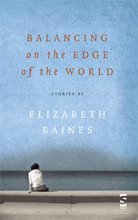
Last week I immersed myself in short stories in preparation for workshops I would be conducting at a Short Story day hosted by the National Short Story Campaign. One of the things I did was revisit metropolitan, the short-story magazine I co-founded and co-edited with Ailsa Cox (and which the two of us co-published with John Ashbrook).
It was an experience both exhilarating and depressing, and a sober illustration of the problems which exist nowadays for unknown but talented writers of serious literature. I was newly stunned by the standard, originality and energy of the stories we published, and I have to say grabbed by them in a way I wasn't by the stories in many published collections. Several literary agents were too at the time, and picked up several of our writers. Yet what struck me last week was how few, even so, have yet made it as mainstream authors.
Some have made it into mainstream publication, although few are known for their short stories. Roger Morris is known for his critically-acclaimed Macmillan New Writing novel Taking Comfort and - perhaps better - for his Faber crime novels. Susan Davis and Paul Magrs publish fiction for young adults. [Edited-in correction: Paul has also published 10 mainstream novels for adults, two of which were already placed with mainstream publishers, along with a collection of stories, before we published his story, so doesn't in fact qualify for this list of 'unknowns'.]. Daniel Davies (if indeed it is the same Daniel Davies) has published a novel with Serpent's Tail. Art Corriveau's novels have been published by Penguin, but his short stories are published by an independent press. The agent of the brilliant Tamar Yellin failed to place her collection of stories or her novel The Genizah at the House of Shepher with any British publisher, but after they were published by the American Toby Press, the latter won the prestigious Sami Rohr Prize and the former was short-listed for the first Edge Hill Prize for the Short Story. The novels of Nigel Pickard, Robert Graham and Frank Downes have come from small presses.
And what about the others? One, Fi Francis, has sadly died - such a loss to literature - and I was recently astonished to be told that another, Penny Rendall, has given up writing. But even allowing for such tragedies and contingencies, it's a shameful fact that so few of the following names aren't better known as writers of fiction, although many have made names for themselves in other fields: Judith Amanthis, Marion Baraitser, Alex Barr, Kate Barry, Kirsty Brackenridge, Madeleine Cary, Dave Downes, Frank Downes, Michael Eaude, Molly Firth, Veronika Forster, Iain Grant, Vicky Grut, Atar Hadari, George Hawthorn, Hilaire, Graeme Hodgson, Rose Hughes, Robert Lawlor, Roderick Lowell Huntress, Mairead Irish, Simon King-Spooner, Kath Mackay, Camden McDonald, Menzies McKillop, Jim McLaughlin, Char March, Heather Leach, Georgina Lock, Paul Marshall, Mindy Meleyal, Rowan Metcalfe, S Morrisey, Graham Mort, Ravinder Randhawa, Karen Rosenberg, John Sitzia, Helen Smith, Amanda Szekely, Mandy Sutter, Kanta Walker, Cathy Wright.
Tuesday, September 30, 2008


Sunday, September 28, 2008
Freedom of Speech
A small quiz:
Which of the following do you find most worrying?
1. The foiled firebomb attack this weekend on the home-cum-business premises of Gibson Square publisher Martin Rynja, who in a determined stand for freedom of speech is about to publish Sherry Jones' The Jewel of Medina, a novel about the Prophet Muhammad's relationship with his child bride, and which Jones insists honours the Prophet and his wife.
2. The fact that on being sent the book for a cover quote by a previous publisher, American academic Denise Spellberg, according to Shahed Amanullah, editor of a Muslim website, made a 'frantic call' to him denouncing the book as 'incredibly offensive', which resulted in a furore, with those who had not read the book also denouncing it and issuing 'warnings'.
3. The fact that 2. caused the book's previous publisher, the giant Random House, to withdraw from publication altogether.
Saturday, September 27, 2008
E-Lit: a Red Herring?
Interesting article by Andrew Gallix on the Guardian books blog this week, asking whether e-literature can ever be innovative in the ways which have sometimes been supposed.
It's a point which writer and Art of Fiction blogger Adrian Slatcher and I have often discussed: the fact that while hypertext is so astoundingly non-linear, no real way has yet been found to apply this to fiction on the web without losing words in favour of other media such as pictures and music. Responding to the article, Adrian makes this point again, and notes rightly that my Manchester-Festival commissioned blogstory last year (which had to take the form of a real-time blog) was inevitably more conventionally linear than my writing for print, since the blog is essentially a linear, sequential form. (Adrian offers his own piece on this post, but the links don't seem to work, and I'm not sure if this is his joke...)
It's a point which writer and Art of Fiction blogger Adrian Slatcher and I have often discussed: the fact that while hypertext is so astoundingly non-linear, no real way has yet been found to apply this to fiction on the web without losing words in favour of other media such as pictures and music. Responding to the article, Adrian makes this point again, and notes rightly that my Manchester-Festival commissioned blogstory last year (which had to take the form of a real-time blog) was inevitably more conventionally linear than my writing for print, since the blog is essentially a linear, sequential form. (Adrian offers his own piece on this post, but the links don't seem to work, and I'm not sure if this is his joke...)
Monday, September 22, 2008
Saturday, September 20, 2008
The Things You Can Sell and the Things that Make You Swoon
God in heaven help us, the Guardian magazine runs a feature today on fashion in literature: 'Chic Lit', actress Emily Mortimer dressed in clothes echoing female characters from fiction (she's a writer's daughter too - John Mortimer - geddit?); journalist Helen Gordon writing as if authors from Austen to Douglas Coupland wrote about fashion simply to relish it, rather than (often satirically) as signifiers of their characters' personalities and conditions; and - most telling of all - books recently in print displayed next to the latest fashion accessories (a full page spread, for instance, in which Gabriel Garcia Marquez's A Life is suspended on a string next to a Gucci bag - why?)
Conjures some depressing images, doesn't it: publishers scrambling to be part of this latest, dummest kind of promotion, and editors turning manuscripts down because they can't quite see them on such a page... (You think I'm joking?)
Fortunately the Review makes up for this a little with an article from Nick Laird condemning just the kind of ethos in evidence here and showing how destructive it is for serious literature, though once again in making a special case for poetry he is rather dismissive of fiction:
A capitalist society ... teaches its citizens to think in terms of selling. Poetry manages, almost uniquely, to be outside of that, and this allows poets to make real art, without recourse to the market...And there's a transcript of a speech by the sadly and recently late David Foster Wallace, which is so close to my own agenda in my current writing that (rather than those shoes and bags) it makes me want to swoon...
Thursday, September 18, 2008
Three Sisters at the Royal Exchange
OK, so I'm off to the Royal Exchange to see Three Sisters, and I'm excited because I won't ever forget the great Uncle Vanya I once saw there with Leo McKern and Eleanor Bron - the scene where he brings the flowers is still with me, and I can still fill up remembering it. Pure Chekhov, it was, heartbreaking, utterly true to his insight into human longing and disappointment.
I take my seat in the first gallery. I look down. Why does this round stage, which can seem intimate even from the high-up second gallery, look so vast and far away? Across the other side, horizontally to me, is a long dinner table (the table where the soldiers will sit, their conversation undercutting that of the three sisters), and it seems immense yet miles distant, divided from us by (admittedly transparent) pillars. I feel I can't see it properly. I push my glasses up my nose, but I can't see it any better. Already I feel excluded from the space of this play.
The action begins, much nearer to us than the table, directly below: on our side of the stage Masha and Olga sit in separate spaces, Olga on a settle, Masha at a piano, Olga talking to Masha across the space. Well, I know this is the point, that Masha, churning with frustration, is cutting off, but somehow I can't join her, psychologically, in her space. I can't join Olga either, I'm watching them both from outside, and yet without focus: I can't take them both in at once and have to keep switching my attention from one to the other. Partly I think it's the performances, or Sarah Francom's direction, but most of all, I think, it's the set design of this production: presumably symbolically, but visually impossibly, the central space is constantly empty and the characters most frequently separated by this abyss.
It's like a tableau, this production of this play by this playwright whose concerns and approach were above all internal, psychological. And there's no moment of real stillness in a play which demands above all moments of stillness, and all that longing, all that desire, all that erotic tension between Vershinin and Masha, were - from my vantage point, at any rate - lost.
By the second act I had given up. Gauzes hung from the flies to the floor, shrouding the beds - set apart again around an empty space - and cutting us off from the characters and the action. Behind the gauze curtains the faces are indistinct and overall the characters are lost in the infinite space which the curtains define - which again may be symbolic of their condition but precludes the internal focus which the play requires. In the final act tree-trunks descended in true RX tradition, spindly but placed around the edges and cutting off the view of any actor directly opposite the ones you were sitting nearby.
Perhaps it was no wonder that the main laughs from the audience were at the outdated social mores...
Alfred Hickling thinks the problem is the play, but personally I think Chekhov and Stanislavski might just be having a bit of a twist in their graves.
Monday, September 15, 2008
A Bit Hard
Yesterday the Sunday Times review was devoted to The Future of the Book, yet I can't find a link on the website - which may seem confirmation of the view expressed by some contributors that print media is getting left behind by the web. But maybe it's me...*
[*Yes it was me: it was The Independent, as Adele Geras points out. No wonder I couldn't find it: silly me!]
Pretty depressing article by John Walsh who believes like Sven Birkets (who in 1994 examined how students now respond to Henry James) that the way in which the internet has taught us to read is resulting in a loss of the ability to engage with serious fiction:
It seems that we may be losing the capacity of "settling into" a book or - more importantly - in the stream of somebody else's thoughts in a way that readers (and writers) once took for granted ... Now, many serious writers complain, challenging fiction doesn't appeal; "difficult" novels don't sell. Adam Mars-Jones's massive and beautifully written novel Pilcrow, published earlier this year, sold only a few hundred copies, and there have been several similar casualities. Although, traditionally, every Booker winner invariably becomes a world bestseller, the 2008 winner, Anne Enright's The Gathering, made the briefest appearance in the top 10 before disappearing. It had a narrative of sorts, but was broken-backed in structure and its strength was the narrator's wry, funny, piss-taking tone - exactly the kind of thing that Prof Birkets' students hated in Henry James.
To sell now, books evidently need to be big on plot and incident, short on interior monologue - the sort of titles the Richard and Judy Club strenuously promotes.
Saturday, September 13, 2008
A Question of Vulnerability
Anne Enright continues the week's Guardian theme of authors' vulnerability at public readings, particularly when it comes to the Q & A.
Apart from Norman Mailer, it once seemed to her:
Apart from Norman Mailer, it once seemed to her:
I asked a question myself once. The writer was Norman Mailer, and I had just had enough of him - standing up there thinking he was someone, when every single thing he said was pants.Enright challenged him:
He was advocating sex to the (manifestly anti-sex) audience. What a great activity. He couldn't praise it enough; metabolically, spiritually, possibly even financially. I put up my hand and waited to catch his eye.I was a bit pink and tingly, indeed, as I got ready to break through the fourth wall that exists between performer and audience, between the one who is known and the one who is not. When my turn came, I found the act of speaking sort of mortifying and dreamlike. I said: "If you're that keen on sex, then why are all the sex scenes in your books so unhappy?" And he said: "Why are you so angry?"
Enright is telling this story ironically, first and foremost against herself, since earlier in the article she says, 'Long experience tells you that it is the angry people who ask about anger'. 'You have to hand it to Mailer,' she acknowledges, ' - now there was a man who was made for the Q & A.'
But she can't resist adding: 'The prose he read, I am delighted to report, was dire.'
Tee hee.
Wednesday, September 10, 2008
The Writing on the Wall
I was in the doctor's this morning (nothing serious) and for some reason nothing was moving, and the wait was an hour and a quarter. At one point I looked up from my book and there were eighteen of us waiting, all in silence. One other person was reading a book, two others were reading waiting-room mags, but the other fourteen were sitting staring at the walls for one and a quarter hours.
Maybe they were the deep thinkers. Or maybe they were just too worried about their health...
Maybe they were the deep thinkers. Or maybe they were just too worried about their health...
Tuesday, September 09, 2008
Just L'il Ole Me with the Power to Ban Books
I'm a bit late with this one, what with being stuck in the hills and that, but I can't resist it:
So on being presented by The Guardian with Carol Ann Duffy's poetic response to the banning of her poem Education for Leisure, Pat Schofield, the external examiner whose complaint led to the banning, had this to say:
But then that's our education system, it seems.
So on being presented by The Guardian with Carol Ann Duffy's poetic response to the banning of her poem Education for Leisure, Pat Schofield, the external examiner whose complaint led to the banning, had this to say:
"...a bit weird. But having read her other poems I found they were all a little bit weird. But that's me".Correction: that's an external examiner whom we'd expect to be able to understand poems.
But then that's our education system, it seems.
Tuesday, September 02, 2008
Save Me from the Short Story
This week the books blog Vulpes Libris pays tribute to the short story while yet paradoxically providing an insight into the general prejudice against the form. Yesterday's post was a round-up of favourites (and the Bitch is pleased to have her own collection offered by the esteemed Dovegreyreader). However, the blog's coordinator Leena ended up asking for contributions from other bloggers, since she drew a blank with her fellow foxes, who confessed to little interest in or knowledge of the form.
While today's blog offers an appreciative review of the great collection The Fantastic Book of Everybody's Secrets by Sophie Hannah, it also includes a contribution from Elaine of Random Jottings who, although going on to recommend several (canonical) short story writers (including the lengthy stories of Henry James), says this:
While today's blog offers an appreciative review of the great collection The Fantastic Book of Everybody's Secrets by Sophie Hannah, it also includes a contribution from Elaine of Random Jottings who, although going on to recommend several (canonical) short story writers (including the lengthy stories of Henry James), says this:
My main problem with this genre is that the narrative can be over far too quickly and just when you are getting interested in the characters and situation you turn the page and find that that is it, you have come to the end. I have lost count of the number of times I have done this and thought, oh damn just when it was getting interesting. When I am reading fiction I like something solid, something I can really get into so I somehow feel cheated with a short story and irritated that I am not going to know what happens next. I gather that short stories are regarded as being an art form on their own, incredibly difficult to write and anybody who can do them properly is regarded as a literary giant. This may be true but when I pick up a collection of short stories and find they are described as ‘exquisite vignettes’ (and yes this has happened), my main reaction is to run screaming from the room.There is of course a whole essay to be written about the implicatons of this for the ways in which we read and our expectations of what we read...
Thursday, August 28, 2008
Back to the Hills
I may or may not be blogging very much for the next 10 days or so. The usual reason. (There's still a cloud down on this hill.)
Tuesday, August 26, 2008
Get Thee to an Old Folks' Home
Nice article by Mark Lawson on possible signs that ageism in the arts may be on the wane...
I do wonder, though. I'll never forget the time I was teaching in a Glasgow comprehensive, not long out of college. I was twenty-three. We had cosy little individual staff rooms and the people in mine were a riot: swearers, drunkards, anti-establishment cynics who held parties in the school after hours - you know, you've seen them on Teachers. Well, I was telling them a story about some really stuffy people, and I described those people: straight-laced, tradition-bound, no sense of humour - well, what did I expect, they were all over thirty!
There was a gulping silence, and then everyone in the room said, 'Well, thanks!'
Well, of course I knew if I thought about it that they were all over thirty, but I didn't think of them as over thirty, for this reason: the image in my head of thirty-year-olds was pretty dire, and they simply didn't fit it. But such images are pretty hard to shift, and I do wonder sometimes what images are in the heads of the young people who seem increasingly nowadays to be running our arts organisations (and of course, in the theatre especially, funded to look for work by even younger people)...
Sunday, August 24, 2008
No Point in Whispering when You Want a Shout
OK, so I looked up Blurbings.com, the service providing book blurbs (by which they seem to mean puff quotes), which has apparently caused some outrage. And thanks to Tania Hershman I found the hilarious article by Rebecca Johnson on Salon.com exposing the fact that nothing could be more potentially corrupt than the traditional way that such cover quotes are obtained.
Blurbings.com tells us:
Here's my own recent cringe-worthy experience, my search for a cover quote for my recent story collection. Would I ask people I knew? Would I heck! How could I live with myself (and them afterwards) otherwise? So what did I do? I sent initial queries to the agents of short story writers I didn't know personally but whose work I respected. Guess what? Back came nice polite letters from the agents telling me that their clients were fiendishly busy but wished me all the luck.
What next? OK, I would bite the bullet and ask a well-known short story writer I had met not so long ago. But I wouldn't put her on the spot by ringing her up, or suggesting the coffee we had vaguely mooted. Instead I sent her a postcard, in which I insisted (repeatedly) that she must refuse to do it if she didn't want to etc etc, she didn't even need to answer this card if she didn't want to.
Guess what? She didn't answer the card. I didn't get a quote, and yet I still may have spoilt a beautiful potential friendship...
What next? Well, there's that mega-famous author who's really close friends with some really close old friends of mine, and I've met her at their house more than once... that wouldn't be so bad, would it. I mean, it's pulling strings, but I can hardly be said to know her, and she wouldn't feel obliged to give a good quote whatever... So I email my friends and ask them what they think. Well, they'll read the stories first and decide whether to ask her. I email the stories. One of my friends reads them over a week on his train journey to work. He really likes them, he thinks his friend the mega-famous author will like them. He'll contact her and ask.
Days go by. Weeks. A month, two... I give up. (Nine months later, when the book is published, I'm at a party at his house - the mega-famous author isn't - and he tells me she never answered his query.)
Meanwhile, I have caved in completely. I have rung up my good friend who has agreed to look at the manuscript, and there I am in his kitchen on Sunday afternoon, handing it over and cringing inwardly, not nearly as sure as he seems to be that he'll like the book when he reads it... But then we're saved the embarrassment: for my publisher decides it's better he doesn't do it anyway, since he's already just provided a quote for another of her books.
I was lucky in the end. I walked into the foyer of MMU for a reading, and Livi Michael, writer of wonderful novels for adults and children - and of brilliant short stories, one of which we published in metropolitan - came sweeping across the tiles to greet me. Livi! Perhaps I could ask Livi! But does she know my work? Would she hate my work? How could I put her through the embarrassment of saying no if she didn't like it? No, I can't ask Livi!
She sees the look on my face. 'I know what you're going to ask me,' she says, 'and the answer is Yes!' Turns out she did like my work already: turns out she loved the book.
Even so, it's not the easiest thing in the world, coming up with a quote that sums up and yet does justice to a book. Wouldn't surprise me if Livi, like so many of my writer friends, has since declared herself a blurb-free zone.
And I did only manage to get one shout.
Blurbings.com tells us:
Normally, a blurb will cost an author and/or publisher $14 - $23, which includes printing of the galleys, packaging and mailing fees. The standard 30 – 50 blurbs expected per book can range from $420 to $1,150. It is also very time consuming researching and contacting prospective authors as well as conducting follow-ups during the duration of the process.Notice any figure missing? A fee to the poor 'blurbing' author! As Rebecca Johnson says, it's also a time-consuming business for the endorsing author, who is expected to do it for free. Once, I remember, the winning novel of a competition for which I'd been on the judging panel, which was now to be published by a small publisher, was sent off for a quote to a famous novelist well known for her left-wing feminist views. How amazed and shocked the publisher was when she wrote back that she didn't do quotes for free. But you know, in reality, it's their shock which is shocking.
Here's my own recent cringe-worthy experience, my search for a cover quote for my recent story collection. Would I ask people I knew? Would I heck! How could I live with myself (and them afterwards) otherwise? So what did I do? I sent initial queries to the agents of short story writers I didn't know personally but whose work I respected. Guess what? Back came nice polite letters from the agents telling me that their clients were fiendishly busy but wished me all the luck.
What next? OK, I would bite the bullet and ask a well-known short story writer I had met not so long ago. But I wouldn't put her on the spot by ringing her up, or suggesting the coffee we had vaguely mooted. Instead I sent her a postcard, in which I insisted (repeatedly) that she must refuse to do it if she didn't want to etc etc, she didn't even need to answer this card if she didn't want to.
Guess what? She didn't answer the card. I didn't get a quote, and yet I still may have spoilt a beautiful potential friendship...
What next? Well, there's that mega-famous author who's really close friends with some really close old friends of mine, and I've met her at their house more than once... that wouldn't be so bad, would it. I mean, it's pulling strings, but I can hardly be said to know her, and she wouldn't feel obliged to give a good quote whatever... So I email my friends and ask them what they think. Well, they'll read the stories first and decide whether to ask her. I email the stories. One of my friends reads them over a week on his train journey to work. He really likes them, he thinks his friend the mega-famous author will like them. He'll contact her and ask.
Days go by. Weeks. A month, two... I give up. (Nine months later, when the book is published, I'm at a party at his house - the mega-famous author isn't - and he tells me she never answered his query.)
Meanwhile, I have caved in completely. I have rung up my good friend who has agreed to look at the manuscript, and there I am in his kitchen on Sunday afternoon, handing it over and cringing inwardly, not nearly as sure as he seems to be that he'll like the book when he reads it... But then we're saved the embarrassment: for my publisher decides it's better he doesn't do it anyway, since he's already just provided a quote for another of her books.
I was lucky in the end. I walked into the foyer of MMU for a reading, and Livi Michael, writer of wonderful novels for adults and children - and of brilliant short stories, one of which we published in metropolitan - came sweeping across the tiles to greet me. Livi! Perhaps I could ask Livi! But does she know my work? Would she hate my work? How could I put her through the embarrassment of saying no if she didn't like it? No, I can't ask Livi!
She sees the look on my face. 'I know what you're going to ask me,' she says, 'and the answer is Yes!' Turns out she did like my work already: turns out she loved the book.
Even so, it's not the easiest thing in the world, coming up with a quote that sums up and yet does justice to a book. Wouldn't surprise me if Livi, like so many of my writer friends, has since declared herself a blurb-free zone.
And I did only manage to get one shout.
Saturday, August 23, 2008
It's All too Much for an Author
Got my head stuck in that bearpit the Guardian books blog this week, where, after writing a post on the problems of having to sell one's book via one's identity in this commercially-oriented literary world, Josie Henley Einion was torn apart by the resident purists for using both her identity and the books blog to sell her novel.
Sigh. I must get out more...
And in so doing, I missed an apparent web discussion about book blurbs... well, it happened according to the Guardian, but I still can't find it, or should I say I'm not prepared to spend a moment longer at this ruddy computer on this first hot day of August, and I'm off in to the garden.
Which is just as well, because if you ever got me started on the excruciating process of having to creep to your well-known friends and acquaintances for shouts... Can't think about it any more, I'm shuddering too much. I'm off to do some weeding...
Friday, August 22, 2008
Internet Widower
John Keenan responds on the Guardian books blog to John Updike's contempt for the internet, and links it to a fading relevance in his recent novels, in particular The Widows of Eastwick.
Wednesday, August 20, 2008
Thanks, Enid
In response to Enid Blyton's win in the recent Costa poll for the best-loved children's writer, Lucy Mangan writes in today's Guardian of her own childhood obsession with Blyton and the fact that while Blyton's books were once banned from public libraries as politically incorrect and culturally impoverished, she opened up for generations of children the 'promised land' of reading.
I've said it many times before and I'll say it again here: she opened up for me the promised land of writing. I wanted consciously to be a writer from the age of eight - in fact, I was a writer before that, and Enid Blyton played no small part in that. Like Lucy Mangan, while I was reading everything, including Dickens, I gobbled up Blyton - The Famous Five, The Secret Seven, and in particular the Adventure Series (The Castle of Adventure, The Valley of Adventure etc) - like a drug. You can say this for Blyton, which you can't say for Dickens: nearly every time I finished one of her books, I went off and wrote a story of my own.
Why was this? I don't have any Blyton books here to study for the reason: while I still have many of the books I read then I never kept a single Blyton; that wasn't the point of them, the point of them was what they triggered in me. I do of course remember though that they were, as Mangan says, formulaic and baldly told. It's interesting to me that Mangan reports that Blyton decribed her working method thus: '...simply a matter of opening the sluice gates and out it all pours with no effort or labour of my own.' Clearly, what is going to result from this is unthinking, cliched, repetitive. Yet there was something exciting for me, I think, generated by that, an energy - and a permission just to do it, which the classics, bound by their mature and rarified insights and more sophisticated use of language, couldn't give. The classics (after a certain age I never read any other books specifically intended for children; I stayed away from them like the plague) were exclusive in their consciousness (while of course being in the long term far more nourishing fodder), whereas Blyton did not even merely include me in hers, she allowed me to take over: so bald was her prose (as I remember) that it left infinite room for my own projections, my own imaginings of the settings and the inner thoughts of the characters. No wonder I would go off and write when I'd finished reading one: I was already writing as I was reading.
I must have another look at The Faraway Tree. So many people have told me that they hated it when I've said I loved it. I had chicken pox, I remember, and I suppose I was a bit delirious. But that notion of a tree you can climb to another world, the world of imagination (Yes, OK, I know it's derivative in the first place, but it's probably something about the very bald way she wrote it!) has been the basis of of my concept of writing ever since.
Creativity works in more complicated ways than we sometimes think, and all I can say is, Thanks, Enid.
Monday, August 18, 2008
It's Marvellous, Darling!
A nice post from Ms Baroque on the fraught question of reviewing for writers.
Business versus Literature?
Mark Liam Piggott writes interestingly (and bravely) for the Guardian blog asking whether literary agents are any longer helpful to literary writers, or whether the pressures of the market have turned them into gatekeepers barring work which, however excellent as literature, is unlikely to be profitable. The many comments are interesting. Susan Hill (with her publishing hat on) points to the Nielsen book scan which reveals the sales of any previous book by an author, and thus determines whether or not they are likely to be invested in again, pointing out as she has on previous occasions that publishing is above all a business and that 'fine words butter no parsnips'. Though whether this is a defence or a condemnation depends where you're coming from with regard to the matter of literary fiction, I guess...
Like Piggott's, Nasim Marie Jafry's novel the State of Me, which I review on my other blog, is another interesting case of a novel held back by the commercial requirements of agents and then making it to publication without an agent.
Like Piggott's, Nasim Marie Jafry's novel the State of Me, which I review on my other blog, is another interesting case of a novel held back by the commercial requirements of agents and then making it to publication without an agent.
Thursday, August 14, 2008
The View from the Mountain
So sorry – I hadn’t resolved my internet problems after all. I’ve been pretty cut off altogether: the radio hasn’t tuned in either, there’s no telly, and each day it’s been late before I’ve driven the 6 miles for a newspaper, and sometimes there haven’t been any left.
Anyway, through my tiny window of internet connection from the side of a cloud-covered mountain I’ve had one or two glimpses of our weird commercially-oriented literary world: John Sutherland on the sexual fantasies the BBC Drama dept finds necessary to invent to make our literary history palatable, and Molly Flatt striking despair into the heart of every novelist by taking a whoops-silly-me-but-what-a-lark attitude to the fact that she reads as a kind of addiction without attending much to what she reads.
And if you think that going back up the Welsh mountain has made me regress to the Wesleyan parts of my origins, I don’t care. (And when the flood comes, I’ll be OK, Jack, even if I will have to live in a silent, clouded world.)
Subscribe to:
Posts (Atom)