Thursday, April 03, 2014


Sunday, February 16, 2014
Friday, February 14, 2014
Judging the author rather than the book
Our reading group discussion of a stunning book that has been unjustly overlooked, even dismissed. Moon Tiger by Penelope Lively.
Friday, January 03, 2014
Reading group: The Book of Daniel by E L Doctorow
Here's what our reading group thought of this novel based on the real-life case of the Rosenbergs, charged with leaking the secret of the atomic bomb to the Soviet Union and executed in 1953.
Saturday, November 09, 2013
Single shorts from Nightjar
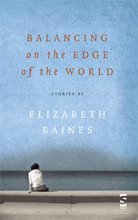
I don't know whether it was a deliberate reminder, but the day after my post on the publication of short stories in individual volumes, two new Nightjar Press chapbooks came slipping through my door, presumably from Nightjar publisher Nicholas Royle. For a few years now, Royle has of course been publishing chapbooks under this imprint devoted to the format, each volume containing a single story.
Genre-wise, the imprint is also devoted to the uncanny. I say genre, but of course the uncanny can be conveyed via a wide range of types of writing and, inevitably, I like some of it more than others. My narrative interest is above all psychological. By this I don't at all mean that I only like writing grounded in psychological realism, with complex and believable and 'identifiable-with' characters etc; no, no, I love a good surreal story, and am very ready to be lost in the uncanny. A good uncanny story operates of course by tugging on a reader's fear or uncertainty, and it seems to me that therefore the best uncanny stories are those that unsettle us by touching on serious existential fears rather than simply giving us a brief and therefore safe thrill of horror. (Others, I know feel differently, but quite frankly I've had far too many real-life scares to be interested in looking for a thrill of horror.) I'd say that stories grounded in psychology do the former, and those that hinge on circumstance and plot tend to do the latter.
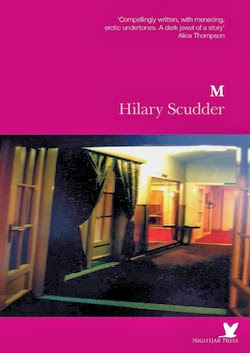
 The two new Nightjar stories exemplify for me this dichotomy. In Hilary Scudder's story, M, the first-person narrator flees from her husband, of whom she has been very afraid, to meet her lover, M. Before fleeing she leaves her husband a letter, daring (in her euphoria at escaping) to wish him as much unhappiness as he has caused her, indeed to wish him an agonising death. But as she approaches the place where she has arranged to meet her lover, things take a dark turn: it is not the cafe-bar scene she expected, but a dank and deserted docks... It's hard to say any more about the story because what counts in the story is what happens (and if I told you I'd spoil more or less everything about it). But what does happen happens to our protagonist. Rather than resulting from her psychology (either her idiosyncratic psychology, or the psychology we all share), the dangers she faces are out there, external to her. The final twist, while it does indeed provide a jolt of horror, is basically contingent: it could have happened, or it couldn't; chance is what determines that it does, rather than its being an inevitable consequence of the specific psychology of any of the characters or of human nature in general. There is an overall message - that it's hard to escape the horrors of sexist men - and the story is certainly vivid, with elements associated with the genre - a protagonist suddenly lost in a dark and threatening place, with lush glimpses of an erotic but sinister hidden world - guaranteed to give that bolt of thrill, and I'm sure lots of people will love it.
 M John Harrison's Getting Out of There is for me a story of a quite different order. It couldn't begin in any more ordinary setting or situation: a web designer moves from London back to the small seaside town in which he grew up, takes a room in a run-down house and sticks most of his belongings in a lockup 'with untreated breeze-block cubicles of different sizes, behind doors that were little more than plywood.' So far so quotidian, indeed seedy. But what's not ordinary is the prose. This is how it begins:
Genre-wise, the imprint is also devoted to the uncanny. I say genre, but of course the uncanny can be conveyed via a wide range of types of writing and, inevitably, I like some of it more than others. My narrative interest is above all psychological. By this I don't at all mean that I only like writing grounded in psychological realism, with complex and believable and 'identifiable-with' characters etc; no, no, I love a good surreal story, and am very ready to be lost in the uncanny. A good uncanny story operates of course by tugging on a reader's fear or uncertainty, and it seems to me that therefore the best uncanny stories are those that unsettle us by touching on serious existential fears rather than simply giving us a brief and therefore safe thrill of horror. (Others, I know feel differently, but quite frankly I've had far too many real-life scares to be interested in looking for a thrill of horror.) I'd say that stories grounded in psychology do the former, and those that hinge on circumstance and plot tend to do the latter.

Hampson came back after some years, to the seaside in the rain, to this town built around a small estuary where a river broke through the chalk downs. Everything - everything people knew about, anyway - came in through that gap, by road or rail; and that's the way Hampson came too, midweek, in a rental van, unsure of what he would find for himself after so long.and right there at the beginning you know, from the rhythm, from that description of the gap in the chalk and the river taking everything with it, hinting already at gaps in reality and a sense of inevitability - not to mention that phrase 'everything people knew about anyway' - that you're in the hands of a master. This is a story about alienation: Hampson's alienation and everyone's alienation. When strange things start to happen, which they do, there's the possibility that Hampson is going mad, but we can't simply pass it off as this: the evocation of the world around Hampson, seen through his perspective, draws us into his psyche, we share his psyche, and are drawn right into the experience. What's most unsettling for the reader as well as Hampson is the disruption of reality, the uncertainty as to whether or not the phenomena are out there or not. As I interpret it, this is is a story precisely about the horror of the ordinary, about our fear yet need for it. The horror is partly within ourselves, in how we can deal with the world, and for me this makes it a deeply resonant story, one which both comments on and transcends the genre.
Wednesday, November 06, 2013
Tuesday, November 05, 2013
Austen modernisations, really?
Is there anything that better illustrates literary fiction's contemporary enthralment to the market than HarperCollins' series of Jane Austen modernisations? As John Mullan points out in the Observer, Austen's novels are specifically about the manners, modes and social constructs of the time in which she was writing, all of which have now gone by the board. He outlines them all and shows how Austen's plots hinge on them entirely: the formality of naming which creates the crucial romantic misunderstanding in Sense and Sensibility, the rigid rules of sexual behaviour which, adhered to or breached, can create commitments and misunderstandings that would never happen now (Persuasion and Sense and Sensibility), the unbreakable trap that marriage was, the fact that a single woman had lost her chance of it by the age of 27, and so on...
I suppose people will object that it's the characters that can be replicated, that the interest is in seeing those same characters negotiate a different set of social circumstances. But this is to subscribe to a pretty naive concept of 'character' and, more crucially, of what a novel is. Most of us, I guess, have been told that we are like a certain older relative, that we share their character, and many of have us felt that indeed we are and do, and in that sense we can see character as something that is passed down through families, determined by our genes, and therefore given and constant. But we are not in fact those older relatives: we may share certain personality traits but we are also formed by the different things that happen to us and the different society in which we live. Change the circumstances and you change the way a person is going to a behave, and thus in turn their character. And what is a novel - that most social of forms - but a depiction of the way people behave (action) when a certain set of social circumstances is applied to them?
A novel and its characters, as I discussed in a previous post, are also, supremely, constructs of language: to change the language of a novel - an essential part of the project in any modernisation - is to destroy its soul. And as Mullan points out, when the Marianne of Austen's Sense and Sensibility is finally driven to swear it is a most dramatic moment, but Joanna Trollope has her 'using the F-word on page 6, so when things turn really bad what extreme words does she have left?' Swearing means something different nowadays: it doesn't indicate the same thing about situations or characters, and the fact that Trollope's Marianne swears does not make her the same character as Austen's.
I really can't see what's actually being replicated here. Except for one thing: the lovely glow that a best-selling classic lights in the heart and a publisher's bank balance.
Saturday, November 02, 2013
Single shorts
Philip Hensher hopes that Penguin's issue of a single short story by Zadie Smith as a hardback and ebook indicates that we are 'at the beginning of a golden age of possibility, where writers can write at whatever length they choose'. I'm not quite sure sure that, as one commenter on the Guardian site points out, Penguin putting out what amounts to a Christmas-market taster from a novelist with Smith's profile is an indication of this, but I do hope, like Hensher, that the rise of the ebook is causing a sea-change in our attitude to the short story.
I have complained before on this blog about the fact that the manner in which short stories have generally been published in this country militates against the kind of reading that many short stories require. Many short stories need to be read as what Hensher calls 'exquisite singularities', and not 'as a chapter between chapters' in a collection. In recent years of course, we have had the market-driven rise of collections of linked short stories, in which individual stories are most supremely subsumed to the whole. Such collections have their charms, but I think they have pushed out the kind of short stories that are off-the-wall original and can't be repeated - which indeed the greatest short stories often are. As Hensher says, due to economic considerations, 'we don't publish books in the way they were conceived,' and this has been especially true for the short story.
Thursday, October 31, 2013
Tuesday, October 29, 2013
Norman Geras
I am late in making a tribute to Norman Geras, author of Normblog, who died on 18th October. Partly this is because I haven't been blogging at all (I've been immersed in writing), but partly I have felt too affected to feel up to making any public statement. Norm was the husband and father of my dear long-time friends writers Adele Geras and Sophie Hannah. For many years I didn't in fact know Norm personally - whenever I went to Adele's he'd be at the university or up in his room working - but I got to know him somewhat after I started blogging in 2006. By the time I first talked to him at the Manchester blog awards (which he'd won the previous year) and for which we were both shortlisted, I was of course already entirely smitten with his blog, which as countless others have said, was an oasis of calm and reason in an internet world of increasingly knee-jerk reaction. He couldn't understand, when I first talked to him, why I had two blogs - my author blog as well as this critical commentary blog. I explained the kind of conflict that I and I think other authors feel between the need don a promotional hat for our work and the need to be free to challenge such market forces. He still thought I should have the courage to combine the two blogs. I didn't - I went on finding it politic not to - but I always felt that by not doing so I was falling short of the intellectual rigour that Norm personified. Norm was frankly an intellectual giant, and I always turned to his blog, as others have said they did, to see what he made of any issue. I am going to miss dreadfully his incisiveness and reason, his intellectually tough yet humane presence, and the online world is vastly poorer without him. Fortunately he will still be with us in the form of the Normblog archive which is being kept open, a vast repository of reason and enlightenment.
Friday, September 06, 2013
Literary labels


The excellent online magazine The View From Here kicks off its autumn season today, and I'm chuffed to be in the fiction slot, The Front View, with a new story, 'Tides, or How Stories Do or Don't Get Told'.
I suppose you could say that 'Tides' is a bit of a metafiction, but I hesitate to use that word because it sounds as if the story is far more experimental, hermetic - whatever - than I think it is. A short while ago the reading group I'm in had a couple of writing-group sessions, and I brought this story and made the mistake of calling it metafiction, and I think it put people off and they approached it fairly critically. (I think they liked it in the end, though!). See, that's the danger of labels, yet they're what we're stuck with in this marketing literary culture...
Anyway, I'd be really interested to know what other people think. You can read the story here.
Many thanks to Kate Brown, Fiction Editor at The View From Here.
Crossposted with my author blog.
Thursday, August 22, 2013
Friday, August 16, 2013
Saturday, August 03, 2013
Novel as language
In today's Guardian Review Zadie Smith writes:
Yet always we are asked the question, 'What is your novel about?' and we are always expected to come up with some more concrete answer than the above, to refer merely to the story, or a political or moral theme, as though these are the be-all and end-all of any piece of fiction, when in fact they are common currency, and could be replicated any number of times. The real, defining and unique aspect of any novel is the voice or voices. And yet we do, don't we, we answer in the way we're expected, like dogs on hind legs? It takes a particular level of fame and status to be able to answer as Smith has done (although I'm daring to agree with her here, and wait wincing for the chop), for most of us are in thrall to the marketing machine that grinds along on those clattery superficial and ever-replicable cogs. Answering in the way we are expected, we feel afterwards that we have sold our work short.
And does it affect how we write? As it happens for me, a couple of days ago someone writing a PhD contacted me about one of my very early stories, and commented that I was doing something unusual and interesting with language. I was flattered, but my blood ran cold. For I consciously stopped writing quite in the way I did then. Mostly I think it's a good thing, that my work became more accessible, but it did make me wonder: have I simply been deflected, possible wrongly, by a sense of what's no longer linguistically acceptable in a dumbed-down literary marketplace?
What's this novel [her latest, NW] about? My books don't seem to me to be about anything other than the people in them and the sentences used to construct them.And my reaction is Exactly! That's exactly how I feel about my own work, and I bet loads of other writers feel this too. A novel (or a story) is a construct, a construct of language, and the literary novel is above all about language: it's perhaps the defining characteristic of the kind of fiction we call 'literary'. Characters are supreme constructs, manifest not only in the narration (language) that conjures them, but in their dialogue (language), which is where people most self-consciously, and on a day-to-day level, construct reality about the world and themselves. None of it's real, but, as Smith (a wizz at dialogue) indicates, what we're engaged in is nevertheless a search for reality, the reality of the world that language constructs.
Yet always we are asked the question, 'What is your novel about?' and we are always expected to come up with some more concrete answer than the above, to refer merely to the story, or a political or moral theme, as though these are the be-all and end-all of any piece of fiction, when in fact they are common currency, and could be replicated any number of times. The real, defining and unique aspect of any novel is the voice or voices. And yet we do, don't we, we answer in the way we're expected, like dogs on hind legs? It takes a particular level of fame and status to be able to answer as Smith has done (although I'm daring to agree with her here, and wait wincing for the chop), for most of us are in thrall to the marketing machine that grinds along on those clattery superficial and ever-replicable cogs. Answering in the way we are expected, we feel afterwards that we have sold our work short.
And does it affect how we write? As it happens for me, a couple of days ago someone writing a PhD contacted me about one of my very early stories, and commented that I was doing something unusual and interesting with language. I was flattered, but my blood ran cold. For I consciously stopped writing quite in the way I did then. Mostly I think it's a good thing, that my work became more accessible, but it did make me wonder: have I simply been deflected, possible wrongly, by a sense of what's no longer linguistically acceptable in a dumbed-down literary marketplace?
Tuesday, July 09, 2013
Space and self
Writing in the Guardian on re-reading E M Forster's Maurice, Lawrence Scott finds that the novel's plea for private space, psychic as well as physical, has supreme relevance in the age of the internet.
This instinct for withdrawal and obscurity speaks to present critiques of digitised life. In a world increasingly patrolled by online analytics and social media, Maurice's political dilemma still resonates: how might you not be in hiding while not being on display?I've often written about the way that social media encroach on the time and attention necessary for creative production, but this article has made me think more about the impact on writing process. It's that reference to online analytics that set me thinking. Nowadays we are all out there, on line in more ways than one. Facebook operates precisely to break down the public and the private, and through it we - including our apparently private selves - become sets of fixed data owned by other people. The whole project of writing fiction, though, for me and I'm sure for most others, is precisely to question outward appearances and assumptions, to get beneath the concrete and the quotidian to a deeper resonance, and to question the concept of the fixed nature of reality. We approach a piece of fiction with the sense that there are things to discover in the process of writing, in the unravelling of the story, things about life and truth and even about ourselves, that we haven't yet imagined. This requires a particular openness, to possibility, to ambiguity - we ask what if, we have to slip into other views and other psyches (which is why I also say writing is like acting) - and a certain divesting of ego and identity. So, my question: if we are spending time (for the sake of our book sales) working on fixing on the public consciousness (and the data banks) our particular personalities, do we boost those particular personalities to such an extent that we endanger those creative moments requiring our fluid, uncertain and unpredictable selves?
Wednesday, June 19, 2013
What a novel can do to a reader
Here's a funny (or not so funny) little postscript to our reading group discussion about A M Homes's The End of Alice - a novel concerning the murder of a child by a paedophile - and food for thought about the power of fiction.
I have been in Wales, and yesterday evening, my final evening and a beautiful one, I was walking with my partner on the Anglesey coast path. It was my birthday; the walk was a birthday treat my partner had arranged, and it couldn't have been more perfect: the weather was warm, the sea below the cliffs was glassy, the fields were bright yellow with the biggest display of buttercups I've ever seen, everywhere there were birds, and I saw my first-ever ring-ouzel, that summer-visiting member of the blackbird family.
Then, as the path curved towards the next village, we rounded a corner and walked into the click of a camera: a lone man taking a photo and unaware of our hidden approach. He turned away quickly and began walking on ahead of us. In his hand he was carrying something bright and spotted, and as we walked behind him I made out what it was: a piece of clothing, in fact an anorak, the anorak of a small girl. Immediately for me all the calm and warmth drained from the evening. What on earth would a lone man be doing walking the cliffs carrying such a thing? There was no child in sight. And wasn't there something odd about him? On this warm evening he was wearing a heavy waterproof jacket, and his face was unshaven... Where was the child to whom the anorak belonged? All at once I was imagining her in a ditch somewhere, horribly mutilated: they were coming back, all those images prompted by the rape and murder of my own ten-year-old friend on just such a flower-scattered cliffside, images which, though I dealt with that experience in my novel The Birth Machine (or maybe exorcised it) have since become buried, but were resurrected by Homes's novel.
But, I asked myself, surely if this man had murdered a child he'd hide the evidence, he wouldn't carry such a bright, attention-attracting piece around with him. But then, if you'd just murdered a child wouldn't you be deranged, wouldn't you be deranged to have to do it in the first place? And when the man - who was walking quickly, as if to shake us off - suddenly stopped ahead and took a photo of the path ahead of him, the horrific possibility came to me that he was actually documenting the scene of a murder with the kind of perverted mentality suggested by Homes's novel. And I found myself noting every particular of his appearance in case I had to report it to the police.
And then, just as we reached the village, I heard the cry, 'Dad!' and from round the bend ahead a little girl came running towards him, and then into sight came the rest of the man's family, an older girl and a wife. And suddenly the man looked nothing like a sinister child predator, but an ordinary short man, a father kind enough to carry his little girl's coat, and who'd got left behind while taking photos and was simply hurrying to catch up.
But it left me thinking, and a bit shaken. My childhood was ruled by fear of the lone stranger, and when I became adult I saw this (perhaps not entirely wrongly) as linked to racism, and set out consciously to reject it. And I have revelled in the fact that in recent years, the old formalities have broken down and people are generally more friendly and casual and unsuspicious with strangers. But I have now been reminded that actually, that childhood fear was also to do with some terrible things that did happen very close to home, and that it's all too easy to slip into a comfortable false consciousness and ignore the darkness.
And it's Homes's novel that has done this for me. And that's the power of fiction.
Sunday, June 16, 2013
How much real horror can a reader take?
In the very week that A M Homes won the Women's Prize for Fiction, for her wonderful May We Be Forgiven, our reading group happened to be discussing her earlier novel, The End of Alice, narrated, like Nabokov's Lolita, by an incarcerated paedophile murderer. It's an important book, I think, but for our group its power was somewhat negated by the fact that several members found it just too horrifying to read. An account of our discussion is here on my author blog.
Thursday, June 06, 2013
Women's Prize for Fiction
Huge congratulations to A M Homes for winning the Women's Prize for Fiction for May We Be Forgiven, her hilarious, stomach-churning yet moving depiction of the implosion of the American Dream via the disintegrating life of a hapless historian trying to rehabilitate the reputation of Richard Nixon.
Homes is that really precious thing, most particularly in this age of fearful sensibilities: a writer who dares to break the false boundaries of taste and accepted sentiment in order to explore the complex, sordid yet touching truth about ourselves. There seems to me in Homes's writing a total lack of authorial timidity or self-regard, and I salute her.
In the (just less than) fortnight run-up to the prize I set out to read all of the shortlisted books and I managed them all except Hilary Mantel's Bring Up the Bodies, of which I've only read a quarter. The thing that struck me most strongly was a transatlantic divide: three of the shortlistees were American and three British, and I found a literary-cultural difference in their books. It's often said that British literature is obsessed with the past, and it isn't only the UK Mantel's straightforwardly historical novel that seems to bear this out. British Kate Atkinson's structural tour-de-force, Life After Life, is essentially about the horrors of war and plays with the thoroughly contemporary astro-physics notion of parallel universes and alternative lives; however, her focus is historical and the book pivots on a moment in 1910 when the protagonist is born into a Forsterian middle-class idyll about to be shattered by war. While the pivotal moment of Zadie Smith's NW is contemporary, an explicit theme is that of time, and much of the narrative is retrospective examination of how the characters got to the point where they are now.
It's not that the American writers aren't interested in history - Homes's protagonist is after all a historian - but what characterises all three are energetic plunges into the here and now to which history has led us, and a muscular facing up to the huge changes we are undergoing. Both Homes's novel and Maria Semple's very clever and entertaining yet moving Where D'You Go, Bernadette, are steeped in the technology that does indeed saturate our world, and capture the way that it is changing not only the texture of our lives but our psyches. Most urgent is Barbara Kingsolver's stunning Flight Behaviour, set in a place, America's rural bible belt, where climate change is seen as 'God's will' yet is most dramatically experienced.
A great shortlist, and great evidence of the strength of women's writing on both sides of the Atlantic.
Thursday, May 23, 2013
Sunday, April 21, 2013
Branding in publishing
Longman's dictionary:
brand n 1 a charred piece of wood 2a a mark made by burning with a hot iron to designate ownership (eg of cattle) b a mark formerly put on criminals with a hot iron 3a a mark made with a stamp, stencil etc to identify manufacture or quality b a class of goods identified by name as the product of a single firm or manufacturer c a characteristic or distinctive kind; a variety (a lively ~ of humour)
brand vt 1 to mark with a brand 2 to stigmatise 3 to impress indelibly (~ the lesson on his mind)
branded adj labelled with the manufacturer's brand.
Well, it's obvious which of these we mean when we're talking about branding in publishing, isn't it?
Or is it? The more I think about it, the less sure I am, and the more sure that sometimes we aren't at all clear what we mean.
Our Salt panel at the London Book Fair was centred on the notion of branding, though our focus was on the use of social networking in creating a brand, and we took the necessity of creating a brand, and the concept itself of a brand, for granted. But since then I've been thinking...
What precisely do we mean by a brand, and who or what is meant to be the brand? Clearly when the LBF invited Salt to form the panel on the strength of their success via social networking, they were thinking of Salt's output as a brand, in the sense of n 3b, 'a class of goods', in this case books, 'identified by name as the product of a single manufacturer', and also perhaps as n 3c, since Salt is characterised and made distinctive as a quality literary list. It's pretty obvious that a publisher does need to be brand in these senses - both as a business, and in the case of a literary publisher, for artistic reasons.
But then we Salt authors were there to speak for ourselves, precisely for our individual identities as writers, distinct from each other (we hope) and from all other authors, and it is constantly said now that an author - an individual author - needs to be a brand. It was an idea that was utterly taken for granted in the session on The Future of the Literary Agent I attended later that day. When agent Hellie Ogden spoke of what she was going to do for a new author she had taken on, it was the author's brand she spoke of managing and promoting. But what does this mean? In what consists the author's brand?
All too often, I fear, it means that an author is considered, or expected to be, the manufacturer of a series of one particular kind of novel. I have too often heard writers complaining about being pushed by their publishers to write another novel just like their last (and others of being rejected for not doing so), in other words to conform to their supposed brand, in the sense of 'being marked with a stamp'. Well, ouch! After all, creativity is all about innovation, to be repetitive is to be anti-creative. But even more pertinently, from the business point of view too there's a huge fault in this kind of thinking. Of course we like brands: as humans we take comfort in the familiar, the recognisable, but we are also excited by the new: brands can pall, especially in this era of the restless search of the new. This, I guess, is what leads to the deplorable situation of publishers dropping those they may have pushed into repetition, thus wasting their previous investments, and constantly seeking desperately for the The Next New Author.
But in good business practice a brand will maintain a constant while simultaneously refreshing and evolving. And is it not the case that serious authors do this anyway? The brand of a serious author consists after all in voice or style - which as T S Eliot averred is embedded in personality - or maybe something even more subtle, a particular characterising talent or energy, which in turn can give rise to the refreshment of literary variation.
Come back, you abandoned literary mid-listers, all is, or ought to be, forgiven...
Subscribe to:
Posts (Atom)