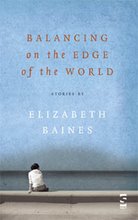
Monday, April 01, 2013

Edge Hill Prize long list and what it shows

Last year, or maybe the year before, the Edge Hill Prize (for a published short story collection) began publishing their longlist. This move is to be welcomed, chiefly and most obviously because it gives publicity, and introduces us, to a larger number of excellent books that may otherwise get no attention whatsoever, but also because it provides us with some measure of the current state of short story publishing. This year the Edge Hill longlist is larger than ever, and it does indeed paint an interesting picture.

It does seem that the locus of short story publishing in Britain and Ireland is now firmly the small presses, and that there are more small publishers than ever in existence producing excellent work. Of the 24 publishers represented on the list, 19 are truly small publishers. It's even more interesting to look at the proportions for the longlisted books: 37 books are listed, but small publishers have produced 29 of those, Salt and Comma being responsible for nine between them. Perhaps another interesting fact is that six of those 19 small publishers - Doire Press, Arlen House, New Island, Stinging Fly, Blackstaff and Lilliput - are Irish, two (Parthian and Old Street) are based in Wales, and another (Freight) is Scottish, reinforcing the notion of the short story as non-conformist.  Perhaps to my own shame I hadn't actually heard of Doire, Freight or Lilliput, or indeed of some of the remaining ten: new to me were the Valley Press based in Scarborough, Route which operates from Pontefract, of all places (I'm prejudiced - I once lived there!), Skylight, Elsewhere, Tightrope (Canadian) and Odyssey (US, I think - they charge for their books in dollars, at any rate). The two I haven't yet mentioned are the northern-based Pewter Rose, and the Bristol-based Tangent.

It's perhaps to be noted, though, that the bigger publishers are still producing short stories - two longlisted books come from Pan Macmillan, and Bloomsbury has fielded no less than three. Interesting, though, that Faber, which one thinks of as the home of literary fiction par excellence, and which has triumphed in this prize in the past (their authors Claire Keegan and Sarah Hall have both been overall winners), appears to have nothing to enter this year (Junot Diaz, the only short story writer they seem to have published this year, failing to be eligible as he's not British-born).

Anyway, many congratulations to those writers on the longlist, and if you'll permit a little indulgence, very special congrats to those on the list I happen to know personally: Carys Bray with Sweet Home (Salt), Nuala Ni Chonchuir with Mother America (New Island), Tania Hershman with My Mother Was An Upright Piano (Tangent), Jackie Kay with Reality, Reality (Pan Macmillan), Adam Marek with The Stone Thrower (Comma), Jonathan Pinnock with Dot, Dash (Salt), Jane Rogers with Hitting Trees With Sticks (Comma) and Tony Williams with All The Bananas I've Never Eaten (Salt) 

Sunday, March 17, 2013

The underlying pattern

I'm pretty averse to Rules for Writing (OK, I know there are basic rules, but I hate the way they get fetishised and lead to the samey-ness that often dominates lit mags and short story prize lists and the kind of literary tyranny that results), but I like, as I think most writers will, this article on story archetypes by John Yorke, from his book on the subject which comes out next month. It's descriptive rather than rule-making, with a nice eye on both the excitement of subverting the archetype he describes and the endless mutability of the underlying pattern:
It seems impossible to understand how, with only eight notes in an octave, we don't simply run out of music. But just as tones give rise to semi-tones and time signatures, tempo and style alter content, so we start to see that a simple pattern contains within it the possibility of endless permutations. Feed in a different kind of flaw; reward or punish the characters in a variety of ways; and you create a different kind of story.

Thursday, March 14, 2013

How close are we to androgyny?

Interviewed about the newly announced longlist for the Women's Prize for Fiction (formerly the Orange Prize), Natasha Walter, one of the judges, says that she was struck by the number of women writing from male viewpoints. Like Telegraph writer Sameer Rahim noting a similarity in the Costa winners, she sees this as possible evidence of a move towards the fulfilment of Virginia Woolf's wish for women writers to be seen as androgynous rather than as women. Others, however, including me (see this post), suspect a different implication. Kira Cochrane writes:
If a woman adopts a male perspective, it seems their story is still more likely to be respected, and read as universal. The author Naomi Alderman is well aware of this bias, and notes that the women who have won the Booker include: "Hilary Mantel writing about a strong man [Thomas Cromwell]. Pat Barker writing about the first world war and men's experiences. AS Byatt, yes there's a woman in it, but actually a lot of Possession is first-person writing as a man. Let's look at their names: Hilary, Pat and AS. These are names a man can read on the train and you don't necessarily immediately know that they're reading [a book by] a woman."

Saturday, February 02, 2013

Reading group: Roger Fishbite by Emily Prager

A bit belated - I forgot - here's the link to my latest reading group report: a discussion of Emily Prager's Roger Fishbite, a re-write of the Lolita story and a book which I think has been sorely underrated, mainly, I'd say because, unless I'm mistaken, people seem to be noticing brilliant prose less and less nowadays (or muddling it with high falutin' abstraction).

Thursday, January 31, 2013

What makes you think you know me?

In a Guardian article today about Ricky Gervais's controversial new character Derek, Mark Lawson notes this:
Performers such as Alec Guinness and Paul Scofield used to argue that actors should be wary of giving interviews because the profession demands the ability to disappear within a part. But contemporary actor-comedians such as Gervais, not only chat-show regulars but also constantly visible on social media, are as far from that mysterious ideal as it is possible to be. The risk is that a proportion of viewers will always be judging the public personality – and, in Gervais's case, controversy – as much as the work. It's intriguing to speculate about how Derek would be received if played by an unknown actor.
I have often argued on this blog a similar case regarding writers: the fact that, if novels don't exactly get judged purely on the personalities of their authors (though I suspect they often do), our celebrity culture does mean that very often it's the novelist rather than the novel that gets attention. In a books marketing climate depending on social media it's unavoidable: authors are now pretty much required by their publishers to have a profile on social media.

It's a conundrum: as I have pointed out often enough, many writers write precisely because they find social interaction more difficult than the page, and most writers write precisely because they find social interaction inadequate: it's solitary contemplation that produces original thought and it's the calm of the page where those thoughts can be properly transmitted and appreciated. This last is a point made strongly by Susan Cain, author of Quiet: The Power of Introverts in a World That Can't Stop Talking. (Tania Hershman, who it seems is also currently concerned with these issues, alerts us to a moving film of Cain speaking.) Cain doesn't in any way suggest we give up social interaction, but pleads for more space for the privacy and contemplation necessary for creative production.

Here's another thought. If the recent 'sock-puppetry' scandal has shown us anything, it's that you can't always trust who someone is online anyway, and I'd say you can't always know who someone is online even when they're using their own name. Another thing the scandal showed was that there's now a whole culture - especially among authors, or at least those authors who were up in arms - of obsession with honesty and being up front, but it seems to me that writers, above anyone, are capable of fictional manipulation - either consciously or unconsciously - when it comes to their online selves. I'd go further and say that we never really know a person from any of their fundamentally public appearances.

I've been thinking about these issues a fair bit since I discovered in the pages of Nicholas Royle's new novel First Novel (which plays with the issue of the difficulty of knowing what's fiction and what isn't) a character (appearing intermittently and briefly) who answers to my description and bears my writing name. Other characters in the novel are recognisable as real-life people to those who know them in life, but their names are changed, and other writers are mentioned, but only as the authors of their books - they do not appear as characters (except maybe Paul Auster, though if I remember correctly that's only in the narrator's imagination). People keep coming up to me and suggesting it's outrageous and asking me if I feel weird about it. The answer is: no, on reflection, I don't (though their reaction does make me feel weird - it's not me, folks, it's a character!). I haven't discussed it at all with Nick, and he may have other things to say about it, but as far as I can see, it's a kind of literary joke about the knowability of anyone with any kind of public profile. Who is this Elizabeth Baines? No one really knows: it's significant - and funny - that the glasses of the EB in the novel flash at one point with the reflections of a glitter ball. For one thing, as Nick knows, it's a pen name, the name behind which, in the beginning, when I first started writing, I hid my real identity. But it's all very complex: in fact, I wasn't so much hiding as naming my deepest, most private, contemplative self, the self that (with luck) emerges on the page, and delineating and protecting it from my social identity - which in turn makes it ironic that it's now become the name for my public profile, and the active promotional side of me as a writer, as well as a name by which people know me on a social level after all. 

The truth of it all is this: as difficult as it is nowadays, if you really want to know a writer, try to forget the public profile and look at the work for what it is.

Tuesday, January 29, 2013

A Prize Change?

I'm a bit behind with this, but I'd like to note here the interesting list of finalists for the International Man Booker, and the official statement which is a declaration of fulfilled intention to reverse a tradition:
The previous incarnations of the prize have included a large cluster of well-known and indeed expected names, from Doris Lessing and Milan Kundera to Amos Oz and Joyce Carol Oates. There is, however, nothing familiar or expected about the list unveiled today.
The statement points out that the list (below) includes only two well-known names and quotes the prize administrator as saying that the judges were chosen, and a larger number appointed than previously, in order to allow the panel "to read in far greater depth than ever before.”
This is presented as such an innovation that it's wearying confirmation that our prize culture relies too heavily on the known and approved (and so, probably, previously hyped). It would be nice to think, though, that this development - along with the great surprise finds of this year's Booker shortlist - are signs of permanent change.

Here's the list:
U R Ananthamurthy (India), Aharon Appelfeld (Israel), Lydia Davis (USA), Intizar Husain (Pakistan), Yan Lianke (China), Marie NDiaye (France), Josip Novakovich (Canada), Marilynne Robinson (USA), Vladimir Sorokin (Russia) and Peter Stamm (Switzerland).

Sunday, January 20, 2013

Giving it to the students

A deeply-thought article by Rachel Cusk in yesterday's Guardian Review, considering the value of teaching creative writing - not only for students, but also in relation to the creative well-being of teacher-writers and our culture in general.

With searing insight she identifies the impulse which sends students flocking to courses:
Very often a desire to write is a desire to live more honestly through language; the student feels a need to assert a 'true' self through the language system, perhaps for the reason that this same system, so intrinsic to every personal and social network, has given rise to a 'false' self
and her article is steeped in a need to honour that. Market-driven publishers, she points out, do not always do so - publication is not always 'an assurance of quality', and this justifies the need for the kind of academic haven for writing which painting and music have always enjoyed:
academic institutions offer a shelter for literary values, and for those who wish to practise them
But what of the writer-teacher? With unerring precision, she puts her finger on a conundrum here:
the role of teacher, like that of parent, effectively ends what might be called creative unself-consciousness. The teacher/parent is under pressure to surrender, as the phrase goes, the inner child, to displace it into actual children, to become scheduled and reliable in order to leave the child irresponsible and free. For a writer, who may have fought every social compulsion to "grow up", whose inner world has been constellated around avoiding that surrender, this is an interesting predicament. Like the child, the creative writing student is posited as a centre of vulnerable creativity, needful of attention and authority. So the writer is giving to others the service he might customarily have given himself.
Some writers will be creatively diminished by this, she says, others made bigger, enriched, and in a perhaps politic gesture, she leaves it there, so it's a conundrum that remains unaddressed in the article. Yet I suspect it's one that's crucial to the whole subject: more than once have I given up teaching creative writing for the sake of my own writing self, and thus the sake of my own writing - exciting as I do find teaching, exhilarating and stimulating as the writing community of a university can be - and I can't remember the number of times other teacher writers have said to me - or announced at readings - that if they had my opportunity (a partner prepared to foot the bills) they'd do it too. Cusk rather brushes aside the need for money that leads published writers into teaching, listing it as only one reason alongside possible others. Last September I heard a complaint (in a workshop discussion at a two-day celebration of the 60th anniversary of Stand Magazine) that, while it is now essentially the academy that funds literary writers, writers - especially poets - seem reluctant to acknowledge their academic affiliations in their  biographies; on the contrary, they were taking the money and running. Other reasons that bring writers to the academy, says Cusk, are an interest in the subject and a desire for social participation, and (again in contrast to the Stand complaint) a desire (of which she rightly seems not to approve) for the professional profile that attachment to an institution confers, and for the way it can 'ward off the suspicion of amateurism and the insecurity of creative freedom'.

It occurs to me that every reason Cusk lists is essentially selfish: she doesn't include a love of teaching for its own sake, or a desire to bring other writers forth into the world. I'm pretty sure from this article, and her previous piece for the Guardian, that Rachel Cusk has these last qualities and is one of those brilliant and committed teachers of creative writing, but the overall view of creative writing teaching she provides is, in spite of her project of defence, less heartening.

Is it possible that those writers most able to divest themselves of their self-oriented writing identities for their students are the ones who find it most difficult to keep going at both?  And if it is, what does it mean for students, for the academy, and for literature? I'd call it more than 'interesting.'

Oh, and I should of course refer you to Marcel Theroux's pretty honest guest post on this blog for Faber Academy.

Sunday, January 06, 2013

The way we change


Sometimes you get such searing insights into how the world of reading, and of selling books, has changed. At Christmas a relative I visited was weeding his bookshelves, and one of the books he offered round was this 1949 Pan paperback edition he bought from a secondhand-bookshop when he was a teenager. I took it for its classic cover design, but when I got it home I could hardly believe the 'blurb' (below) on the back of this populist publication, which in its structure, language and preoccupations reads more like a (stilted) essay, and appeals to assumed biobliographic and philanthropic interests in the readership rather than to a simple desire for spills and thrills. I particularly like the opening academically-inclined salvo:
THE SAINT VERSUS SCOTLAND YARD was originally entitled The Holy Terror, but its present title was used in the American editions and is therefore now adopted to obviate confusion.
and the assurance that the author is
himself [?] deeply interested in problems of psychology and philosophy
as well as the fact that
Enthusiasts for the Saint are reminded of the Saint Club ... which, besides giving members some amusement, supports the Arbor Youth Club in a heavily blitzed East End area of London
although we are told that Charteris has 'invented new ways of selling books,' and that last, with its carefully-placed contact details,  is probably an example.


Thursday, January 03, 2013

Women and winning

So the 2013 Costa winners are announced: they are novelist Hilary Mantel, new writer Francesca Segal, poet Kathleen Jamie, graphic memoirists Mary and Bryan Talbot and children's author, Sally Gardner. While Telegraph writer Sameer Rahim cheers the fact that they are all female and wonders if this makes the all-women former Orange prize (which is still looking for a sponsor) redundant, it occurs to your blogger that the fact that he can find their all-female character so noticeable makes the answer no. He also notes that
three of the five Costa winners have male protagonists – evidence, if we needed it, that the authors are pursuing the stories that interest them and do not feel in the slightest inhibited their gender.
Hm. There are some odd implications here. Could there possibly be a hint that stories about men are more interesting than stories about women, even to women writers? That if women work with female protagonists they are somehow being inhibited by their gender? Even (it could follow) that female gender is essentially inhibiting (unless you escape it with a male protagonist?) Is it true that it still is? How many women writers, I wonder, create male protagonists because they know, consciously or unconsciously, that in our culture the male still stands for normal and the female is, well, female and therefore minority? In fact, you know, for this reason it's much simpler (as a woman), I find, to write with a male protagonist. Bring on a female protagonist and right away you're battling with complex issues and barriers both for your protagonist and her way of being in the world and indeed for your book, not least among the barriers being that it it is known that women readers are happy to read about men but male readers are less keen to read about women. (Even the remarkably sensitive men in my reading group still show this tendency to some extent.) Well, it's less hard than it was, I think, but I do reckon it would be really interesting to study the proportions of male and female protagonists in successful and/or prizewinning books by women.

Wednesday, January 02, 2013

First Novel: a seventh novel by Nicholas Royle

How on earth do you review a novel written by someone you know and in which you encounter a character bearing your name and answering vaguely to your description but doing something you never did? This has been my experience on reading a proof copy of Nicholas Royle's new novel, First Novel, published tomorrow, 3rd January, and aptly described on the jacket as a 'fiendish piece of metafiction that blends reality and imagination to unsettling effect'.

Like his author, protagonist Paul Kinder is a lecturer in Creative Writing at a university in Manchester and lives here in Didsbury, the geographical details of which - along with some of the local inhabitants - are made carefully and vividly recognisable to those who know it in life. Unlike his author, who has several novels and many other publications to his name, Kinder once wrote (under a different name) a single novel that sank without trace and is now obsessed with first novels, collecting them from secondhand-book shops and (by default) teaching a course on First Novels. Meanwhile at night he drives around the dogging sites under the flightpaths of South Manchester, ostensibly researching a second novel, and remembers events in London, before his move to Manchester, which led to the breakdown of his marriage.

Interwoven with this narrative are others, in cleverly different prose styles, which are being written, it soon turns out, by his students. A first-person narrative written by MA Novel student Helen describes an encounter with a character who is clearly and unsettlingly Kinder in a house whose details so match Kinder's own it seems she must have been stalking him. Another, presented anonymously, spookily describes an incident Kinder saw two days before from the window of his home study: the harrassment and possible murder of a homeless man. More substantial, and the most obviously fictive, is the story of Ray, an RAF officer posted to Zanzibar in the 60s, and written by Grace, an undergraduate Kinder finds disturbing. But then First Novel is a book that turns the real and the fictive/fictional on end, and all of this culminates in a shocking connection we could never have guessed, and a dismantling of our assumptions about the reality of some important aspects of Paul Kinder's Didsbury activities.

Needless to say, this clever and thought-provoking novel more than touches on the issues with which this blog has often been concerned: the complex relationship between fiction and reality, the sometimes blurred edges between the two and the way that each can deeply affect the other. (Not to mention the issues around the teaching of Creative Writing.) Paul Kinder has difficulty distinguishing between right and left, on and off, and, as the novel progresses, in making choices of action, underlining the important point that not only is fiction contingent, poised on multiple narrative possibilities, reality is too - a point generally belied by conventional narrrative which fixes reality into single possibility. Everything here is under question, even metafiction, and so by implication First Novel's own metafictive status. Paul asks Helen of her own metafictive piece in which he and she appear: 
Would it seem bold taken out of context? If you weren't you and I wasn't me?
As for me: well, this is nothing like the time someone wrote a novel (unpublished) entirely about me without changing my writing name while changing everyone else's names - that really was deeply spooky.  The Elizabeth Baines in First Novel has only a walk-on part and, frankly, she's an imposter.

Though I've a damn good mind to write a riposte...

Wednesday, October 24, 2012

Is the Editor Dead?

'No book with a spider on the cover has ever sold'

An intensive writing bout has prevented me from keeping up this blog and attending many of the recent literary events, but I did manage to attend Manchester Literature Festival's panel discussion, 'Is the Editor Dead?'. Four editors representing a spectrum of publishing perspectives - Lee Brackstone and Michael Schmidt of established literary publishers Faber and Carcanet, and John Mitchinson and Peter Hartey of new internet-based setups Unbound and Poetic Republic - tackled the question posed by the Festival brochure: Has the democratisation of the publishing industry (the internet having enabled self-publishing and so-called peer review, a situation in which the role of the editor has seemed increasingly redundant) been good for readers and writers? Perhaps inevitably in a time of great flux in the publishing industry, the evening came up with more questions than answers, and to some extent a retrenchment of opposing views, but it was very interesting.

Speaking first, Lee Brackstone acknowledged that things in publishing are 'relentlessly grim': orders have dropped significantly, the traditional model is under severe strain and the role of the editor is indeed up for interrogation. However, he made a strong case for the importance of the editor: editors are crucial tastemakers; more importantly, the editor's role is to 'add value' to a writer's work. If editors are to continue, however, they need to adapt to the current situation, to think harder and more creatively about how to add value, and his own new role as Creative Director of Faber Social is a way of doing that. He envisages taking greater ownership of authors' careers, taking possession of the various channels now available and, among other stratagems, linking up with other independent publishers. While he may have abandoned the title of editor, he has by no means abandoned the role, and hopes, he implied, rather to enhance it. (Later in the evening, however,  Michael Schmidt would put in that he wishes Faber hadn't abandoned the title, with which I couldn't help agreeing, since names can be so influential in affecting the nature of the things they name.)

John Mitchinson of Unbound spoke next. For those who don't know, Unbound has adapted the eighteenth-century practice of subscription publishing for the internet age: via the website, authors pitch the ideas for their books to potential subscribers until there are enough subscriptions to finance publication by Unbound (and, depending on the level of subscription, subscribers can follow the process of the writing of the books). Mitchinson outlined how his background as first a bookseller and then in traditional publishing had led him to conclude that traditional publishing is a wasteful business - most 'published' books get destroyed rather than sold, in fact - and that the problem is not in our reading culture but in the economics of the way good reading material is delivered to readers. In reality the reading public is millions of people following their own interests, and publishing used to be an ecosystem catering to that, but has become an agribusiness, which is bad for both readers and writers. Unbound, he said, is a new way of bringing writers and readers together, and he expressed huge enthusiasm for the potential of the internet for literature, calling it the most exciting thing since Gutenberg. On the other hand, he acknowledged that it has presented an unforeseen problem: if anyone can write and produce and distribute a book (as is increasingly happening), what becomes of the role of the editor?  In spite of the fact that Unbound clearly encompasses the contemporary notion of crowd-sourcing, involving the public in the tastemaking process, and although Mitchinson indicated that editors should not be gatekeepers, he was in agreement with Brackstone that the editor should be a tastemaker, needs to be someone with an instinct. (Presumably Unbound editors choose the book proposals to present for subscription in the first place.)

Next up was Peter Hartey, co-founder of Manchester-based Poetic Republic, of which I had not previously heard, the online development of a writing group into a prize anthology where participating writers judge each other's work with anonymous peer reviews. Hartey came out fighting and began with an unequivocal and contrarian statement that the editor is indeed dead. He strongly stated that the editor of conventional publishing has indeed been an all-powerful gatekeeper, that the industry has been controlled by publishers who can buy retail space, that editors are fallible and can turn down great books, that there's 'a great sea of writing out there' to which they have no access, and that in practice they rely on contacts. Now, however, they are losing control of book discovery which is happening instead in the wider community and driven by reader behaviour. Traditional publishers are now signing contracts with authors discovered by the community, and the traditional relationship between authors, readers and editors is no longer relevant. If the editor has any role now, it is that of developing new systems. He also said it was all something to do with algorithms, at which point he lost me entirely.

Michael Schmidt began by nailing his colours to the opposite mast and disagreeing that there was a 'great sea of literature' out there: there are small puddles, more like. He then said that he felt that the main change in publishing inimical to both writers and readers is that already pointed out by Mitchinson, its increasing homogeneity. Once there was specialism among the literary imprints of the mainstream houses, but this has gone. This creates a problem for the writer in finding a publisher, and opportunities for readers are reduced. Increasingly therefore, literary writers are turning to small publishers, who are now echoing the situation which existed among the larger publishers in the 60s and 70s. He questioned the 'decorum' which dictates 'what we want now' (and which presumably drives literature towards homogeneity), and with a thought-provoking sleight of hand turned this on Peter Hartey's concept of  'reader discovery', asking what is meant by 'peer review', especially if the reviewer is anonymous. Later, in the Q &A he would ask the question again, slightly differently: in what way are the commentatators/judges of Poetic Republic peers of the writers they are judging? Hartey replied that they are peers in that they are all writers being judged by the same system; they all have the same commitment and all understand the conditions under which they are operating, all of which leads to real validation of poems chosen, and to the result of great writing validated by a large number of people. This did not seem to me at all to answer the implied challenge in Schmidt's question, ie that, just as we cannot assume that there is a 'great sea of good writing', neither can we assume that all, if any, writers are up to the task of editing (personally, I'm pretty sure that since writers have an understandable tendency to judge everything by their own work and aims as writers, they are often the least objective of critics/editors in terms of what others are likely to appreciate), and that indeed editing requires a particular talent that (as with all talents) not every individual is likely to have. Schmidt, backed by Brackstone, then talked about the particular skills that editors bring and the collaborative process that is involved, citing the fact that Lord of the Flies was three times its eventual length before Faber editor Charles Monteith worked on it with Golding. On the whole, Schmidt didn't feel that the publishing landscape has changed as radically as Mitchinson believed - there's a provisionality about the web; blogs, for instance, don't have the weight of essays - and he ended by reiterating that the editor is crucial and endorsing Brackstone's concept of the 'added value' an editor can bring.

The Q & A threw up some interesting points, though I felt that there was a failure to bring them into a coherent discussion. My notes consist of the following observations:

John Mitchinson considered that the readership for literary fiction has not disappeared (in spite of mainstream publishers' assumptions that it has), that traditional publishers no longer publish for readers but for retail slots, that there used to be a backlist but that this has now been hollowed out by the current system, that under the current system (in conventional publishing) a publisher has to produce bestsellers, and that therefore that's the editor's job: to find bestsellers. That, however, we can't go on having a tiny number of gatekeepers choosing what the rest of us read, although since the internet has proliferated we are in dire need now of some kind of filtering, of curators and gatekeepers after all.

Lee Brackstone said that the elephant in the room is the retailer - a point which could have done with an evening's elucidation, and which I suspected could have been a riposte to Hartey's apparent assumption of the collusion between publishers and retailers. (Mitchison responded that yes, that was why they were doing Unbound.)

Michael Schmidt added that the elephant in the room is copyright and ebooks, a point which was annoyingly left hanging.

Someone in the audience asked Peter Hartey to explain algorithms, but his explanation seemed to presuppose an understanding of algorithms, so I and, I suspect, a lot of the audience were left none the wiser.

Going back to the point of copyright, someone raised the question of access to texts, and  Michael Schmidt said that AHRC is so keen on open access that it's leading to an erosion of new scholarship - another extremely interesting point which I felt could have done with far greater elucidation.

The woman sitting next to me asked in a wonderfully measured way about the fact that editors are inevitably biased and powerful, and that most in mainstream publishing houses are white middle class and therefore not in a position to assess, for instance, Asian writing. Michael Schmidt gave what seemed to me an admirably humble answer in which he confessed to his lack of confidence in editing a writer of a different nationality. The prophylactic, he reiterated, is a variety of outlets for writers - this is very important.

In spite of the radically different views expressed, it seemed that all four editors were in agreement about one thing: that in traditional publishing there has been what someone called 'a race to the bottom' which has in effect made it difficult to make people pay for books, a situation which needs somehow to be turned around.


At some point in the evening someone - I think it may have been Mitchinson - said that no book with a spider on the cover had ever sold, and, readers, I'll leave you to ponder that.

Saturday, October 13, 2012

The light in the dark: Alison Moore's success with a 'bleak novel'.

There have been some interesting and instructive moments in the coverage of Alison Moore's Booker shortlisting for her excellent and memorable novel, The Lighthouse - a debut novel from one of three small independent publishers on the list, my own publisher, Salt.

In an interview with the Observer last week, Moore said, 'Somebody said that were it not for the Booker prize not many people would know about my novel, and that's not mean, it's quite true,' which tells you everything you need to know about press coverage of fiction in this country.

And in an interview on Radio 4's Today, she is asked about the novel's bleakness and is, in this era when most publishers and agents shy away from anything 'too dark', able to admit happily that the novel is bleak, and that that's how she writes. And I have read that her novel is one of the most popular and talked-about on the list...

Sunday, September 23, 2012

Stories as jokes

Good points in a Guardian article by Kirsty Gunn in response to comments by Clive Anderson, chair of the judges for the BBC International Short Story Award, the shortlist of which has just been announced. Anderson's chief comment, she reports, is 'that what the short story must have – its overriding and most important feature – "is a twist" ', an old-fashioned and extremely limited view of the short story and its possibilities. Anderson is of course not really making a considered literary point here: he's the front man for a marketing campaign, and in such circumstances there's always a rush to the lowest common denominator and the populist. The one shortlisted story I've heard so far, Lucy Caldwell's Escape Routes, doesn't appear to me to conform to his dictum, and I can't imagine that such a criterion would inform the choice of judge Michele Roberts, for instance. Still, as Gunn implies, this possible misrepresentation by Anderson is the problem:
That speaks to a larger concern – which is the way literature in the UK is constantly made safe and understandable, diluted and commoditised, by those who don't have the first idea about form or voice or point of view or emotional landscape or any of those things real writers concern themselves with before they even sit down and think about inventing a story.
As Gunn also implies, the comments of the chair of judges for a prize of such prestige will be taken as literary, and a statement of serious intent - or not serious, as Gunn points out: 'A great short story,' says Anderson, 'can combine the structure of a good joke with the impact of a miniature masterpiece', and Gunn comments: 'It's what our culture wants to do to art: break it down, play it for laughs. Make us feel we get the joke. It's the approach that stops us taking it seriously.'

A great pity if a good shortlist of subtle stories is belied by the crass but influential words of the chairman, and their literary project sidelined.

Monday, September 03, 2012

Promotion and criticism

I hardly dare say this, but the fuss over R J Ellory's 'sockpuppetry' has me feeling distinctly uncomfortable and with alarm bells ringing. Of course his behaviour (in posting glowing Amazon reviews of his own work under a pseudonym and trashing that of his rivals) is highly reprehensible. But the thought immediately occurs to me: how far different is posting glowing reviews of your own work from the business of promoting your own work, as we authors are obliged to do nowadays? Well, yes of course it's different, but really, honestly, when I'm engaged in the business of promoting my own work I feel as though I'm doing something very similar. Because really, who am I to say my work is any good/worthwhile? Surely, that's for others to judge. Obviously you don't actually say that, that your work is good, but just standing up and shouting about it carries that implication. Doesn't it? Well, if it doesn't, if all you're doing is metaphorically standing there sheepishly and saying, Well I'm not sure if it's any good, but please, please take a look - well, frankly, now that I've thought about it, I'd rather boil my head than carry on being so ruddy beseeching. Actually, to be honest, I'll go further and admit that doing any of the tasks of promotion, asking people to review my books, putting word out about my readings etc etc makes me feel like a prostitute. I wish I could have the dignity of doing what I did right at the start of my writing career - hide right away behind my work and simply send it off into the world, where others could sing its praises or not. And as for Ellory, clearly he's responsible for his own actions, but the thought occurs that a culture in which the onus is on authors to get their books sales has surely paved the way for such actions...

And then there's the other side of it: his trashing of his rivals. Oh dear. Big bell ringing here. In the context of his glowing reviews of his own work, his negative reviews of his rivals sure look bad. But there's something worrying at stake here. Ellory may well have been on a campaign to do his rivals down, but he may well also have truly considered his rivals vastly inferior to himself - after all, we authors may be swilling in angst but we need a certain confidence about what we're doing, too, or we couldn't go on, and often have strong and negative opinions about those who are doing it differently. Yet I have read objections to Ellory's statement that he 'wholeheartedly regrets the lapse of judgement that allowed personal opinions to be disseminated in this way', on the grounds that he is still however holding to those opinions. Well, maybe he is being disingenuous here, clever - taking an opportunity to publicly reiterate those opinions - but the reaction to this worries me: are we writers not allowed to hold negative opinions of the work of other writers - or at least, if we do, must we keep them to ourselves, and resist engaging in literary discussion that promotes our own agendas at the expense of that of others? Well, yes, I guess that's increasingly so: as others have pointed out recently, in a situation where authors are expected to market and promote their own work, and reliant on each other for cheerleading, we are ending up with a backscratching culture in which true literary discussion heads for the drain..

Thursday, August 23, 2012

Entertainment culture

At the moment I'm in wild Wales from where the British literary (for want of a better word) scene is looking progressively bizarre and reminiscent of a hall of mirrors. On the one hand we have a panel of Booker judges being avowedly 'literary', passing over names and reputations and concentrating on the books (hooray) (though meanwhile Irvine Welsh at the Edinburgh Book Festival disses the Booker as middle class and colonial), and on the other, the Guardian's Not the Booker, originally set up to challenge, one would have assumed, the very tendencies this year's Booker panel are eschewing, conducting what seems basically a popularity vote, with those authors possessing the gall to rally their mates to vote most likely to end up on the shortlist and those without pretty much guaranteed not to, irrespective of books' merits. (The shortlist turns out to be entirely male: go figure.)


How many people who voted on the Not the Booker had read all of the books on the longlist in the short time time available? How can any vote made without doing so be considered authoritative, and how can any competition run in such a way be considered serious? Ah well, I've read tweets suggesting that we shouldn't  be taking it seriously. It's just a bit of fun, and it gives some books exposure and that's a good thing isn't it? Who cares about the ones who don't get exposure (however good they may be?) Never mind the quality, feel the hype... The trouble is, though, people do take the results of such competitions seriously, and they do have a serious effect on literature and literary production.

And then we come to the new Costa short story competition, in which, it turns out, the shortlist chosen by the judges will be put to public vote. How is an author to decide what to send to such a competition? Once upon a time you simply chose one of your best, most ambitious stories, suiting it perhaps to what you knew of the judges' literary tastes, confident that the criteria would at least be literary. Now you have to consider sending a crowd-pleasing story. But what will make a crowd-pleasing story? One suspects something pretty simple and traditional, or maybe sensationalist. But what kind of demographic is likely to vote? What kind of demographic will the Costa be encouraging to vote? And will they get it right? And how far will the sifters and then the judges have that demographic in mind when they choose? It seems impossible to second-guess all these things. Perhaps then, you may as well just send your best story and hope for the best, in which case the whole thing is more than usually just a lottery. But ah, isn't that what it's all about now, isn't that what we want? An entertainment, lottery culture...

Tuesday, August 07, 2012

What sort of writer (and person) do you want to be?

Today, in a blog post entitled What I Won't do to Sell More books writer Nicola Morgan expresses what I think many of us writers are now feeling. Her ten points include: 'cut[ting] back on being a writer and bust a gut to do more marketing. (Because as far as I know there are only 24 hours in a day and I can't stay awake for all of them.)'and 'tailoring the books I write to have a far greater mass appeal, even though those are not the books I really want to write (Nothing wrong with them but they don't beat my heart.)', but I urge you to go across and read the whole post in which she elaborates on her reasons. If she did any of the things listed, she says, she wouldn't be the writer or person she wants to be.

Thursday, August 02, 2012

Was Aristotle right?

Another article by Oliver Burkeman on our fascination with horror, in which he seriously entertains new findings by Eric Wilson 'from conversations with psychologists' that it stems not from feelings of power/relief (there but for the grace of god) or sadistic excitement or any of the other conventional explanations, but from a desire to empathise. He cites horror films and people rubber-necking at car crashes - and personally, in these cases I'm not in the slightest convinced - but then moves on to consider tragedy in literature and art:
Recently, researchers at Ohio State University investigated another psychological eccentricity, not unrelated to morbid curiosity: the enjoyment we derive from sad films. On the face of it, this makes little sense. But their work – which involved having 361 people watch Atonement, interrupting them at several points to administer questionnaires – revealed that the film triggered thoughts about the viewers' own relationships. It stimulated empathy, "reinforcing pro-social values". Gratitude for good relationships was part of it, but more generally it just felt stirring to focus on what mattered. We crave meaning and connection, it seems, far more than cheeriness. Neither tearjerkers nor morbid sights offer the latter – but they do offer the former.
I don't think there is a relationship here with morbid curiosity, but I do agree that tragedy works in this way - Aristotle's catharsis: it really is more of a question of identification by the reader/viewer. Which means the current emphasis on the 'heartwarming' and 'entertainment' is short-changing us sadly.

Friday, July 27, 2012

What do we mean by 'literary'?

In the week when this year's Booker judging panel chooses a wideranging longlist, biased towards the off-beat but nevertheless embracing the apparently traditional farce of Michael Frayn's Skios, Daniel Green alerts me on Facebook to an article on The New Inquiry blog in which Rob Horning denounces the term 'literary'. It might seem from this last that Horning is taking a similar liberal approach to that of the Booker judges, but - although I find the real thrust of his argument hard to tease out  - his position seems, on the contrary, partisan.

He doesn't like the term 'literary', he begins by saying. My initial reaction is to agree (although I often find myself using the term). My reasons are these: while 'literary' can refer to a wide range of kinds of writing, from plain if heightened realism and the well-turned familiar to the wildly experimental and dissonantly innovative, it is too often taken as conjuring up the latter, against which there is a general prejudice. Any use of the term can cause people to assume with no other foundation, and often wrongly, that a book will be too difficult, or unenjoyable, or elitist, and put them off. 'Literary', in consequence, is too often used nowadays as a term of denigration. Secondly, this usage of the term is arbitrary, since forms that are unfamiliar when they first appear - non-linear narrative, for instance - can become familiar (and thus lose their 'difficulty') over time.

Initially, Horning appears to be saying exactly this last. He says that although we think the term defines 'particular formal characteristics', it doesn't really, since what is considered literary changes over time. But here his argument takes a different course, and his article turns out to be based on the assumption that, far from being used as a term of denigration, 'the literary' is a term still embraced as a positive accolade.

The reason for changes in notions of what is literary, he says, is that the literary is a matter of fashion. And the fashions are dictated (not by external factors in society, as I'd contend) but by a 'gate-keeping' literary community intent on 'asserting social power'. It's used, he declares, as 'an alibi for the status aspirations of the people who use it, who want to control its meaning'. 'The literary is what literary people say it is, which is what makes them literary people.'

It's the snobbery of the literary he's objecting to. There's something in this, of course: I remember feeling as child that maybe I could never be the writer I wanted to be, as those novels considered literary - ie given acclaim by reviewers - were set in worlds about which I knew nothing (except from books), middle-class drawing rooms peopled by doctors and lawyers or Bohemian artists. And when my novel The Birth Machine was first published it was hard to get it taken seriously as literature/art rather than propaganda because of its subject matter. It's certainly true that there are changing prejudices around what we consider literary. But it's the use of the term we are apparently talking about, and Horning seems at this point to overlook the fact that 'literary' has in recent years become a term of abuse, that publishers and agents are drawing their hands away from novels in any danger of being considered 'literary' as from hot bricks, and authors have been turning to familiar genres as the only way of surviving. I'm not sure that professing a 'literary' identity has recently given authors much power, social or literary.

Not that Horning purports to be talking about authors. 'The literary never really refers to books but to readers', he says. The point is that 'literary works flatter audiences... lets them pat themselves on the back by rejecting pleasure'. Well, there can't be many readers wanting to be flattered and patted on the back this way if publishers' enthrallment to the market is anything to go by, or if there are, the industry is mistaken and neglecting them sadly. And here we come up against a glaring inconsistency in Horning's argument. To Horning, it seems, 'the literary' does after all mean a specific 'formal characteristic' that is apparently unchanging. He began by asserting that the literary is not the same as the good, that 'any overlap may be entirely coincidental', but here he joins the ranks of those who use the term as an insult and equates the literary with the bad: 'The literary,' he says, 'never lets you forget how literary you are by reading it', implying not only that it always has a certain self-consciousness of tone but that this tone is directed towards nothing but flattering the reader's vanity (and so the author is implicated after all). This doggedly overlooks the possibility that prose designed to defamiliarise can have worthier aims: to draw readers' attention to certain truths about language, story-telling or life (see, for instance, my reading group discussion of Muriel Spark's The Driver's Seat). But then Horning has covered that base: 'Such goals are nonsensical, impossible,' he asserts, but in any case, since the literary is a matter merely of fashion decreed by an elite interested only in their own status, literary fiction is unfit to point to the truth. As a result, he says, literary books are never a force for social change and are only ever transient in significance.

Well, I don't know where George Orwell's novels, for instance, or nineteenth-century literary classics come into this. The example he chooses to prove his point is John Updike's Couples. I thoroughly enjoyed his hatchet-job on Updike's overblown prose, but can't agree that the fact that this is how it now seems is simply the result of 'the need for evolving sumptuary laws of culture to fix people in what seems to be their place' rather than wider changes in our social attitudes and consequent changes in the way we use language.

It turns out, though, that Horning isn't ignoring the current state of the market and its effect on so-called literary fiction, but for him it's another illustration of the way that literary fiction is lost up its own upturned nose: those he sees as claiming the badge of the literary he sees also as using the current marketing situation for 'just another mystification of the capitalist value form that orients production not toward generating more material wealth but generating distinction. It justifies poverty amid plenty on the basis of effort directed at shadows — in this case the alleged superiority of some socially coded type of language use'. For me this comes too close to blaming the victim, and his savage description of what he calls the newest literary moves towards endorsement of popular prejudiced and narrow conceptions of the literary: 'arid avant-gardism, formal difficulty for its own sake, genre experimentation, or really anything that the right readers can tell themselves is powerful and new and thus enjoy their own perceptiveness'.

Towards the end of the article, however, there's a change of tone, and Horning becomes almost wistful:  'I used to think you could salvage the term literary by ignoring its marketing usage and reserving it at least personally for those unique artifacts that appear perfect in themselves.' And he ends with what I take as self-irony: 'The reader who purports to be beyond the literary may be the most literary of all, claiming the perfectly camouflaged cultural capital whose value therefore can’t be questioned.' Which makes it all the more mystifying to me that he has expended so much effort in attacking a straw man.

Thursday, July 26, 2012

Booker Longlist

Congratulations all on the Booker longlist, and especially to my publisher Salt, for the inclusion of Alison Moore's The Lighthouse, and to the two other small independent publishers on the list, Myrmidon and And Other Stories.

Here's the whole list:

The Yips by Nicola Barker (Fourth Estate)
The Teleportation Accident by Ned Beauman (Sceptre)
Philida by André Brink (Harvill Secker)
The Garden of Evening Mists by Tan Twan Eng (Myrmidon Books)
Skios by Michael Frayn (Faber & Faber)
The Unlikely Pilgrimage of Harold Fry by Rachel Joyce (Doubleday)
Swimming Home by Deborah Levy (And Other Stories)
Bring up the Bodies by Hilary Mantel (Fourth Estate)
The Lighthouse by Alison Moore (Salt)
Umbrella by Will Self (Bloomsbury)
Narcopolis by Jeet Thayil (Faber & Faber)
Communion Town by Sam Thompson (Fourth Estate)


See here for Justine Jordan's assessment of the list and  here for an article reporting comments by chair of the judges, Peter Stothard. Personally, I'm pretty pleased by Stothard's statement that 'Who published a book, and indeed even the author, is of very little concern to Man Booker judges. We were considering novels not novelists, texts not reputations' and that a key criteria for this year's panel was that 'a text has to reveal more, the more often you read it... We were looking for books that you can make a sustained critical argument about, and when you read them again, you can make a different critical argument.'

Saturday, June 16, 2012

Filling the page at all costs

Here's a good article by Jenny Diski on the LRB blog, reacting to a vogue for apps to combat 'writer's block' and keep the words tumbling onto the page, including Write or Die, an app which apparently starts deleting the words you've already written if you stop writing for more than 45 seconds. 'Don’t write any words,' she suggests, 'and the bastard app can’t delete them. That’ll show it.' Her tone may be joky but her message is deadly serious. She goes on:
If you think you’ve got writers’ block after 45 seconds of not writing, you don’t need an app, you need someone gently to tell you that you should consider the possibility that writing is not just about writing, it’s also (and maybe mainly) about the space in between the writing.
Personally I'd get rid of that 'maybe' and that parenthesis. As she says, writing really is all about waiting and gelling. It's bad enough the book industry turning its back on thoughtfulness and subtlety and complexity, without writers adopting practices likely to spell their doom.

Tuesday, May 29, 2012

Women just have to do men down, don't they?

A little belatedly (I'm busy writing), here's an article on gender bias in the fiction industry, by Joanna Trollope, chair of this year's Fiction Prize for Women (as we must now call it, since Orange have pulled their sponsorship to concentrate on film, and a new sponsor is being sought).

The vicious comments beneath prove her point, I think.

Saturday, May 12, 2012

Review: The Beautiful Indifference by Sarah Hall

Reading this book, a first collection of short stories by novelist Sarah Hall, underlines for me what I really want from my reading, and makes me realise how seldom I get it. I don't want to be simply entertained, diverted, informed or even satisfied, although all of these are good things to experience. No, what I really want is my deepest sense of the world confirmed and reignited, to feel raw yet healed with the truth of it, and buoyed with excitement. I want language so sharp and glittery and plump with that truth that the book is a taste, a texture on my tongue, a sensation in my gullet and gut. Above all, I want a pulse.

This book had all of these things for me. Via seven long stories set in places as far apart as Hall's native Cumbria and South Africa, it pulses with damage and sensuality. The first story, 'Butcher's Perfume', deservedly shortlisted for the BBC National Short Story Prize, presents, in a prose punched with dialect ancient and modern, the first-person account of a Cumbrian schoolgirl's fascination with the Slessor family, grim fighters and sensual horse whisperers in a land drenched in a bloody history, 'burnt-farm, red-river raping territory', and in which, due to her unwitting involvement, that 'smoulder of years gone by' flares into a terrible act of revenge. Other stories, by contrast, present modern young women in contemporary situations or couples on exotic foreign holidays, but every one peels away the metropolitan surface to reveal, shockingly, a vertiginous precipice of uncertainty and pain. In the title story a successful writer has an assignation with her younger lover in a hotel in a busy tourist city. It's not long, however, before we're aware of the primitive and the animal beneath the city's slick veneer, and of the fact that this is a scenario of sexual dysfunction and deep emotional pain. The protagonist muses that pleasure and discomfort are 'so closely aligned', and images of fleshly danger and vulnerability swill the prose like the wash of pink around the venison arriving on the plate of the lover, a doctor currently forced by his medical rotation to work on the psychiatric wards, and regretting the loss of opportunity to conduct 'procedures'. While the protagonist finds his way of eating 'erogenous', there are inverted hints of the cutthroat:
He went very carefully through the dense tissue with his knife... He would put the knife in his mouth if anything stuck to it ... closing his lips over the blade, slipping it harmlessly along his tongue. 

Amputation is an image occurring in this story and in 'She Murdered Mortal He', a masterpiece of narrative tension in which, on arrival in a South African township as yet unspoilt by tourism, a couple's relationship, sparked and nurtured in the cosmopolitan city, immediately implodes. In a development reminiscent of M R James's 'Oh, Whistle and I'll Come to You...' the female protagonist sets out in the dark to walk the narrow strip of sand on the beach and encounters not the physical dangers of which the travel brochures have warned her, but something more horrifying: her own animal nature. The cloak of civilisation similarly unravels in 'Vuotjarvi', in which a couple holiday beside a remote Finnish lake, the bottom of which is 'no more than a black imagining'. In the story with the most potentially conventional scenario, 'The Agency', the longings of an unfulfilled wife and mother turn out to be not so conventional, and concerned, once again, with that fine line between pleasure and pain.

'Bees', narrated in an internalised second person, presents a woman beginning a new flat-sharing life in London, but in contrast to the optimism usually suggested by such a situation, she sits in the garden surrounded by the mysteriously massacred bodies of bees, and eviscerated by the violence she has had to escape and the loss she paradoxically feels:
Your heart ... might be tracking north now, along edgelands, past spoil-heaps and stands of pylons, under motorway passes, back to the higher ground. Back to him.

'The Nightlong River' takes us back to ancestral territory, to an early-twentieth-century but also timeless world of hedgerows 'ruddy as a battle' with hawthorn and with 'a brown rot to the moors', where narrator Dolly's friend Magda is ailing, menstruating pathologically and developing tumours. Dolly determines to make her a coat of mink pelts, for which she joins the mink hunt. But the philanthropy of the gesture gives way to a primeval thrill in the hunt and the natural world:
But my dreams were not of Magda... What remains are the moors and the mountains, the solid world upon which we find ourselves, and in which we reign. We are the wolves. We are the lions.
A beautiful indifference indeed.

Wednesday, May 02, 2012

A warning for publishers

Nick Harkaway issues a Cassandra-like warning to publishers regarding e-books.
Thanks to Canongate's Jamie Byng (via Facebook), who agrees with him.

Sunday, April 15, 2012

(Personal) Kindle update 2

Well, there's no doubt in my mind that Kindles are brilliant for travelling! I'm still frustrated by the inability to skip back and forth in a novel, but my partner tells me he has no such trouble: I just need to learn some techniques. And, contrary to my earlier prejudice, I've found the highlighting feature to be superior to the practice of underlining in a print book: it didn't take me long to be able to do it swiftly, and then rather than having to search back through a whole book for my underlinings (or note them down as I go), I can now simply press a button and call them all up, and press again to see each one in its whole context. And as for the dictionary: no more putting the book aside to check up on the meaning of a word; just press a button and it's there right away at the bottom or top of the screen. I was in Germany and stupidly hadn't taken a German phrase book or dictionary: no problem; I could get one straight down on my Kindle for very little expense, and nothing further to carry around with me! (I did find it fiddly to use at first, but quickly got used to it.)

I'm looking at all those books on our groaning shelves - the old falling-apart paperbacks, the (not so old) hardbacks with their browning paper, all piled two-deep and higgledy-piggedly because we long ago ran out of space, so we can't even find books any more when we want them, and I'm seeing them with different eyes....

Surely not, no... My whole life has been wedded to the physicality of books and their shelves, the way they sat beside my bed on the little white bookcase my parents bought me, or on the planks and bricks I set up in my first-ever flat; the way, on my many moves, I'd pack them carefully into tea-chests before anything else...  What would I be without them?

Thursday, April 12, 2012

Literature as comfort blanket

An interesting post by Danuta Kean, which relates to the issues discussed in my last post, below. She asks why some books become bestsellers, however badly written, often without much of a marketing campaign (Dan Brown's Da Vinci Code, she tells us, received only £5,000 advance, 'guarantee of little or no marketing', and I understand that the first Harry Potter had a similar kind of introduction to the world). Kean's conclusion, which seems to me correct, is that they 'tap into contemporary anxieties about our lives' and yet are 'overwhelmingly reactionary', providing a literary comfort blanket (rather than any political challenge).

Tuesday, April 10, 2012

Gutless culture

Aditya Chakrabortty, spurred by a weekend he's just spent at a festival to celebrate the life of the Bengali artist and thinker Rabinfranath Tagore, writes an impassioned complaint about the lack of political dimension in the fiction being produced in the West today. Partly, he says, it's because 'economics and politics have been cordoned off from the rest of society: as stuff best left to the experts and careerists', an argument put forward by Zoe Williams not so long ago. More importantly he sees it as a matter of the logistics of the contemporary writing life:
'...literature too has been professionalised, so that authors now go from their creative-writing MAs to their novels to their relentless promotional work. Contemporary literary writers, it sometimes seems to me, are so tightly wedged behind their Apples that they have no time for politics.'
Personally, I'd say the problem is more radically the fact that economics is at the centre of our so-called cultural thinking, and the way this impacts on the kinds of novels that find publication and that writers are encouraged to write or discouraged from writing. And in a similar way to Chakrabortty I returned yesterday from an experience - in my case a visit to the horrendous former Stasi prison in Berlin - which left me pondering these issues, and in particular chilled by the thought that while our government wants to seize the kind of power to snoop on its citizens that was used by the Stasi, our publishing companies turn down novels for not being commercial enough - which all too often means 'too political'.

Tuesday, April 03, 2012

(Personal) Kindle update

I still haven't used my Kindle again, but I'm off to Berlin for Easter and I've downloaded in readiness the novel we're reading for the next reading group: John Banville's Book of Evidence. I also downloaded The Great Gatsby, as, although we already had a copy in the house, my partner and I and a friend are re-reading it simultaneously to discuss it.

Well, my partner was ready to read the Banville before me, so, never having even held a Kindle before, he tried it on mine. He didn't like the experience much, and he hated the book, and was left wondering if the problem was the medium. That was it for Kindles as far as he was concerned...

But then I was hogging our print copy of Gatsby, a book we both love, and he turned back to the Kindle. Guess what, he now loves Kindles!!! He's going to get one himself!

Well, I have always said it's the words, not the format/medium...

Monday, April 02, 2012

Calling foul

Paul Magrs has finally called foul and pulled out of a literary festival for which he agreed to do workshops over four days for no fee whatever, because he has now discovered they are not even prepared to pay his travel expenses! On his blog he replicates the excellent email he sent delineating the reasons why this is simply just not an acceptable way to treat the primary providers, the writers.

Sheenagh Pugh elaborates on her blog, unpicking the fake reasons of economics with which we are insulted on such occasions by festivals charging huge ticket prices to the public.

I urge you to read both blogs.


Sunday, March 25, 2012

The literary establishment

Last week in the Guardian Geoff Dyer questioned the whole concept of the 'literary establishment'. He makes some good points, but, in view of MsLexia's recent experiment to find undiscovered talent and the shocking results (which I wrote about here), as I read Dyer's piece a thought was lurking in my mind which is best expressed by a response from Paul Bilic in this week's Review Letters, who says:
What he fails to address, however, is that to huge majority of non-metropolitan types who are not journalists or celebrities it is nigh on impossible to get a manuscript read by an agent, let alone a publisher. For these people, the notion of an establishment still means something, and, I would contend, more so now than ever before.

Friday, March 23, 2012

Not yet kindled...

Joanna Trollope, chair of this year's Orange Prize, has said that she found reading all the books on her Kindle or iPad a most unsatisfactory experience:
The machines homogenised everything. No matter how striking the prose, the little grey screen subdued everything to sameness... The sheer heft of a book in your hand ... is not only pleasurable but informative. You can tell a great deal just by the look and the feel. (Guardian - can't find a link, I'm afraid)
I've so often said that it's the words that matter, not the trappings with which they're conveyed, but now I'm thinking I agree with Trollope about the Kindle. I got mine for Christmas but, although I've done a fair bit of reading to say that I've also been writing hard, I can't say I've used it much.

I must say I had a bad experience to begin with: I downloaded a PDF I needed for research, and it was hopeless: when the screen showed the whole page, the print was impossibly tiny, and zooming in gave me a frustrating section of a page only, whereas if there was one thing I needed to do with this document, which was the report of a tribunal, it was scan whole pages and skip. I ended up printing out the whole hundred A4 pages, which gave me the chance physically to divide it all up, and put together the sections I really needed, and mark bits with different coloured highlighters according to order of importance. Well, that was a PDF, but then when I came to download a novel next, I discovered that that ability to skip back and forth is crucial to my reading of novels, and it wasn't so easy on a Kindle. Get to a point in a novel which refers you back to an earlier moment which you then want to glance at again quickly, and with a paper book you can usually do it in an instant by remembering how far the book was physically open at the time. Try that on a Kindle, and you're pressing one button after another, and your reading experience is suspended and clotted... And I know some people think it's sacrilege, but I like to scribble copious notes in the margins at top speed...

Maybe I'm just not used to it yet, and maybe I'd be thinking they weren't problems by now if most books since Christmas hadn't however presented themselves to me in print form. I've been sent several print novels for review and comment (and offered a sackful more). I read two books for my reading group, but I had both on my shelves already - and only one of them was available on Kindle in any case. I've read a beautifully produced new hardback - just the opposite of an ebook, with its carefully appropriate artwork, and its creamy pages with good black print so easy on the eye - and I've since been sent the paperback edition. I've been working on proposals for drama adaptations of novels: only one of those books was available on Kindle, and I already had a copy of its print edition. As for those I didn't have, I was back in that old sweet-smelling world of the second-hand bookstore, and the joy of the cover artwork of earlier eras.

On the whole, I can say that the Kindle simply hasn't yet entered my life. However, as Joanna Trollope concedes, 'A Kindle is a brilliant tool, a clever adjunct to reading on the move.' I'm going away at Easter, and I've downloaded a novel ready. We'll see...

Thursday, March 08, 2012

Hidden treasure

Mslexia dropped through my letterbox this morning. Always good for the latest industry trends and issues of interest to writers, this morning it held a special treat for me: the news that my friend Rosie Garland (who once thrilled audiences as Rosie Lugosi the Vampire Queen poet) has won the Mslexia competition for an undiscovered novel, with her novel The Beast in all her Loveliness. Not only that - another of her novels is on the 9-strong shortlist! The Beast... garners huge praise from judges Jenni Murray, who compares her to Angela Carter, and Sarah Waters, women who know their stuff when it comes to good writing, and fellow judge agent Clare Alexander says it has 'so much energy and exuberance, it glued me to the page.'

There's no way, at this rate, that Rosie is not now proved to be the fine and exciting writer I have always known her to be, yet in the 'How I Did It' section she describes the struggles she has encountered in a commercialised publishing industry. Such struggles are all too common now for literary writers who are however hardly free to air them before achieving this kind of success, and so the difficulties lie hidden. Mslexia, however, hearing 'rumours from agents that the market for fiction was in freefall, publishing deals were harder to come by, advances were decimated, and established authors were being tossed on the scrap heap' and noting that 'it's a sad fact that many agencies employ junior staff to sift submissions' and that in such a situation success depends on contacts, launched their competition to test how much good debut literary fiction has been left lying by the wayside. Their results appear to be spectacular: they say they were 'seriously impressed by the standard of the writing on show'. To find out why so much good writing was lying hidden they contacted the hundred (!) longlisted authors. It wasn't that the writers weren't sending their stuff out; far from it, but only 15% had managed to get an agent. Amongst the rest Mslexia encountered a tale of 'near misses', agents recognising the merit of manuscripts, even working for long periods with the authors on manuscripts, but ultimately feeling unable to sell them. Rosie herself writes of an agent who sent her winning book out only once, leaving it languishing after a single rejection before finally confessing to her that 'the market was so dire at the moment, he had been told by the agency to concentrate on non-fiction.'

God help us, is all I can say, and I'm not just talking about us writers but our so-called civilisation.

Tuesday, March 06, 2012

Faber Academy Online

Last year this blog hosted a most lively Faber Academy discussion about the value of creative writing and the teaching of it as a subject. One point which is often raised about creative writing courses is that they are available only to those who can afford to take time out from work to attend, and, for those at a distance, the expense of travel and accommodation. Many will therefore find welcome the news I've just received from Faber Academy's Ian Ellard of the launch of Faber Academy Online, 'a brand-new web-based creative writing platform powered by Moodle 2', creative writing courses in which 'chatrooms, topic forums and specially commissioned video content from Faber editors will be combined with one-to-one Skype feedback and podcasts to create a unique learning experience.' The whole thing kicks off with a 28-week online course in novel-writing, based on their existing face-to-face course, beginning April 11th and taught by novelist Kris Kenway.
Application deadline midday 28th March. Details here.

Crossposted to Elizabeth Baines

Monday, February 27, 2012

Monday, February 20, 2012

Pathetic fallacy

Susan Hill, writing in Saturday's Guardian about her novel The Woman in Black, says something that really struck a chord with me:
I think the pathetic fallacy is less fallacious than is often supposed.
It's funny, the way people go on about the pathetic fallacy. I've been said to use it, but I don't think I actually do. John Ruskin, who coined the phrase, defined it as the attribution of human feelings and purpose to the inanimate, ie a form of personification. Thus the sea is termed 'cruel' and the sun can be seen as 'kind'. Ruskin saw such perceptions as the result of emotion and 'contemplative fancy', which I take to mean on the part of the author. In my fiction I do often make a linkage between the environment and emotion but for my characters: it's a psychological reality that our perceptions affect our view of our environment; the way characters feel affects the way they see their surroundings, and conversely, the ways they see their surroundings tell us how they feel. To convey this is essential, as far as I'm concerned, to make their psychology live for the reader. But it seems that Ruskin's 'contemplative fancy' remark has led to any linkage of emotion and the environment being seen as pathetic fallacy - and even, it seems to me, to a kind of contemporary fear of narrative description.

Susan Hill argues more boldly for something closer to the 'pathetic fallacy': that the reverse can happen, that the landscape itself can have an emotional effect on people:
...a harsh climate and a hard landscape toughen people. A low-lying, dank place tends to be lowering to the spirits, and we all know that constant wind drives people mad
and of course she's right; it's another psychological reality. But to entertain such a notion in fiction is not, technically, to employ pathetic fallacy - at least in Ruskin's definition - unless you are using personification.