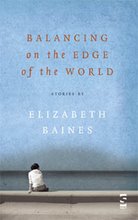
It will soon be two years since I posted on this blog, and, as I explain on my author blog, the reasons are various. One of those reasons was that blogging was very difficult to maintain, both timewise and psychologically/mentally, while I was writing some very immersive full-length fiction. I now find myself in a position to blog again, but have decided - for the moment at least - to confine myself to posting on my author blog, and the reason is not simply time and creative/intellectual effort.
Fictionbitch was my first blog, created specifically for theoretical comment on the nature of literature and its place in our culture. Initially I chose to write the blog anonymously, in that time-honoured literary tradition whereby comments can be judged for themselves rather than through what is known of or believed about the author, and I wanted to be able to comment on the issues honestly, according purely to my lights, without the need to avoid offending other authors, or publishers. It wasn't long, however, before someone objected to this anonymity. The novelist Susan Hill, who was also blogging at the time, complained about it on someone's else blog (Scott Pack's, maybe), stating her view that people should own up to their opinions, and seeing something underhand, perhaps, in my anonymity. This troubled me a good deal and did seem like a symptom of the growing cult of personality I felt was tainting our literary culture - and it did indeed fuel some Fictionbitch content.
Meanwhile I had begun to realise that, at that time, blogging had become an essential tool for an author (Facebook and Twitter weren't even in existence, I think), that publishers were increasingly expecting it, and that I needed to create a blog to promote my own work. My author blog was thus in direct opposition to Fictionbitch, a place where I had to be myself and advertise my work (something, that last, that didn't at first come easily, since I was brought up strictly not to blow my own trumpet) and was increasingly required to promote enthusiastically the work of others - in other words, to take part wholeheartedly in that cult of personality and hype that Fictionbitch was holding up to critical scrutiny. This worked for while, in a kind of Jekyll and Hyde way, until one day, out of the blue, Blogger outed me by combining my blogs, and it went round the literary blogging community: Fictionbitch is Elizabeth Baines! I'm pretty sure that from that point on Fictionbitch was less bluntly critical than it had been, and keeping the two blogs in the air and juggling those two opposing roles, the critical and the promotional, did require greater effort and creativity (and often left me feeling a bit of a fraud). Still, I'm glad I achieved Fictionbitch, several posts of which, I'm told, are collected in The British Library (I haven't checked this out myself).
But I have to admit defeat, that social media have personalised everything and that there is really no option but to give in. In my time away from my blogs I have come to terms with this, and hope now to be able to incorporate in my author blog some of the kinds of discussion I had on Fictionbitch (which I will leave fallow for now), relating them to my own writing. The new post on that blog concerns the current debate about cultural appropriation, and what it means for me as a writer and my own writing.
Friday, August 31, 2018


Monday, November 21, 2016
Literature and marketing: The Sunday Times/Peters Fraser and Dunlop Young Writer of the Year Award
This award, relaunched last year after a seven-year break, has produced another stunning shortlist and is proving once more to be a beacon of integrity in a literary prize world that seems increasingly in thrall to commercialism. Not that any of these books shouldn't sell in bucketloads: while each is highly original, in some way unlike anything that has come before, there's plenty of entertainment and immersion here, those qualities that tend to be associated with 'saleable' books - a word which all too often means 'nothing too different from what we already know sells.'
The shortlist:
The shortlist:
- An Account of the Decline of the Great Auk, According to One Who Saw It by Jessie Greengrass (John Murray Originals)
- Physical by Andrew McMillan (Cape Poetry)
- Grief is the thing with feathers by Max Porter (Faber)
- The Ecliptic by Benjamin Wood (Scribner)
Four innovative books by authors under 35: a collection of short stories, a book of poetry, a novel, and a fiction composed of both prose and poetry. I haven't yet read them all, but I've sampled those I haven't and am immensely impressed by every one.
Jessie Greengrass's collection of short stories I do know, as it won the Edge Hill Short Story prize in the summer. The stories range across place and time, their protagonists haunted by the nexus of history in which they find themselves, and by their sense of themselves within it. I'm honestly bowled over by Jessie's insight and imaginative power, the rhythms of her prose and the originality of her voice. At an event for bloggers on Saturday, prize judge and Sunday Times Literary Editor Andrew Holgate interviewed three of the authors, and it was clear from Jessie's answers that her background in Philosophy strongly influences her as a writer of fiction - all to the good, I'd say: her stories, while entertaining and engaging, are profound.
Andrew McMillan's poetry collection Physical comes already garlanded with poetry prizes, and deservedly so. Powerfully moving, tough yet tender, these poems interrogate the notion of masculinity and of male relationships in their different forms. In the interview, Andrew spoke of the way that literature has traditionally been the male gaze on women, and he was moved to subvert that by writing about the male gaze on men - which, along with a miraculous combination of total lack of punctuation and ease of reading - makes his book truly innovative.
Max Porter's Grief is the Thing with Feathers is the most obviously innovative in terms of form. I opened it up and was stunned and can't wait to read it. A giant crow straight out of Ted Hughes swoops on a grief-stricken widower and Hughes scholar newly coping with single parenthood, and what follows is a thrilling chorus of voices - including that of the crow - buzzing with energy and linguistic innovation and conveyed in a mix of prose, prose-poetry and poems. (Max wasn't present at the meeting.)
I had started reading Benjamin Wood's The Ecliptic on the way on the train and was immediately intrigued. The setting is a gated refuge for beleaguered artists on an island off the coast of Turkey in the 1960s, and the story centres on a celebrated female artist who has lost faith in her own creativity and a teenage boy who arrives to unsettle the community. It seems that the novel takes great risks with structure, which of course I haven't got to yet, and Andew Holgate asked Ben whether he had been nervous about doing this. Yes, he said, he had been petrified and thought of 'pulling the ripcord' and creating a 'safer' ending instead, but decided finally to meet the challenge he'd set himself.
Finally in the interview, Andrew H asked the authors about the fact that they had been supported by their publishers in their innovations (which publishers have seemed increasingly unlikely to do), and all three talked warmly and enthusiastically about the fact that they had been. Ben said that after a huge battle to get his first novel published (The Ecliptic is his second), he was now enjoying a lack of creative interference from his editors at Scribner. Jessie felt very lucky that in this time when publishers have tended to concentrate on single books (as marketable commodities), her publisher, John Murray, is concerned to develop an author's career and give her time to find her voice.
This last discussion struck a very deep chord with me. When I was editing the short-story magazine Metropolitan with Ailsa Cox, our local arts funder sent me on a course to learn how to market it. The tutor asked all those in the group (all editors of literary magazines) to stand up if we cooked. Then he asked those who didn't cook pasta to sit down. Next, he asked those who didn't cook spaghetti to sit. He pointed to the four remaining standing - those who cooked spaghetti - and announced to the class that this was his target market, the people to whom he would be bothering selling his spaghetti spoon. Targeting the rest, it was implied, would be a waste of time and resources.
Well, if Ailsa and I had gone along with that marketing philosophy, we'd have stopped bothering with Metropolitan there and then. We had started it precisely because literary magazines were being squeezed out by commercial pressures, which made it seem as if no one wanted or needed them any more. (It was just before the internet, which made them so much more possible again.) Of course we did use marketing techniques, quite aggressively, in fact, but our fundamental marketing philosophy - taken quite shamelessly from the snake-oil salesman - was that you can sell anything if you want to badly enough (our magazine was in nearly every branch of Waterstone's). The alternative marketing philosophy, embraced by publishers in recent years (and even by arts funders, as we experienced - we had also been required to conduct a feasibility study), that it's only worth supplying an already established demand, has been hugely detrimental to the world of literature. After all, it's a massive category error: as my teenaged son said to me at the time, fiction, unlike a spaghetti spoon, is so much more than a mere practical tool. You could even say that the essence and role of literature itself is an ability to bring people fulfilments they never knew they wanted. (Interestingly, it is the most successful tech companies of our contemporary world that are busy doing just that.) So I'm excited about this prize, which is so consciously bucking the trend, and take my hat off to the shortlistees' publishers who continue in the honourable tradition of bringing us startling literature unlike what has gone before and with the ability to change our psychic worlds.
I honestly wouldn't like to say who is likely to win, and I don't envy the task of the judges, Andrew Holgate, broadcaster James Naughtie and historian Stella Tillyard, - or that of the bloggers on the shadow judging panel.
This last discussion struck a very deep chord with me. When I was editing the short-story magazine Metropolitan with Ailsa Cox, our local arts funder sent me on a course to learn how to market it. The tutor asked all those in the group (all editors of literary magazines) to stand up if we cooked. Then he asked those who didn't cook pasta to sit down. Next, he asked those who didn't cook spaghetti to sit. He pointed to the four remaining standing - those who cooked spaghetti - and announced to the class that this was his target market, the people to whom he would be bothering selling his spaghetti spoon. Targeting the rest, it was implied, would be a waste of time and resources.
Well, if Ailsa and I had gone along with that marketing philosophy, we'd have stopped bothering with Metropolitan there and then. We had started it precisely because literary magazines were being squeezed out by commercial pressures, which made it seem as if no one wanted or needed them any more. (It was just before the internet, which made them so much more possible again.) Of course we did use marketing techniques, quite aggressively, in fact, but our fundamental marketing philosophy - taken quite shamelessly from the snake-oil salesman - was that you can sell anything if you want to badly enough (our magazine was in nearly every branch of Waterstone's). The alternative marketing philosophy, embraced by publishers in recent years (and even by arts funders, as we experienced - we had also been required to conduct a feasibility study), that it's only worth supplying an already established demand, has been hugely detrimental to the world of literature. After all, it's a massive category error: as my teenaged son said to me at the time, fiction, unlike a spaghetti spoon, is so much more than a mere practical tool. You could even say that the essence and role of literature itself is an ability to bring people fulfilments they never knew they wanted. (Interestingly, it is the most successful tech companies of our contemporary world that are busy doing just that.) So I'm excited about this prize, which is so consciously bucking the trend, and take my hat off to the shortlistees' publishers who continue in the honourable tradition of bringing us startling literature unlike what has gone before and with the ability to change our psychic worlds.
I honestly wouldn't like to say who is likely to win, and I don't envy the task of the judges, Andrew Holgate, broadcaster James Naughtie and historian Stella Tillyard, - or that of the bloggers on the shadow judging panel.
The prize is sponsored by both The Sunday Times and literary agency Peters Fraser and Dunlop, and administered by The Society of Authors.
Thursday, November 10, 2016
Loving and hating books
A book our reading group unanimously loved, and a book our reading group (almost) unanimously hated:
All for Nothing by Walter Kempowski
Cosmopolis by Don DeLillo
All for Nothing by Walter Kempowski
Cosmopolis by Don DeLillo
Tuesday, August 23, 2016
Literary reputations versus actual books
A radical disagreement in our reading group about the political stance of Christopher Isherwood's Goodbye to Berlin, raising the question of how far books can suffer from their authors' meta-literary reputations. See our discussion here.
Sunday, July 31, 2016
Can literary authors write good thrillers?
I hate it when people say they can't, but Duplicate Keys by Jane Smiley seems to prove the point. Read our reading group discussion here.
Wednesday, June 29, 2016
Who cares about poetry?

I'm musing the meaning of the fact that a poetry reading I attended on Sunday was also attended by, at my estimate, another 300 or so others, and in a small town in North Wales. The occasion was the Caernarfon stop on Laureate Carol Ann Duffy's 'Shore to Shore' tour of the country coinciding with Independent Bookshop week, celebrating poetry and community and the independent bookshops at the heart of communities. She is accompanied on the tour by Jackie Kay, the new Makar of Scotland, Gillian Clarke, the outgoing National Poet of Wales, Imtiaz Dharker, and on each stop of the tour by a local poet, on this occasion Ifor ap Glyn who is taking over Gillian Clarke's role. Entertaining musical interludes are provided by the musician John Sampson.
It's true that Carol Ann Duffy and Jackie Kay always command big audiences, due to their hugely accessible and moving poetry which has given them prominence in school curricula, but it's easier to find this unremarkable in large towns such as Manchester, and here the audience was not especially young. People had clearly travelled for miles around North Wales to this event in Caernarfon's Galeri. Is it a result of the starvation of rural communities when it comes to national public/cultural events? Or is it because this is Wales, land of the bards? Though many people in the audience were clearly English. In any case, the whole audience around me was totally engaged in the poetry, which was dynamic, entertaining, deeply political, utterly moving, and utterly relevant to the current political events. It was an evening that showed that poetry matters, and it most certainly mattered to this audience. And afterwards the local bookshop holding the event, Palas Print, did a roaring trade.
Something to chew on at a time when publishers are telling us that the public has no appetite for poetry (or short stories, or indeed any form of serious creative literature). All honour to Picador, Carol Ann's publisher, who are behind the whole tour.

Perspectives for reading
Our reading group recently read A Farewell to Arms, and found a difficulty in knowing what perspective through which to read a book which seemed very much of its time. Discussion here.
Thursday, May 26, 2016
Accessing my website
I've discovered that my web domain has been down for about a week, so anyone trying to access my site through elizabethbaines.com won't have got through. (Apparently the domain owners have sold on their business; the new owners are saying that my domain has expired - although it's paid for - and are insisting that I need to sort it out with the previous owners who are unobtainable and, it seems, no longer even exist!) I don't know how long it's going to take to sort it out, but in the meantime my website can be accessed via the basic url:
Subscribe to:
Posts (Atom)